en.Wedoany.com Reported - Researchers at the University of Chicago Pritzker School of Molecular Engineering have developed a new method to selectively extract lithium with 99% purity from a solution with a sodium-to-lithium ratio of 1000 to 1. The method is based on the electrochemical intercalation process, commonly used in batteries and supercapacitors, which applies an electric current to embed ions into the layered structure of another material.
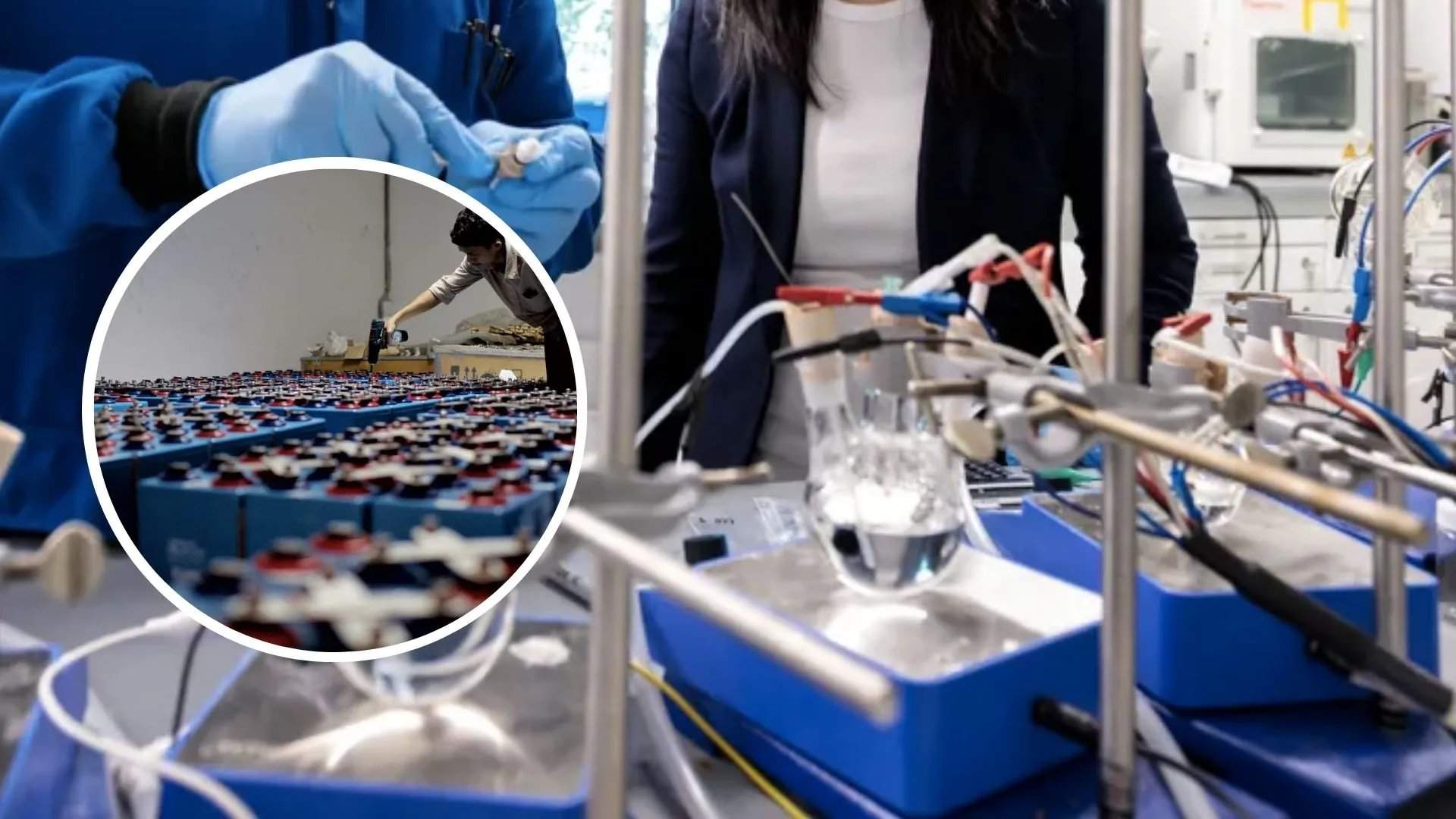
When applied to extracting materials from water, this technique forms a forced-feed filter that uses an electric current to pull positively charged lithium ions through microscopic channels. However, while allowing lithium ions to pass through, these channels also accommodate other ions, including sodium. The research team discovered that the movement of lithium ions through the ion channels of the layered material (cobalt oxide in this study) is controlled by a push-pull interaction between two forces. This finding not only represents progress in pure science but also points the way toward developing new practical extraction technologies.
Dr. Grant Hill, the first author of the paper and a former University of Chicago PME graduate student (Class of 2024), stated that the team's goal was to develop materials capable of selectively separating lithium from other salts, with the main competitor, sodium, being chemically very similar to lithium in both charge and size. Lithium is a critical material for the battery industry, but current mainstream extraction methods, such as smelting roasted spodumene ore with large amounts of acid or constructing vast evaporation ponds to pump and evaporate underground brine, are not environmentally friendly.
Chong Liu, an Associate Professor at the University of Chicago PME and the corresponding author of the study, noted that two parallel reactions always occur during the extraction process: one driven by charge when current is applied to the material, and the other being the material's natural tendency toward equilibrium. Hill compared the ion channels to a highway surrounded by parking lots. When sodium ions are inserted, they squeeze adjacent lithium sites, filling the "parking lots" in lithium-philic regions. To overcome this challenge, researchers needed to optimize the particle size of lithium ions and find a balance between the two competing reactions. In these two reactions, the first is the current-driven intercalation process (i.e., traffic on the highway), and the second is the ion exchange process, where sodium and lithium ions seek equilibrium (i.e., the rate at which ions enter the parking lots).
The study shows that the equilibrium process occurs at its own rate, but researchers can control the speed at which ions are pumped in. This means the "speed" of the first reaction can be set to one of three options: faster, slower, or the same as the second reaction. Chong Liu stated that these three states exhibit distinctly different behaviors, and a highly reversible material response can only be achieved when sufficient time is given for ion exchange to catch up with intercalation. The research reveals that slowly inserting ions and finding the ideal particle size are key to achieving this reversibility.