Japan's Renesas Electronics Unveils 2035 Strategy, Aiming for Global Top Three and Focusing on AI

en.Wedoany.com Reported - Future growth drivers will be divided into three phases: Artificial Intelligence Infrastructure, Physical AI/Software-Defined Vehicles (SDV), and Edge Intelligence.
Recently, Renesas Electronics held an investor briefing, "2026 Capital Markets Day." Renesas President and CEO Hidetoshi Shibata outlined the company's overall strategy looking toward 2035. Shibata cited "3x," "25%," and "Top 3" as keywords, representing the seven years since he became CEO and the future direction of Renesas Electronics.
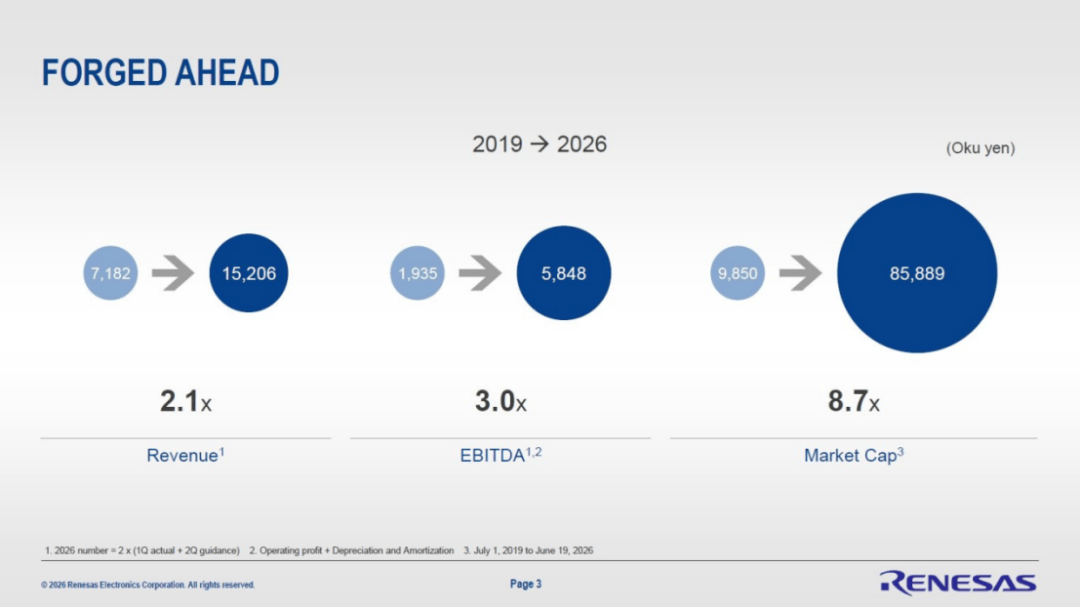
"3x" refers to the change in EBITDA (Earnings Before Interest, Taxes, Depreciation, and Amortization) from 2019 to 2026. Since Renesas Electronics has not yet released its full-year earnings forecast for 2026, the 2026 figure was calculated by adding the first-quarter results to the second-quarter forecast and then multiplying the sum by two. Based on the same assumptions, sales grew 2.1 times and market capitalization increased 8.7 times over the seven years. "There have been ups and downs along the way, but overall, we have made this much progress," Shibata said.
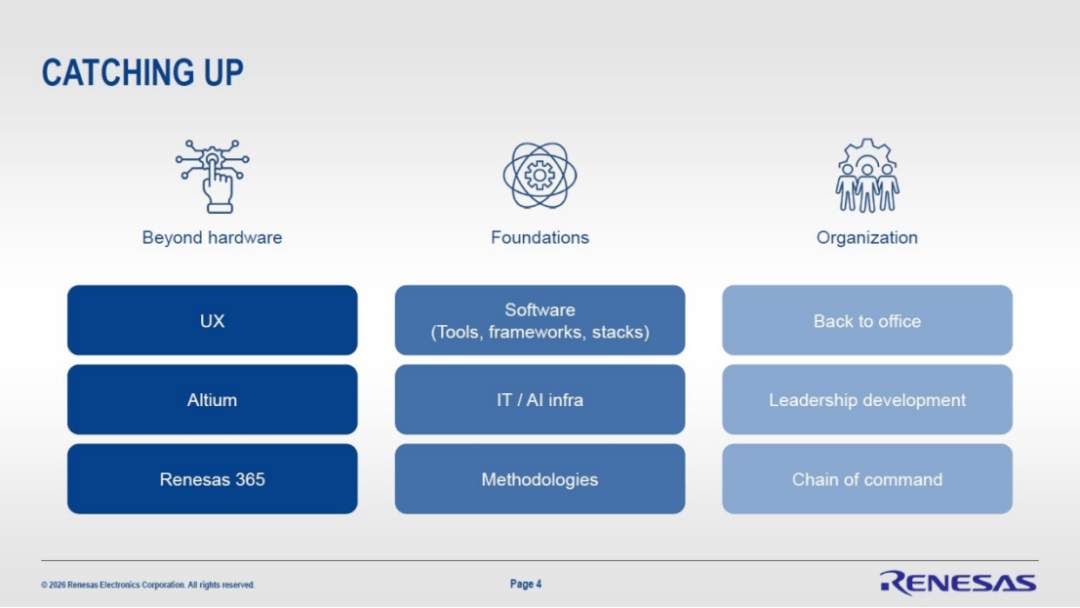
"Top 3" refers to the goal for 2035: to establish Renesas as one of the top three global suppliers of embedded semiconductor solutions. "Of course, metrics like sales and market share are important, but the most crucial thing is to become one of the three companies that users think of first when they consider embedded systems," Mr. Shibata said.
Revenue Growth for Six Consecutive Quarters; Continued Investment in Business Infrastructure
Renesas Electronics CFO Takahira Shinkai elaborated on the company's financial progress and operating model through 2035. He noted that while full-year sales in 2025 were lower than the previous year, quarterly sales bottomed out in Q4 2024 and have grown for six consecutive quarters starting from Q1 2025. He expects full-year 2026 to stabilize.
Regarding medium-term profitability, the company presented a model forecasting that gross margin will generally remain stable at around 55%, while operating margin is expected to grow within a range of 25% to 30%. Mr. Shinkai stated that while the company will continue to increase investment in its business foundation, it plans to offset cost increases through productivity improvements using technologies like AI and by leveraging operating leverage from sales growth.
Furthermore, investment in business infrastructure in 2025 increased approximately 1.5 times compared to 2022. Investment targets include development investment in common IP platforms/software, improvements in design methodologies, investment in internal IT systems and AI infrastructure, and improvements to the office environment.
Primary Growth Driver is AI Infrastructure
Regarding future growth areas, Shibata stated, "In the coming years, AI and IT infrastructure will be the main drivers of our growth." If all goes well, AI infrastructure-related businesses are expected to account for approximately 40% of the company's total sales within the next three to four years. Mr. Shibata positions providing AI infrastructure solutions as "enabling" AI.
Regarding the AI infrastructure market, Shibata noted that its structure is shifting from a GPU and power-centric model to a more heterogeneous configuration. As model scales increase, reducing latency and optimizing power consumption become critical, leading to growing demand for MPU-related devices and a "control plane" for managing workloads and power. Shibata predicts that the AI infrastructure semiconductor market will grow approximately fivefold over the next five years.
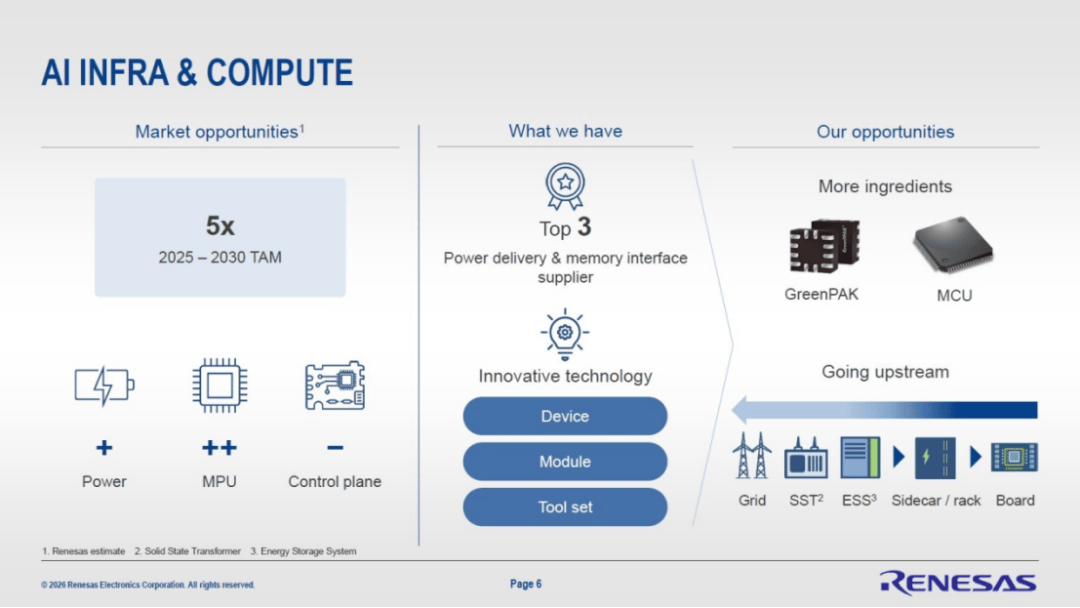
In this domain, we will focus on three major growth pillars: Power Products, Memory Interfaces, and Control. Power products will meet the high power density and thermal efficiency requirements of next-generation data centers, while memory interfaces will support maximizing computational efficiency and eliminating data bottlenecks. Additionally, we will leverage control technologies accumulated in microcontrollers to seize opportunities in areas like the control plane.
From 2030 Onwards, Physical AI and Software-Defined Vision Will Lead the Future Direction
Growth drivers for 2030 and beyond are considered to be Physical AI and Software-Defined Vehicles (SDV). Mr. Shibata explained that AI infrastructure is the foundation for enabling AI, while Physical AI/SDV represents "deploying" AI into real-world devices and services.
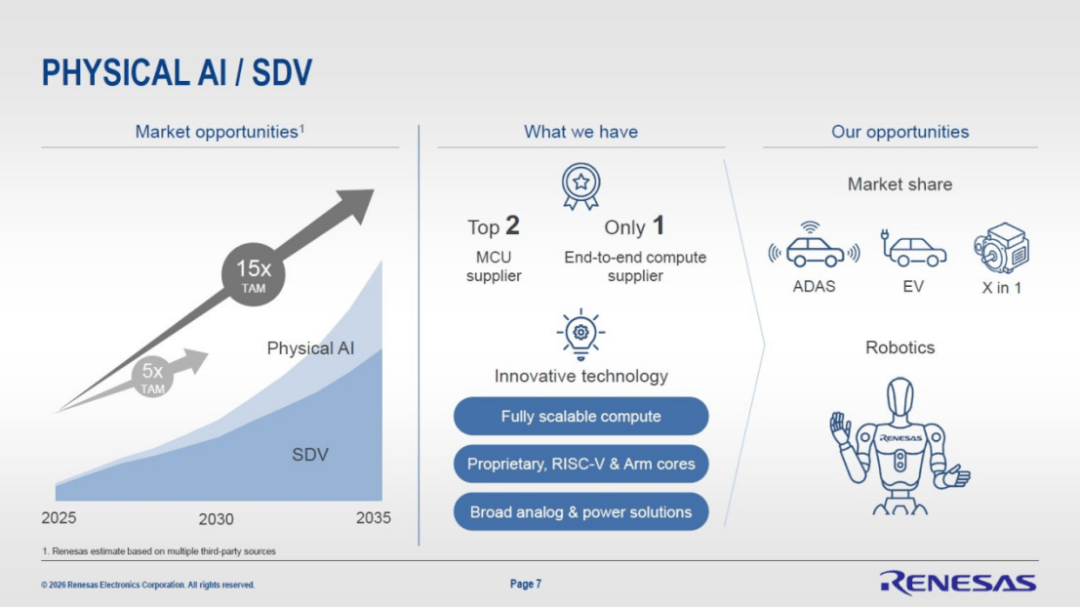
Regarding the SDV domain, Vivek Bhan, General Manager of High-Performance Computing, stated that automobiles are fundamentally changing from "static machines" to "dynamic and upgradeable technology platforms."
In AI-empowered software-defined vehicles (SDVs), the volume and complexity of automotive software are increasing, encompassing autonomous driving, integration with generative AI, and over-the-air (OTA) updates. Renesas Electronics plans to address this challenge by combining its R-Car SoC (System-on-Chip) with microcontrollers and power products. Furthermore, they indicated that the platform can be extended to adjacent markets such as robotics and Physical AI.
"The Era Where AI Itself Becomes the User"
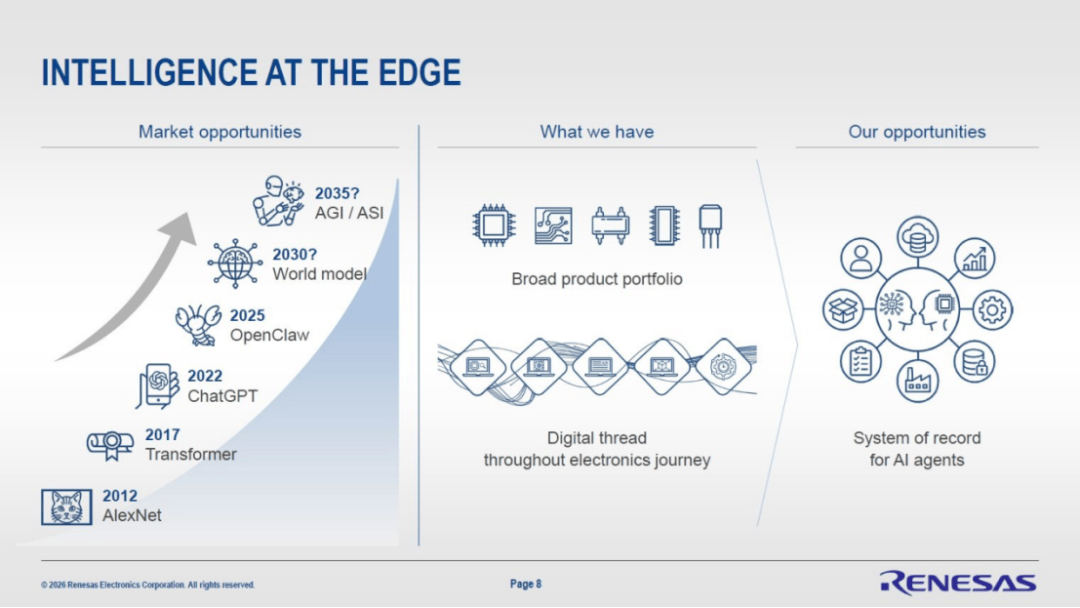
Additionally, growth driven by "Edge Intelligence" is expected to arrive around 2035. "In the past, we considered AI applications from the perspective of 'using AI to simplify human work,' but looking at current development trends in AI agents, it seems AI agents will take on a considerable portion of the work," Shibata said. Subsequently, he outlined a plan to shift from humans using AI to "AI itself becoming the user" and to enhance the platform supporting AI agents.
Related Products



Multi-function Marine Monitoring Low-altitude Detection Radar Sea-air Boundary Ocean Dynamic Environment Measurement
Chengdu Dixin Technology Co., Ltd.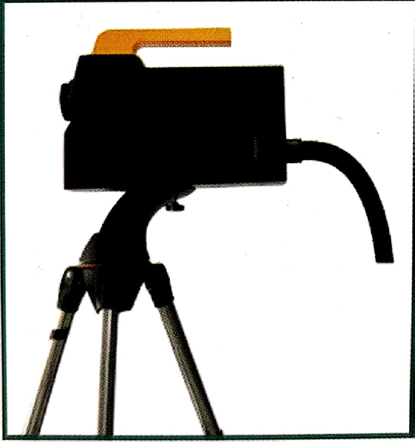
Automatic Aiming Laser Remote Obstacle Removal Robot
Pinggao Group Weihai High-Voltage Apparatus Co., Ltd.
MUX Series Communication Interface Device for Security and Stability Control System
Nanjing NR Electric Co., Ltd.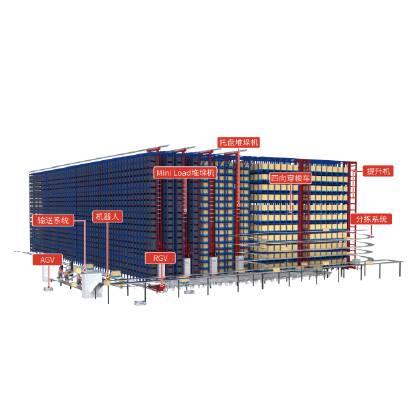
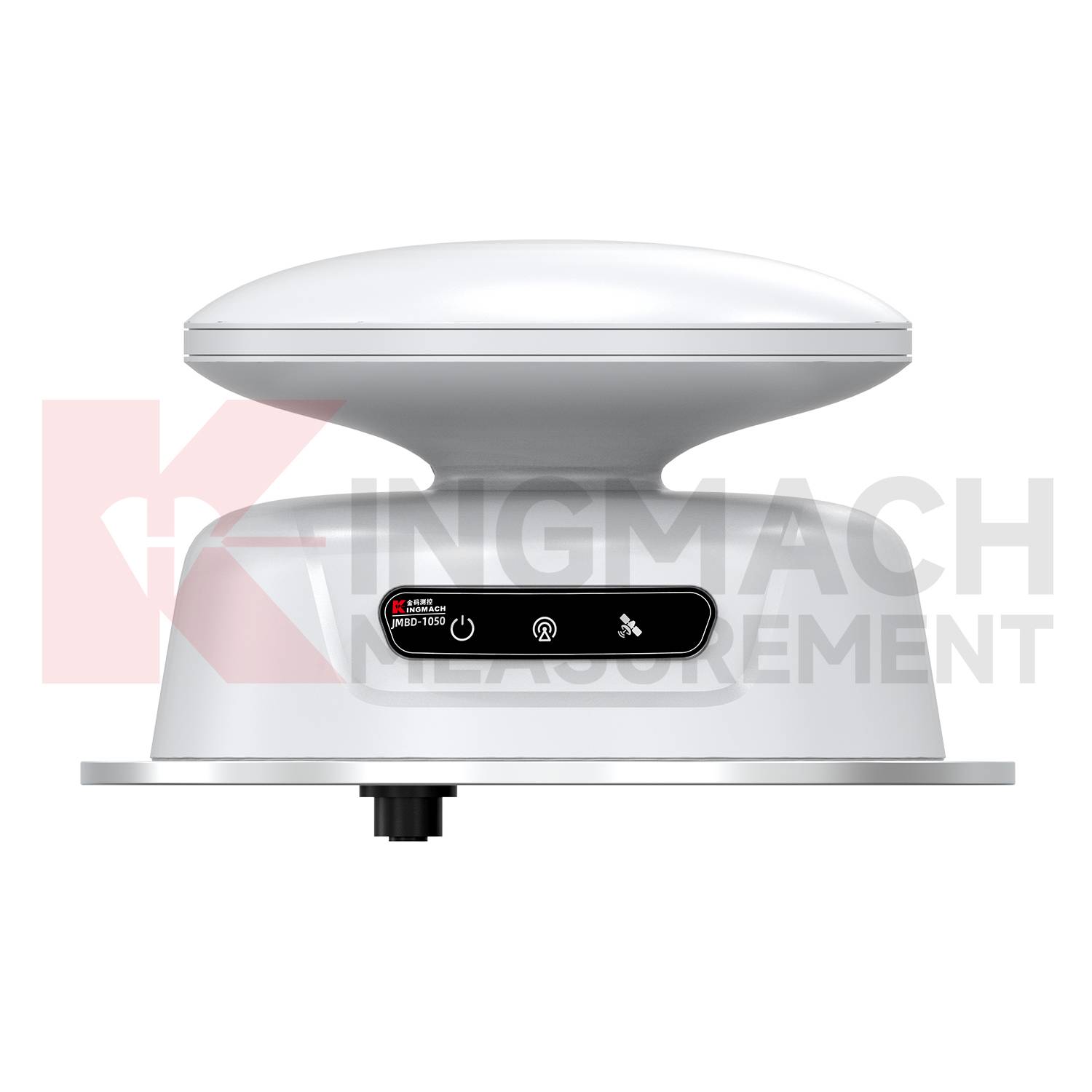
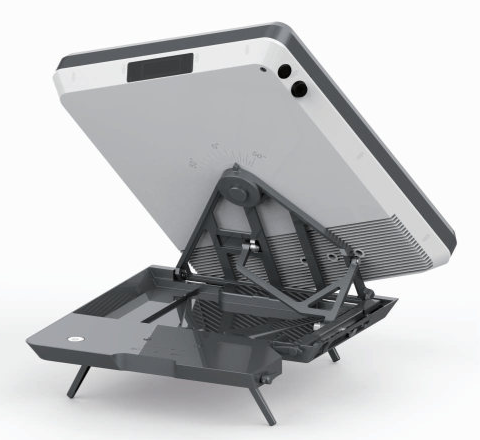
Flat Portable Satellite Terminal 0.35m Aperture Manual Portable Terminal
China Starwin Science & Technology Co., Ltd.
Industrial and Commercial Point-Type Gas Detector
Jinan Benan Technology Development Co., Ltd.
GYTA Type Non-Self-Supporting Aerial/Duct Optical Cable
TONGDING INTERCONNECTION INFORMATION CO., LTD.

Mine Explosion-proof and Intrinsically Safe Industrial Ethernet Ring Network (10 Gigabit/Gigabit)
Chongqing Mas Sci&Tech Co., Ltd.