IEA expects global copper supply gap to approach 30% by 2035
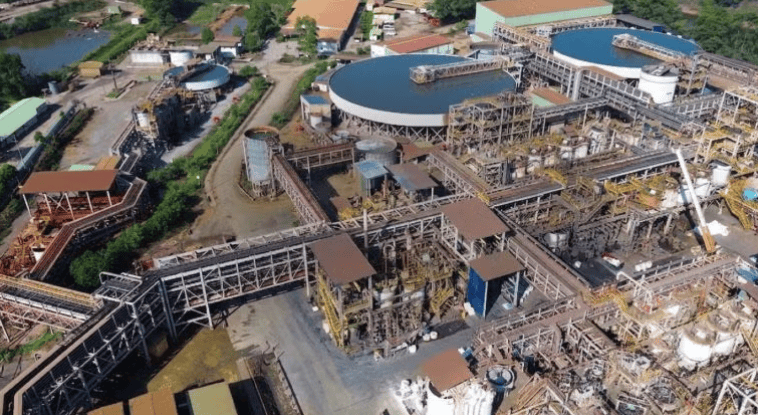
en.Wedoany.com Reported - The surge in copper demand is triggering global supply tensions. Mining giant BHP predicts that copper consumption could double to over 50 million tonnes by 2050. Energy transition projects, electrification, and the development of artificial intelligence (AI) are driving demand for this excellent conductor, second only to silver. The International Energy Agency (IEA) believes that the supply-demand imbalance could lead to a supply gap of nearly 30% by 2035. The high cost, long development cycles, and difficulty in discovering new deposits for new mining projects are intensifying the pressure to meet industrial demand. Europe, facing a metal shortage, must import approximately 40% of its copper, competing with major demand country China. The market has already reacted, with discussions on the prospects of this strategic metal beginning in late 2025. Renta 4 confirmed in a report that copper is favored over gold by medium- and long-term investors, stating that persistent supply shortages, the energy transition boom, AI data centers, and electrification make copper more stable, solidifying its position as a winning metal. Citigroup predicts that the price per tonne of the metal will reach $15,000 within a year, with current trading around $13,100.
The upward trend is accompanied by uncertainty over a U.S. Commerce Department statement on refined copper tariffs. It was then suggested that no tariffs be imposed, with an initial 15% rate introduced in 2027, and the market awaits a final decision. Another challenge comes from Chile, which accounts for 22% of global production, with output in March and April falling 9% and 14% year-on-year respectively, hitting historic lows. Ignacio Díaz, Chairman of the International Copper Association (ICA), stated that the metal is at a turning point, with demand in Europe set to grow by 35% by 2050. The European Commission has included copper in its 2023 list of critical raw materials, which has expanded from 14 materials in 2011 to 34 materials crucial for industrial development.
Addressing the shortage requires a multi-pronged approach. The ICA identifies three key fronts. First, investing in new capacity, considering that mining projects take over 17 years from development to production. Díaz emphasized that speed is crucial; decisions not made today will directly impact 2040 and beyond, calling for enhanced public-private partnerships and expansion of existing projects to shorten cycles. The second direction is recycling, with 30% of global supply coming from secondary sources, consuming less energy than mining. Third, geographic diversification is needed to explore new deposits, reducing supply concentration and enhancing supply chain resilience.
The EU's Critical Raw Materials Act (CRMA) sets targets: meeting 10% of demand through domestic mining, 40% through processing, and 25% through recycling. Macarena Gutiérrez, CEO of Atlantic Copper, believes the Act's strategic definition and assessment are appropriate, but the challenge lies in implementation, facing guiding targets, no binding commitments, and unclear fund allocation. The company calls for competitive energy prices, revision of the Emissions Trading System (ETS), and enhanced innovation support.
The ICA believes Europe is on the right track but needs to accelerate, with the future Circular Economy Act playing a role. Díaz asserts that without competitive costs, there is no viable European industry. The industry also faces declining metal purity; according to IEA data, the average grade of global copper ore has fallen by 40% since 1991. The complexity and cost of existing projects (brownfield) have increased by 65% since 2020, approaching levels of new projects (greenfield), and the pace of deposit discovery has slowed.
In Europe, Spain is the second-largest producer, with active mining in the Iberian Pyrite Belt. Díaz warns that Spain must act immediately to avoid missing opportunities, needing to accelerate approvals and improve coordination between Madrid and Andalusia. Of the €414 million investment, €189 million will go toward the national mineral exploration and waste utilization plan.
Spanish companies hold projects classified as "strategic" by Brussels. Atlantic Copper is committed to metal recycling and international cooperation to secure raw materials, having launched the CirCular project, which recovers critical metals from complex materials and electronic waste with EU support. Global Panduro, a company controlled by Resource Capital Funds (RCF), recently acquired Cobre las Cruces and will accelerate its polymetallic refinery project (PMR), which includes a new underground mine and a refinery in the province of Seville.
Related Products


Mine Explosion-proof and Intrinsically Safe Industrial Ethernet Ring Network (10 Gigabit/Gigabit)
Chongqing Mas Sci&Tech Co., Ltd.
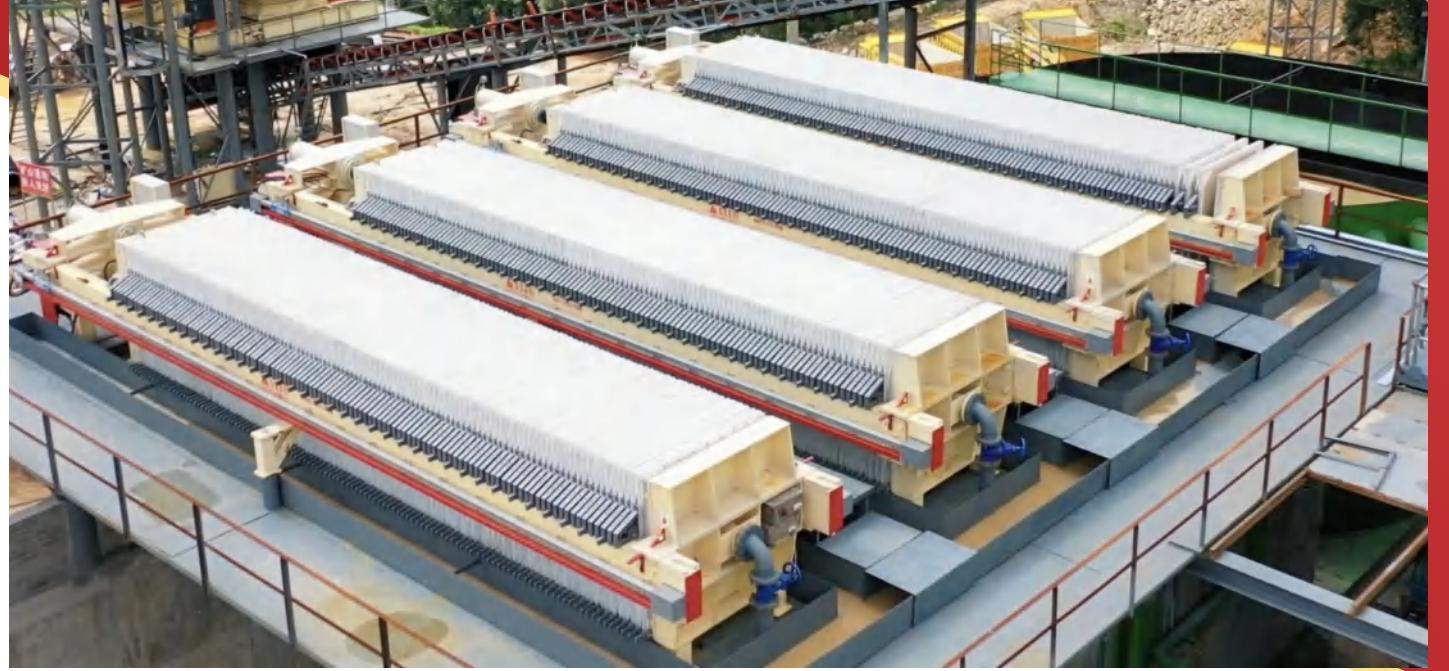
Hydraulic Plate and Frame Filter Press
Guangdong Leimeng Intelligent Equipment Group Co., Ltd.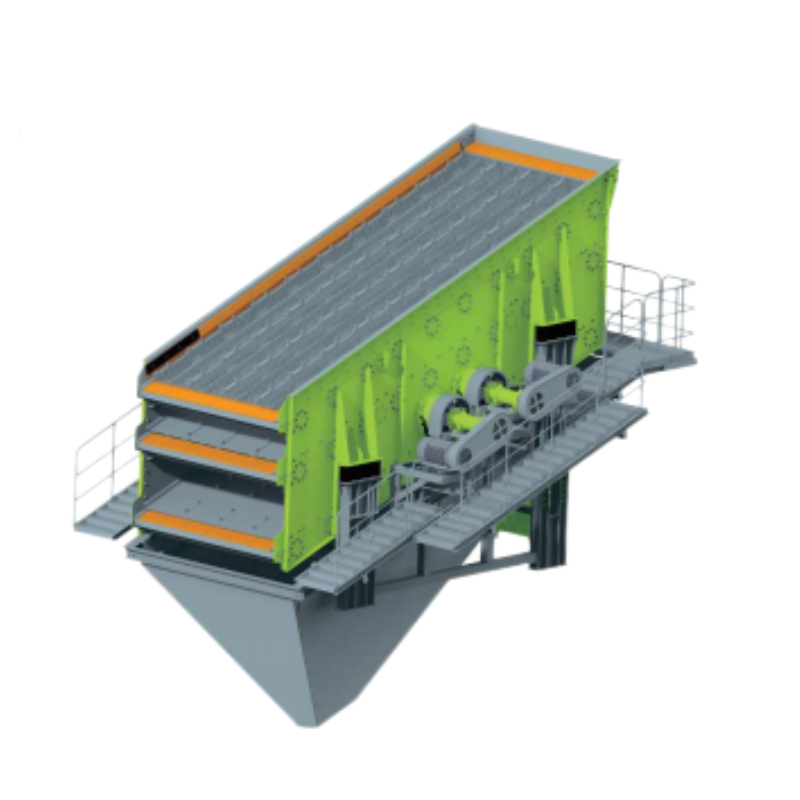
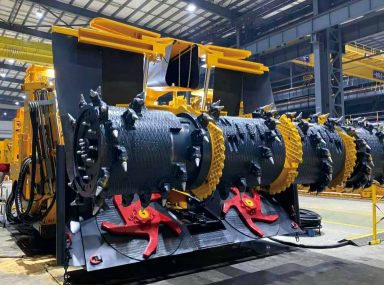
Integrated Excavation and Anchoring Machine (EJM Series)
China Railway Construction Heavy Industry Corporation Limited