en.Wedoany.com Reported - Coordinated source-grid-load-storage projects are attracting increasing attention from energy companies, industrial users and facility operators. Yet moving from demonstration projects to repeatable large-scale deployment will require clearer revenue mechanisms, stronger interoperability, better data quality and well-defined operational responsibilities.
A technically capable Source Grid Load Storage Integration project does not automatically possess a sustainable business model.
Project value may come from several sources, including lower electricity purchasing costs, demand-charge management, higher renewable self-consumption, reduced outage losses, demand-response participation and grid-support services. These benefits may be calculated and settled by different parties over different time periods. Some represent direct savings, some depend on electricity market rules, and others appear mainly as reduced operational risk.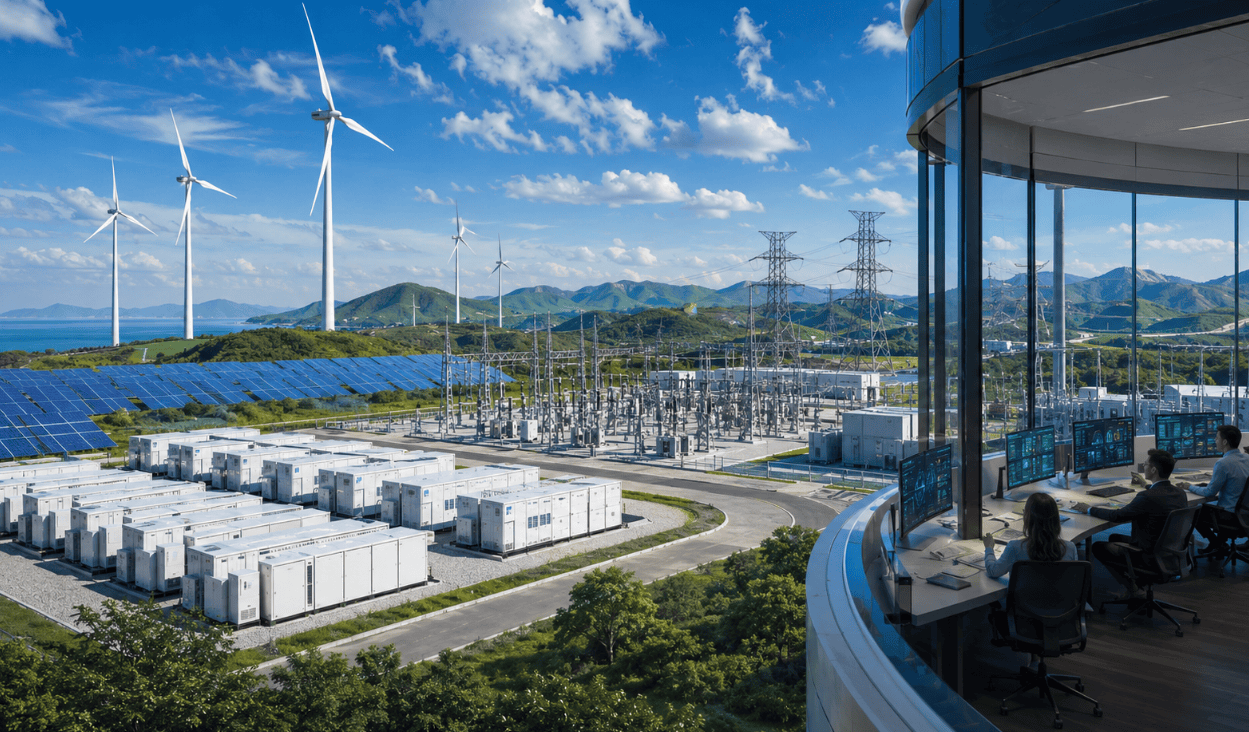
Investment assessment should therefore extend beyond a single peak-to-off-peak price spread. Multi-scenario financial models should evaluate normal operation, extreme weather, changing tariffs, load growth, battery degradation and possible market-rule adjustments. A project whose economics depend heavily on temporary incentives or one revenue stream may have limited long-term resilience.
Equipment interoperability is another major barrier. Solar inverters, power conversion systems, battery management systems, protection devices, smart meters, charging stations and industrial control systems may come from different suppliers and use different protocols and data structures. Physical connectivity alone does not guarantee common data meaning, real-time coordination or effective fault management.
Open interfaces, standardized information models and edge-control capability are therefore increasingly important. Critical control functions should not depend entirely on remote cloud services, because communication interruptions must not compromise local operation. A robust architecture should maintain essential autonomy at the site while using cloud platforms for fleet analysis, strategy updates and asset management.
Data quality is frequently underestimated. Meter accuracy, sampling frequency, time synchronization, equipment-status identification and the completeness of historical records all affect forecasting and optimization. Poor input data can cause sophisticated algorithms to make incorrect decisions. Metering architecture, data governance and equipment naming rules should be designed at the beginning of a project.
Cybersecurity and liability allocation are equally important. Integrated platforms interact with both electrical controls and industrial operations. If an automated command causes equipment shutdown, production loss or a grid disturbance, responsibilities among the platform provider, equipment supplier, operator and customer must be clearly defined. Contracts should specify command authority, manual override procedures, incident response, data ownership and security-audit requirements.
Commercial models may include equipment sales, energy performance contracting, managed energy services and shared-savings structures. Each model creates different requirements for financing, operating data and risk allocation. Customers should compare not only initial capital cost but also long-term maintenance, software upgrades, battery replacement, performance guarantees and revenue verification.
Demand for power system flexibility is expected to continue increasing, creating substantial opportunities for integrated energy solutions. However, scale will not result from lower equipment prices alone. It will depend on measurable value, repeatable technical architecture and enforceable responsibility frameworks. The most competitive suppliers will be those able to provide ongoing forecasting, dispatch, maintenance and market-participation capabilities in addition to hardware delivery.