UC Santa Barbara Receives $1.15 Million to Acquire Two-Photon 3D Nano-Printing System
en.Wedoany.com Reported - The University of California, Santa Barbara (UC Santa Barbara, UCSB) has received a $1.15 million grant from the National Science Foundation (NSF) to acquire a 3D rapid nano-printing system based on two-photon lithography technology. This equipment will enhance the manufacturing capabilities of UCSB's Nanofabrication Facility (Nanofab).
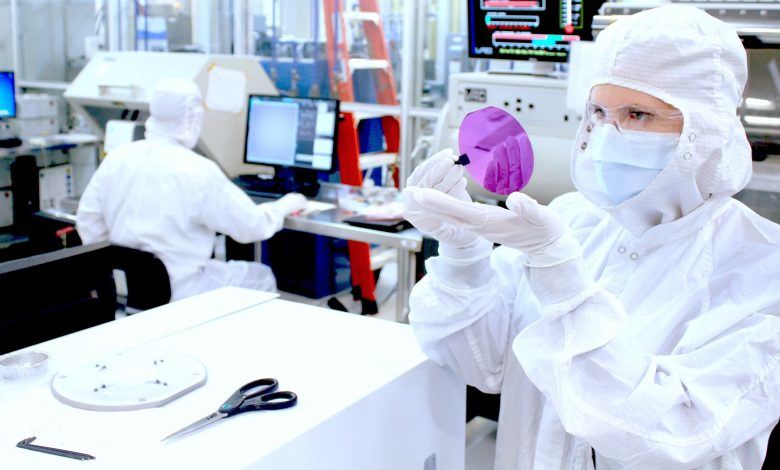
The lead principal investigator on the proposal is Galan Moody, a professor in the Department of Electrical and Computer Engineering at UCSB, with collaborators including four co-principal investigators: Marley Dewey from the Department of Bioengineering, Andrew Jayich from the Department of Physics, Sumita Pennathur from the Department of Mechanical Engineering, and Andrea Young from the Department of Physics. Moody stated that this grant will position UCSB at the forefront of a class of tools that remain rare in U.S. academia, with only a few universities in the country currently possessing equipment with such capabilities.
The team believes this equipment fills a gap in existing fabrication methods. The proposal notes that current nano-fabrication tools, while capable of wafer-scale planar (two-dimensional) manufacturing of semiconductors, dielectrics, and metals at resolutions around ten nanometers, are approaching their limits. Creating increasingly critical three-dimensional microstructures often requires additional complex and time-consuming steps. Moody explained that traditional lithography techniques can only transfer patterns onto thin films just a few hundred nanometers thick, leaving little room for construction in the vertical dimension.
Unlike earlier additive manufacturing systems that build three-dimensional objects by stacking thin layers, the new system can directly print microstructures in a truly three-dimensional manner on a chip. This unique capability opens new avenues for nano- and micro-fabrication of complex structures and devices, no longer constrained by geometry or two-dimensional planes. A typical application area is quantum photonics, where light loss during coupling from a chip into an optical fiber is a long-standing challenge. This equipment can print polymer lenses less than 50 micrometers wide on chip edges or optical fibers to optimize optical modes, minimizing light loss during the coupling process.
Related Products


CAP1400 main feedwater flow nozzle flowmeter.
Jiangsu Hongda Instrument Technology Co., LTD.
LBH4000 Batch Environmental Protection Asphalt Mixing Plant | Asphalt Batching Plant | Asphalt Mixing Plant
Jilin Province Road Construction Machinery Co., Ltd.

Pneumatic high-pressure wear-resistant ball valve
Zhejiang Deca Control Valve Meter Co., Ltd.


Strip Coating and Plating Production Line Equipment
MCC-SFRE HEAVY INDUSTRY EQUIPMENT CO., LTD.
Standard Nozzle Flowmeter
Jinggong Automatic Control Instrument Complete Technology Development Company

Industrial and Commercial Point-Type Gas Detector
Jinan Benan Technology Development Co., Ltd.