New Zealand Investment Promotion Agency Plans to Attract NZ$25-30 Billion in Data Center Investments
en.Wedoany.com Reported - New Zealand's investment promotion agency, Invest New Zealand, has launched a five-year action plan aimed at attracting NZ$25-30 billion in overseas investment for data centers and related infrastructure construction.
Local tech industry figures have raised questions about this. Don Christie, Managing Director of Wellington-based IT and cloud services company Catalyst, stated: "Simply building giant refrigerators here won't bring us knowledge economy jobs." He believes that large tech companies operating in New Zealand transfer most of their revenue and profits to low-tax countries, with hyperscale data centers being largely automated and remotely controlled, employing only a few people while using New Zealand's green electricity to serve overseas customers.
Robert Wall, CEO of Invest New Zealand, returned from overseas in February to lead the agency. Established last year, the agency replaced the role of New Zealand Trade and Enterprise in attracting foreign investment. Wall has an eight-year background in civil engineering before transitioning to investment banking, most recently serving as Managing Director and Head of Sustainable Private Infrastructure at Lazard Asset Management in London.
Wall stated that Invest New Zealand will help accelerate New Zealand's adoption of artificial intelligence, boost productivity, and create a new export sector by selling excess AI computing capacity overseas, particularly to Asia. He believes data center construction can create jobs, including temporary construction positions and indirect employment support. For example, Microsoft's new data center in West Auckland will create 300 temporary full-time equivalent construction jobs and 50 new operational positions. Singapore-backed Datagrid's planned NZ$5 billion data center in Southland will create 75 jobs, compared to around 1,000 at Rio Tinto's aluminum smelter in Bluff; Datagrid will also support an additional 72 jobs through suppliers and services.
In promoting New Zealand, Wall highlighted several advantages, including a mild climate, peace and stability, a high proportion of renewable energy, and internationally competitive electricity prices. He noted that wholesale electricity prices in New Zealand are trending downward, with transmission costs being the main driver of price increases, and data centers help "spread" these costs. According to the International Energy Agency, the most common power source for U.S. data centers is fossil fuel liquefied natural gas, but shortages have driven up prices. Wall stated that data center operators like Amazon, Microsoft, and Google have zero-carbon targets and need renewable energy to achieve them.
Nevertheless, Christie believes that hyperscale operators transfer revenue and profits overseas, minimizing local tax contributions. He argues that New Zealand should invest in startups to become a "Rocket Lab" in the AI field, thereby taking a leading position in the global AI landscape.
In another debate, Mercury CEO Stew Hamilton emphasized that long-term power purchase agreements from hyperscale data centers help fund the construction of new generation capacity. Without these data centers, New Zealand would have to import more cloud and AI services generated by fossil fuels from overseas. Contact Energy CEO Mike Fuge also participated in an Invest New Zealand panel discussion, supporting this view. There are precedents: in 2023, Amazon signed an agreement with Mercury to purchase half the output of the Turitea South wind farm, while Microsoft's 10-year contract supported Contact Energy's investment decision to build the Te Huka 3 geothermal power station.
Several regions in the U.S. have suspended or banned new data center construction due to concerns over rising electricity and water bills. Cities like Seattle and Baltimore have implemented one-year moratoriums. In New Zealand, Wall said there is almost no opposition, but this could change as construction intensifies. He believes that New Zealand's single electricity regulator and single national grid operator make more orderly construction easier. Additionally, stricter environmental standards and a mild climate (average annual temperature of 13.5 degrees Celsius) make water circulation a viable cooling solution.
Currently, New Zealand is experiencing a wave of data center construction, but some projects have stalled. Microsoft's data center in Westgate, with an investment of approximately NZ$1 billion, was commissioned in December 2024, but its twin project in Whenuapai lost its permit after failing to enter the "start-up" phase. Amazon abandoned its large site in Westgate, opting instead to co-locate with existing operators. The Datagrid project in Southland and the TenPeaks project in North Auckland remain in the planning stage.
Regarding the NZ$25-30 billion in investments that Invest New Zealand plans to attract, Wall stated that this would create "one job per megawatt."
Related Products


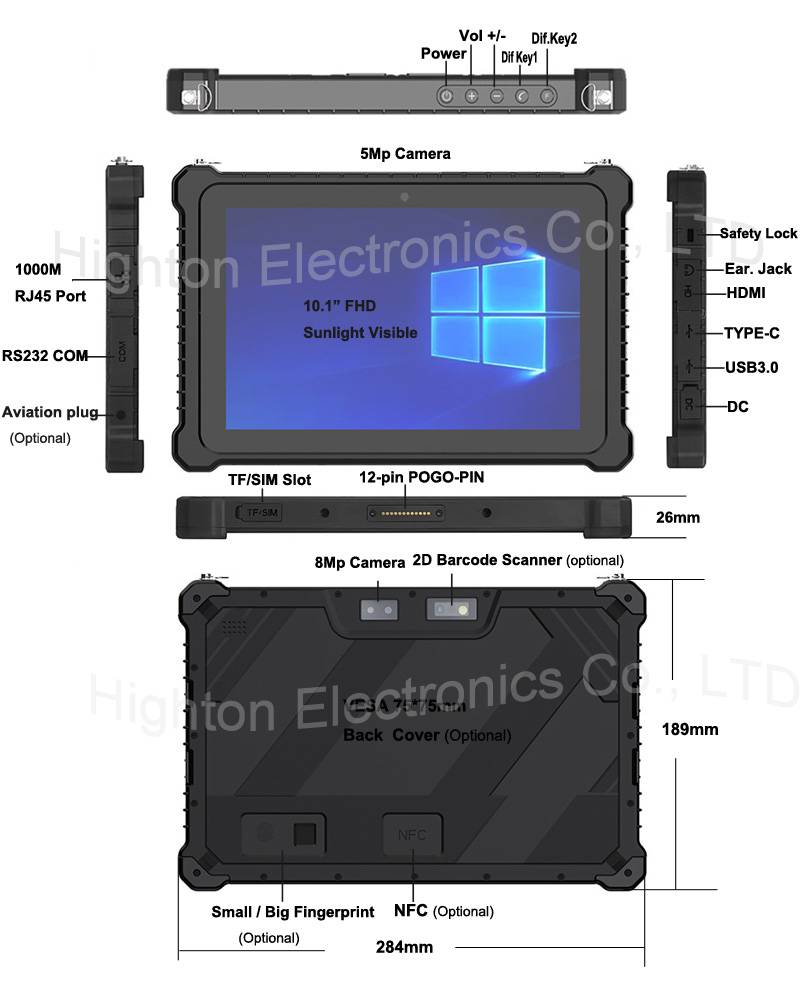
Hot Selling 10 Inch Intel N5100 I5 I7 FHD 8 +128GB 16+256GB Win10 Pro Win11 Pro 4G 5G Rugged Tablet PC Pad with NFC Barcode
Highton Electronics Co., Ltd.
TWP16 P-Band Tropospheric Wind Profile Radar
China Huayun Meteorological Technology Group Co., Ltd.
GYTA Type Non-Self-Supporting Aerial/Duct Optical Cable
TONGDING INTERCONNECTION INFORMATION CO., LTD.

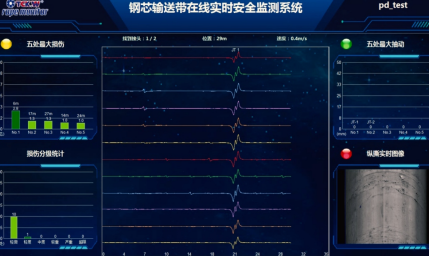
Conveyor Belt Intelligent Monitoring System
LUO YANG WIRE ROPE INSPECTION TECHNOLOGY CO., LTD.
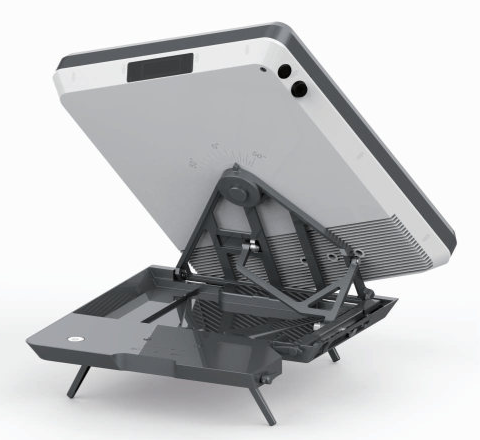
Flat Portable Satellite Terminal 0.35m Aperture Manual Portable Terminal
China Starwin Science & Technology Co., Ltd.