In 2025, China's industrial internet core industry scale exceeds 1.6 trillion yuan
en.Wedoany.com Reported - The 2026 Industrial Internet Conference was held in Beijing, themed "High-Quality Development of the Industrial Internet under the Wave of Artificial Intelligence." Zhong Zhihong, Chief Engineer of the Ministry of Industry and Information Technology, attended the opening ceremony and delivered a speech. Academicians of the Chinese Academy of Engineering, Wu Hequan and Qian Feng, presented keynote reports respectively.
Zhong Zhihong pointed out that China's industrial internet applications have covered 41 major industrial categories and 185 medium industrial categories. In 2025, the core industry scale of the industrial internet exceeded 1.6 trillion yuan, driving an added value of related industries exceeding 3.9 trillion yuan, leading the global systematic development. The Industrial Internet Industry Alliance has gathered over 2,800 member units, becoming the largest industrial ecosystem organization in this field globally. In the next step, the Ministry of Industry and Information Technology will focus on four key areas to deepen and solidify the industrial internet. First, overall planning and development, issuing the "Implementation Opinions on Promoting High-Quality Development of the Industrial Internet" to systematically create a "five horizontals and five verticals" framework. Second, adhering to innovation-driven development, building a new type of industrial network integrating control, networking, and computing, and implementing the "Industrial Internet and Artificial Intelligence Integration Empowerment Action." Third, expanding application scenarios, creating an upgraded version of "5G + Industrial Internet," and implementing actions such as "5G Factory Quality and Quantity Improvement" and "High-Quality Platform Development." Fourth, optimizing the industrial ecosystem, accelerating the development of industrial internet standards, talent cultivation, and international cooperation.
Academician Wu Hequan believes that starting from 2026, the industrial internet will enter a new intelligent agent phase, relying on technologies such as large models, knowledge graphs, and AaaS to support the closed loop of the industrial intelligent agent, gradually evolving from edge-cloud collaboration to human-machine collaboration, self-learning, self-adaptation, and self-evolution. It is essential to accurately grasp the contradiction between the certainty of industrial requirements and the uncertainty of artificial intelligence, systematically study the key technologies and methods required for embedding intelligent agents into PLC, SCADA, and OPC UA, and optimize the support of the industrial internet for intelligent agents and the effect of intelligent agents empowering the industrial internet through differentiated complementarity of general and specialized models, cloud-edge collaboration, software-defined industrial control, and lightweight service subscription models.
Academician Qian Feng proposed leveraging the industrial internet to build an industrial brain, constructing a production-manufacturing embodied intelligent system integrating all elements of the manufacturing lifecycle. This supports collaborative optimization of the industrial chain, supply chain, and value chain, innovative allocation of production factors, real-time precise control of manufacturing processes, intelligent operation and maintenance of production safety and environmental protection, and intelligent design of new products and materials, thereby cultivating new quality productive forces and promoting the digital and intelligent transformation and high-quality development of manufacturing. Automation, informatization, networking, digitalization, and intelligence—these "five transformations"—progress layer by layer and are organically unified, serving as the core support for upgrading and improving manufacturing quality. Artificial intelligence is the core engine for cultivating new quality productive forces. The deep integration of AI and the industrial internet is accelerating the emergence of a new industrial economic form characterized by data-driven, intelligent collaboration, and virtual-real integration.
This conference released significant industrial internet achievements, including the "Implementation Opinions on Promoting High-Quality Development of the Industrial Internet" issued by eight departments including the Ministry of Industry and Information Technology, industrial ontology semantic modeling methods, the industrial embodied intelligent robot training dataset 2.0, an industrial intelligent agent network interconnection testbed based on identification resolution, and the first "5G + AI + New Industrial Control" factory innovation practice.
Related Products

Conveyor Belt Intelligent Monitoring System
LUO YANG WIRE ROPE INSPECTION TECHNOLOGY CO., LTD.
MUX Series Communication Interface Device for Security and Stability Control System
Nanjing NR Electric Co., Ltd.
Industrial and Commercial Point-Type Gas Detector
Jinan Benan Technology Development Co., Ltd.


20 Inch 1600*900 Full HD 60Hz TFT LED Monitor with VGA and DP Interfaces for Desktop Computers-Business Use
Guangzhou Zanying Optoelectronics Technology Co., Ltd.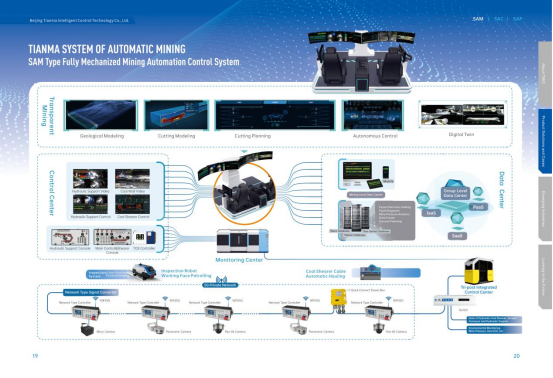
Comprehensive Mining Automation Control System
Beijing Tianma Intelligent Control Technology Co., Ltd.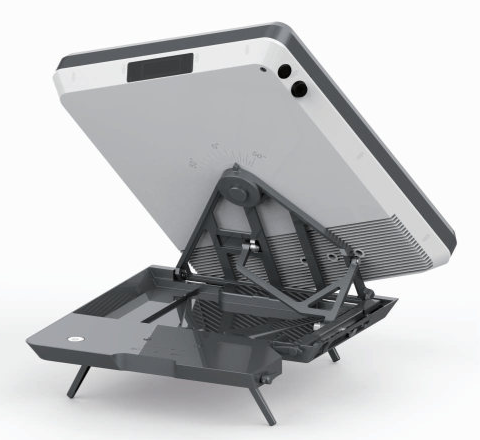
Flat Portable Satellite Terminal 0.35m Aperture Manual Portable Terminal
China Starwin Science & Technology Co., Ltd.


Multi-function Marine Monitoring Low-altitude Detection Radar Sea-air Boundary Ocean Dynamic Environment Measurement
Chengdu Dixin Technology Co., Ltd.