China Classification Society Ensures Successful Completion of World's Largest Offshore Converter Station "Heart of the Sea Wind"
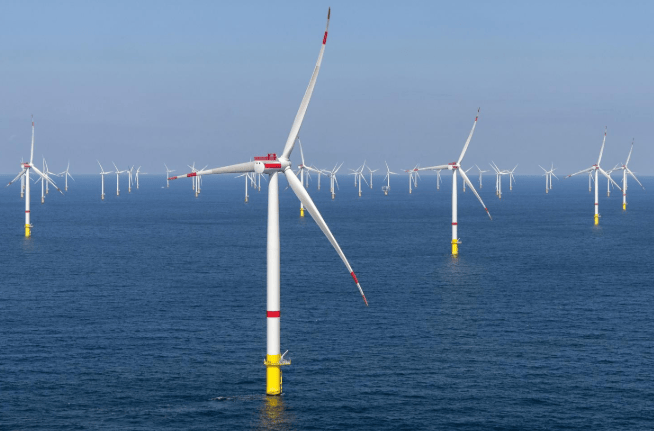
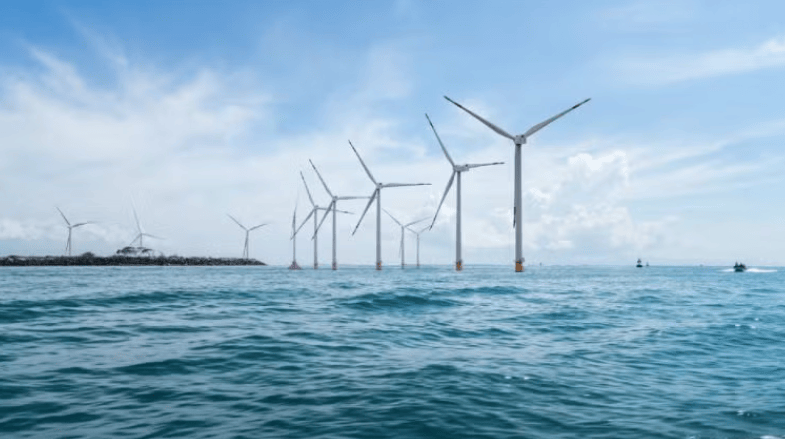
en.Wedoany.com Reported - Recently, the Qingzhou offshore wind farm in Yangjiang, Guangdong, achieved a milestone breakthrough. With the smooth completion of the welding construction of the leg mating unit (LMU) and the topside module of the Yangjiang Three Gorges Qingzhou V and VII offshore converter stations, the world's largest offshore converter station, "Heart of the Sea Wind," has been fully installed offshore. This marks China's deep-sea offshore wind power development and clean energy transmission technology as leading globally. The China Classification Society (CCS) participated throughout the entire process, including the offshore installation of the converter station's jacket, the overall float-over installation of the topside module, LMU construction, and the construction inspection of the converter station's living platform and connecting bridge, providing professional technical support to ensure the successful completion of this major project.
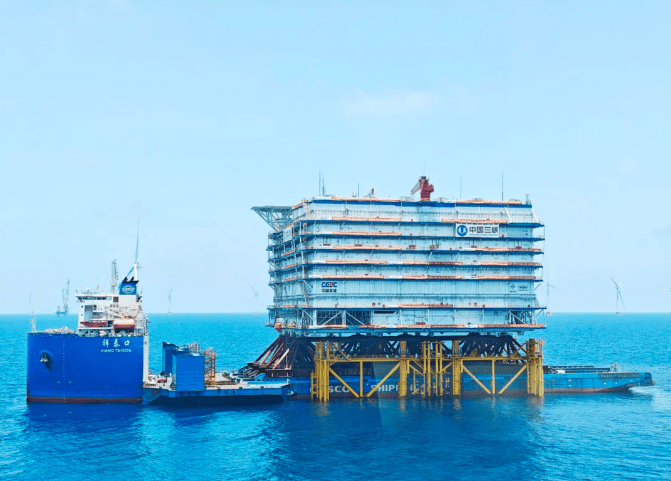
As the core power hub of the Three Gorges Yangjiang Qingzhou Phase V and VII offshore wind farms, "Heart of the Sea Wind" is the world's first ±500 kV, 2000 MW flexible DC offshore converter station, setting three core records in voltage level, transmission capacity, and scale for global offshore converter stations. It is truly a "super giant" of offshore wind power. The converter station has an overall length of 85.5 meters, covering an area comparable to a standard football field, with a vertical height equivalent to a fifteen-story building. Its massive scale and ultra-high process standards have established a new benchmark for global deep-sea converter station construction. Once operational, it will deliver over 60 billion kWh of clean electricity annually to the Guangdong-Hong Kong-Macao Greater Bay Area, reducing carbon dioxide emissions by approximately 4.93 million tons, marking a milestone in optimizing the regional energy structure, supporting the "dual carbon" goals, and ensuring energy security in the Greater Bay Area.
The installation of "Heart of the Sea Wind" involved significant challenges, including long voyage distances, high precision, complex environments, and dual tests of cross-sea navigation and high-precision offshore construction. The converter station set sail from Nantong, Jiangsu, traversing 1,090 nautical miles of open sea, transported steadily by a semi-submersible vessel, and successfully arrived at the Qingzhou operational area in Yangjiang. The project innovatively adopted China's advanced float-over installation technology for the topside module, breaking through the limitations of traditional lifting methods. By leveraging tidal forces, dynamic positioning systems, and ballasting systems of the float-over vessel in coordinated operation, the 25,000-ton giant module was precisely "parked in reverse." Additionally, rubber fenders and leg coupling units provided cushioning and shock absorption, effectively avoiding collision risks during the mating of large components, achieving millimeter-level precision in leg insertion and structural engagement, showcasing China's top-tier offshore installation technology.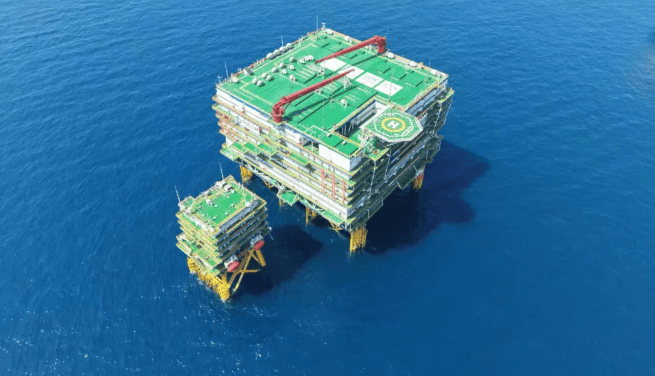
Since the project's launch, the Zhanjiang Branch of the China Classification Society (CCS) has leveraged its professional advantages, actively taking responsibility and deeply integrating into the entire construction chain. Addressing the technical difficulties, safety key points, and construction pain points of large-scale deep-sea converter station construction, the branch quickly formed a specialized technical support team. This team precisely aligned with the full-process needs of project construction, maritime transport, overall float-over installation, and LMU construction, tailoring a dedicated inspection and support plan to provide comprehensive technical support for efficient project progress. During the critical phase of offshore installation, the technical support team from the Zhanjiang Branch remained on-site throughout, tracking construction progress and closely monitoring core offshore installation steps. To address the challenge of millimeter-level precision mating, surveyors combined real-time tidal, wind, wave, and current data from the Yangjiang sea area, collaborating with the project team to optimize the installation plan. They witnessed key processes such as jacket foundation adaptation and mating, stable module placement, and precise structural engagement, strictly controlling construction process standards, structural installation accuracy, and on-site safety management. Additionally, given the harsh offshore environment with high salt spray and humidity, surveyors focused on verifying the anti-corrosion of the converter station's steel structure, protection of precision electrical equipment, and fatigue resistance of marine structures, identifying potential quality and safety hazards to ensure every construction step and structural detail met national and world-class marine engineering standards.
Over the years, CCS has deeply engaged in the field of marine engineering and shipping safety in western Guangdong, always adhering to its original mission and fulfilling its responsibilities. Focusing on emerging marine industry tracks such as deep-sea offshore wind and green marine energy, CCS has supported the implementation and operation of major offshore clean energy projects with advanced marine inspection technology and a comprehensive service system. Moving forward, CCS will contribute to the high-quality development of China's offshore wind power industry, the transformation and upgrading of the marine economy, and the global green and low-carbon transition with higher standards, more refined technology, and a more pragmatic approach.
Related Products


Yingping Mining Section Open-pit Tailings Backfill Treatment of Goaf Ecological Restoration EPC Project
China Bluestar Lehigh Engineering Corporation
Prefabricated Houses and Electrical Energy Boxes
Chengdu Ruilong Machinery Manufacturing Co., Ltd.
Pneumatic high-pressure wear-resistant ball valve
Zhejiang Deca Control Valve Meter Co., Ltd.

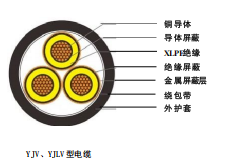
Rated Voltage 6-35kV Cross-linked Polyethylene Insulated Power Cable
TONGDING INTERCONNECTION INFORMATION CO., LTD.