São Paulo State to Adopt Hybrid Regulatory Model in Sanitation Concessions
en.Wedoany.com Reported - The government of São Paulo state will replicate the hybrid regulatory model used by Sabesp (Basic Sanitation Company of São Paulo State) in its future sanitation concession contracts. This model combines contractual regulation with discretionary elements, aiming to provide operators with flexibility and legal certainty.
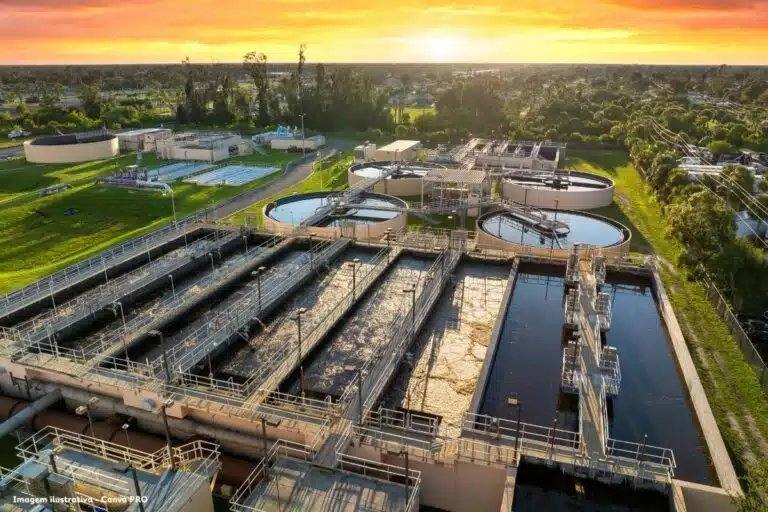
Natália Resende, Secretary of the São Paulo State Department of Environment, Infrastructure and Logistics (Semil), told iNFRA News Agency that the model offers greater flexibility compared to strict contractual regulation and preserves more room for maneuver for regulatory agencies. Previously, during the privatization of Sabesp, the state had already implemented this configuration in URAE-1 (Regional Water and Sewage Unit), covering 371 municipalities. Now, the state plans to expand service coverage to another 274 municipalities through the auction of regional sub-units.
Under the asset-based regulatory model, the regulatory agency calculates the fees charged to users based on assets, rather than having both parties directly set prices in the contract. Despite adopting a more flexible model, the Secretary emphasized that the state government still specifies in the contract how certain "unforeseen circumstances" will be handled, ensuring predictability and legal certainty for operator compensation. Christianne Dias, President of the Brazilian Association of Sanitation Companies (Abcon), believes that what matters more than choosing a specific model is strengthening the regulatory agency's capacity to analyze economic-financial rebalancing and tariff adjustment requests. Fernando Vernalha, partner at Vernalha Pereira Law Firm, pointed out that theoretically, the more detailed the contractual regulation, the greater the legal certainty for the operator, with the key being the clarity of the rules.
The new concession plan, named UniversalizaSP, concluded its public consultation on June 12. According to the draft contract, the asset base will be quantified using the VOC (Original Accounting Value) method in the first two tariff cycles, and from the third cycle onward, the DRC (Depreciated Replacement Cost) method will be reintroduced, where investment pricing is based on market value before applying depreciation discounts. The DRC method is currently under discussion by the São Paulo State Public Services Regulatory Agency (Arsesp) in Public Consultation 5/2026, with a decision expected between late July and early August. This certification aims to curb speculative behavior and excessive pricing, preventing significant increases in tariffs paid by consumers. Concessionaires will concentrate investments in the first two cycles to achieve universalization targets by 2033, during which the regulatory agency will update the asset base annually; thereafter, the asset base will be assessed every five years during periodic reviews.
Related Products


Ultra-Pure Ferrite Stainless Steel Products
Gansu JISCO Group Hongxing Iron and Steel Co., Ltd.
Metal sound barriers that can reduce the transmission of road noise
Hebei Jinbiao Construction Materials Tech Corp., Ltd.





Pure Polyurethane Wall Panel BD-AEF-PIR-01
Baodu International Engineering Technology Co., Ltd.
RISITA explosion-proof air conditioning
Guangdong RISITA Air Conditioning Equipment Co.,Ltd.