U.S. Community Innovation Models Drive Broadband Deployment
en.Wedoany.com Reported - Many communities in the United States still have limited broadband service options. To address this, some communities are building their own network infrastructure, forming public-private partnerships, or constructing open-access networks to solve broadband coverage issues, while also leveraging these networks to support key public services such as water supply and sewage.
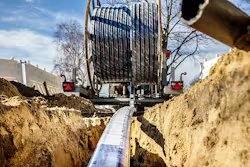
Community broadband construction models primarily include several types. Public-private partnerships involve collaboration between government entities and private internet service providers, where the broadband provider is responsible for designing, building, and operating the network, while local or state governments offer streamlined permitting and tax incentives. Multiple broadband providers, including Allo, Astound, and Surf Internet, have entered into such agreements with communities like Lincoln, Nebraska; Clallam County, Washington; and Troy Grove, Illinois, to bring broadband to areas with limited service options. In the municipal broadband model, communities with their own electric utilities have an advantage. Communities that operate electric utilities, such as Elberton, Georgia; Wyandotte, Michigan; and Fort Collins, Colorado, have added broadband to their list of services for consumers and businesses. Some municipalities choose to build infrastructure and then lease it to others, such as Merrimack, Massachusetts, which partnered with Ripple Fiber to provide fiber optic internet service to 3,000 households. The open-access model involves a single entity owning physical infrastructure like fiber optics and leasing it to multiple competing internet service providers. Superior, Wisconsin, built its own open-access network due to a lack of willingness from traditional service providers. The smart city model leverages the Internet of Things, artificial intelligence, and data analytics to improve efficiency. Tucker, Georgia, partnered with Comcast Smart Solutions to upgrade its lighting infrastructure. Chesapeake, Virginia, selected Boldyn Networks to build a wireless network and constructed a network consisting of 175 miles of fiber and 160 miles of conduit, leasing excess fiber capacity to local broadband providers.
Broadband construction cases in these communities include the Smart Schools initiative in Lincoln, Nebraska; the Broadband Activation Project in Clallam County, Washington; the hybrid smart city network in Chesapeake, Virginia; the transition from coaxial cable to fiber in Elberton, Georgia; the enhancement of fiber service competitiveness in Fort Collins, Colorado; the open-access fiber network in Superior, Wisconsin; the fiber broadband deployment in Troy Grove, Illinois; real-time analysis of the trail system in Tucker, Georgia; and the device orchestration balancing solution in Wyandotte, Michigan.
Related Products


G.652.D Wavelength-extended Non-dispersion Shifted Single-mode Optical Fiber
HONGAN GROUP CO., LTD.

Automatic Aiming Laser Remote Obstacle Removal Robot
Pinggao Group Weihai High-Voltage Apparatus Co., Ltd.

20 Inch 1600*900 Full HD 60Hz TFT LED Monitor with VGA and DP Interfaces for Desktop Computers-Business Use
Guangzhou Zanying Optoelectronics Technology Co., Ltd.


GYTA Type Non-Self-Supporting Aerial/Duct Optical Cable
TONGDING INTERCONNECTION INFORMATION CO., LTD.

Mine Explosion-proof and Intrinsically Safe Industrial Ethernet Ring Network (10 Gigabit/Gigabit)
Chongqing Mas Sci&Tech Co., Ltd.