U.S. Dredging Industry Executes $1.8 Billion in Projects and Builds New Dredgers
en.Wedoany.com Reported - U.S. dredging industry operators are expanding their fleets by introducing more diverse equipment to adapt to different types of work, replacing old equipment with more efficient new technologies, and adopting processes for remote access and operation of equipment. Bill Wetta, Senior Vice President of Product Development and Chief Technology Officer at DSC Dredge LLC (headquartered in Reserve, Louisiana), stated that the basic design of dredgers has remained unchanged for a long time, with the biggest trend being a reduction in crew onboard or achieving unmanned operations. He added that thousands of dredgers can be operated, troubleshot, and assisted with positioning via mobile phones.
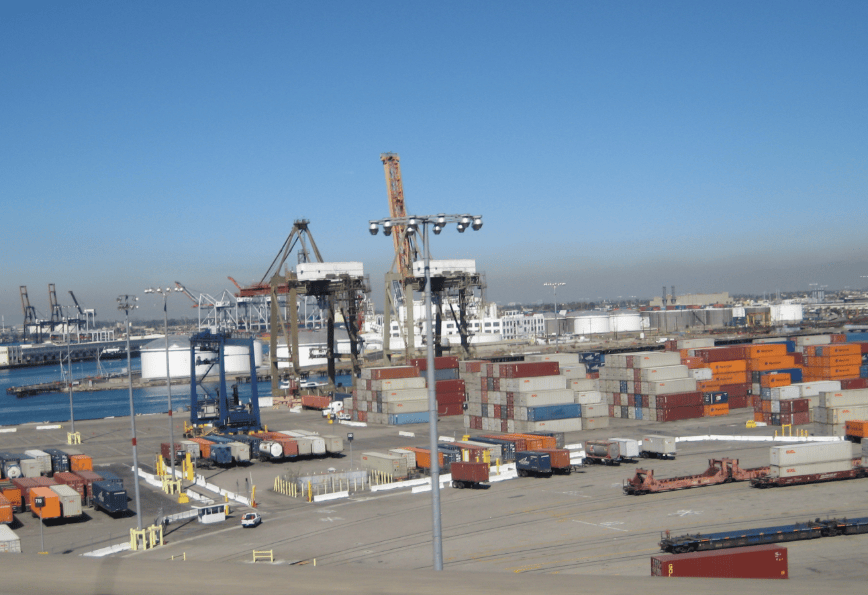
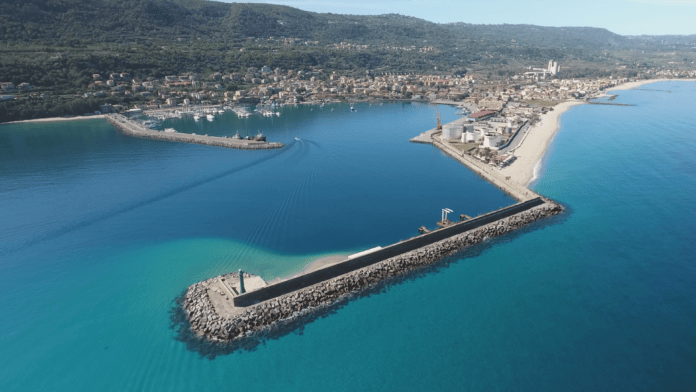
In 2025, the North American dredging industry, composed of operators qualified under the Jones Act, remains a competitive market. According to The U.S. Dredge Report, U.S.-based companies executed $1.8 billion in federal dredging projects. The report noted that major deepening and widening projects were carried out in 2024 in Norfolk, Virginia; Brazos Island and Sabine Pass, Texas; and Mobile, Alabama. Fiscal year 2025 marks a transition period: large-scale channel expansion projects are decreasing, while the core business of maintenance dredging remains stable, providing safer transportation conditions for U.S. waterborne commerce. Additionally, demand for beach nourishment, flood control, and wetland restoration projects has surged in response to climate change impacts. Many projects by the U.S. Army Corps of Engineers include beneficial use, utilizing dredged sand to rebuild coastlines, with 74% of projects recycling materials. Environmental dredging—specifically removing contaminated sediment from rivers and lakes—has become a significant and growing sector in the United States and Canada.
William Doyle, CEO of the Dredging Contractors of America (DCA), stated that 56 companies secured engineering contracts, and the Jones Act framework is fostering genuine competition, creating value for taxpayers while maintaining a strong domestic industrial base. He added that the same fleet is crucial to the national security of the United States and its economy, ensuring that military facilities and port gateways remain open, reliable, and resilient.
According to The U.S. Dredge Report, trailing suction hopper dredgers and clamshell dredgers accounted for 34% of total work volume, with contract values reaching $608.5 million. While this is a decline from the peak in fiscal year 2024, it remains consistent with long-term averages. Each project had an average of three bidders, and the report stated that the competitive environment saved the federal government $773 million, averaging 26% savings per project. Approximately 63% of projects were awarded below government estimates, with 68 projects coming in more than 10% below estimates. Doyle noted that these results underscore how the Jones Act provides opportunities for small businesses to remain competitive, with $294.6 million in dredging work awarded to small businesses through 135 projects in 2025.
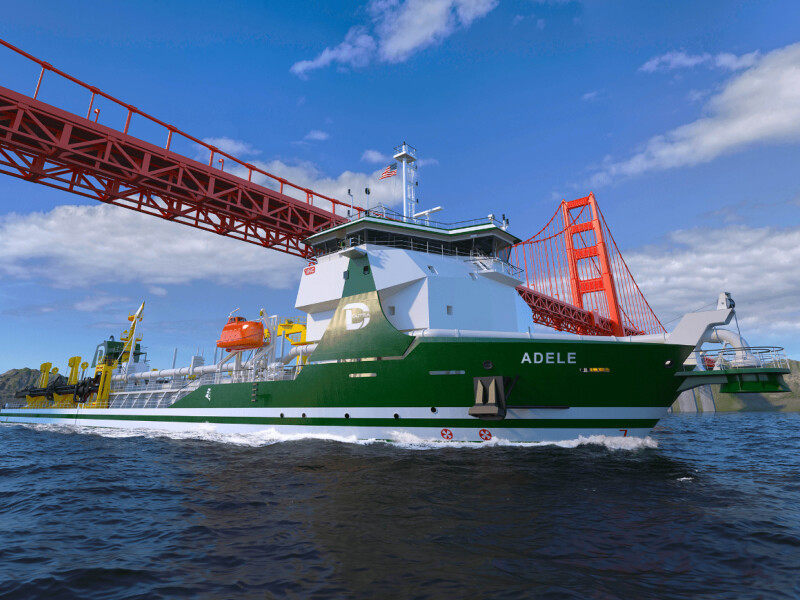
Eastern Shipbuilding Group Inc. (ESG), based in Panama City, Florida, launched two major dredger projects in 2025, beginning construction on two trailing suction hopper dredgers—one for Dutra Group of San Rafael, California, and another for the U.S. Army Corps of Engineers. The dredger "Adele" is a 10,464-cubic-yard trailing suction hopper dredger, named after Adele Coelho, the mother of Dutra Group founder and chairman Bill T. Dutra. The vessel is a 347 ft × 79 ft 6 in × 37 ft twin-screw ship, based on the Royal IHC Beagle Mk2 design from Kinderdijk, Netherlands. The hopper features a V-shaped cross-section with bottom doors at the base for easy discharge of dredged material and is equipped with a bow coupling device for more efficient material pumping. The hull has a bulbous bow, which helps reduce resistance and improve fuel efficiency. Accommodations and the wheelhouse are located forward, with the wheelhouse featuring separate navigation and dredging consoles. The vessel has a total power of 13,290 hp. Upon delivery, the "Adele" will join the Dutra fleet, operating alongside the 9,870-cubic-yard trailing suction hopper dredger "Stuyvesant," which has been in service since 1981. The company also operates grab dredgers and cutter suction dredgers.
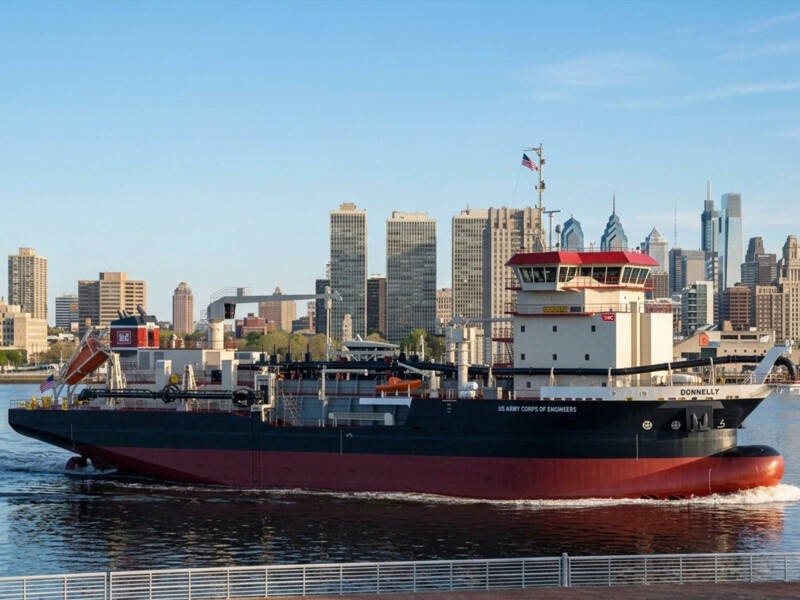
Eastern is also collaborating with the Corps of Engineers to build the new medium-class trailing suction hopper dredger "Donnelly." This vessel is a 320 ft × 72 ft × 28 ft trailing suction hopper dredger, with construction starting in April 2025, expected delivery in 2027, and planned commissioning in federal fiscal year 2028. The "Donnelly" will replace the 57-year-old "McFarland" (318.9 ft × 73.9 ft × 32.9 ft), one of four oceangoing trailing suction hopper dredgers owned and operated by the Corps of Engineers. The vessel is named after Ray Donnelly, a former resource management chief for the Corps' Philadelphia District, who played a key role in analyzing the Corps' trailing suction hopper dredger fleet, assessing recapitalization needs, and overseeing the financial management of the "McFarland." Its draft ranges from 11 ft 3 in light to 25 ft 6 in loaded, with a capacity of up to 6,000 cubic yards of dredged material. It operates using two trailing suction pipes at a maximum depth of 65 ft, accommodates 26 crew members, and has an endurance of approximately 18 days. The diesel-electric propulsion system includes one 3,150 hp Wabtec 12V250MDC engine and two 2,250 hp Wabtec 8L250MDC engines, delivering power to two Schottel SRP 460 L drives, each equipped with a 98.4-inch fixed-pitch four-blade stainless steel propeller driven by a 1,800 kW electric motor. Forward, it is fitted with two 375 kW Schottel STT 1 tunnel thrusters with 49-inch fixed-pitch impellers. The estimated speed is about 12 knots light and 10 knots loaded. Auxiliary power includes one Cummins QSB7-DM emergency generator rated at 120 kW. The steel hull is longitudinally framed and built to ABS 2023 Rules for Building and Classing Vessels, suitable for unrestricted navigation, including notations for trailing suction hopper dredgers and advanced control and automation systems. Dredging equipment includes two trailing suction pipes with gantries, dragheads equipped with hydraulically driven visors and turtle exclusion devices, and two electric high-efficiency dredge pumps (model HRCS 156-33-65) with a suction diameter of 25.6 inches and a sphere diameter of 13.8 inches. A Plumigator anti-turbidity overflow system will be used to reduce environmental impact during operations. Dredging functions will be managed by an IHC Mission Master automated dredging system and integrated control monitoring system, along with a full set of navigation and communication equipment provided by Royal IHC.
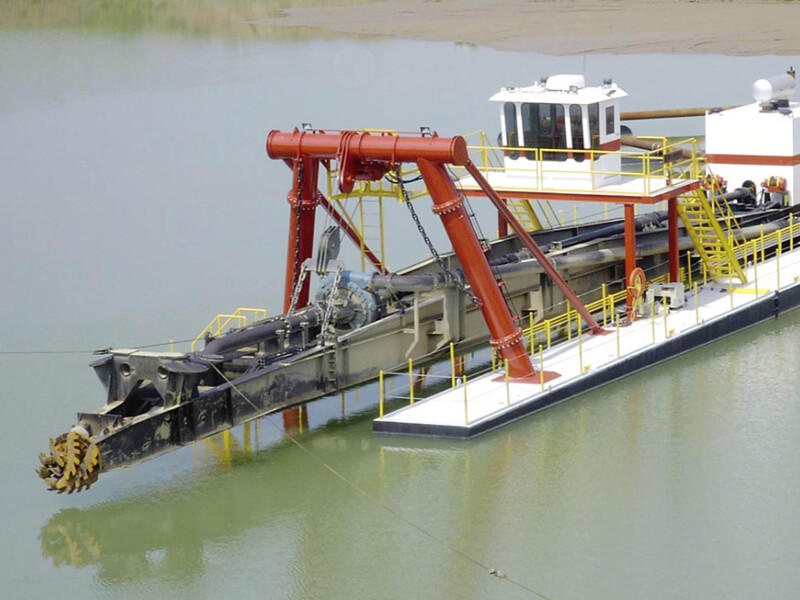
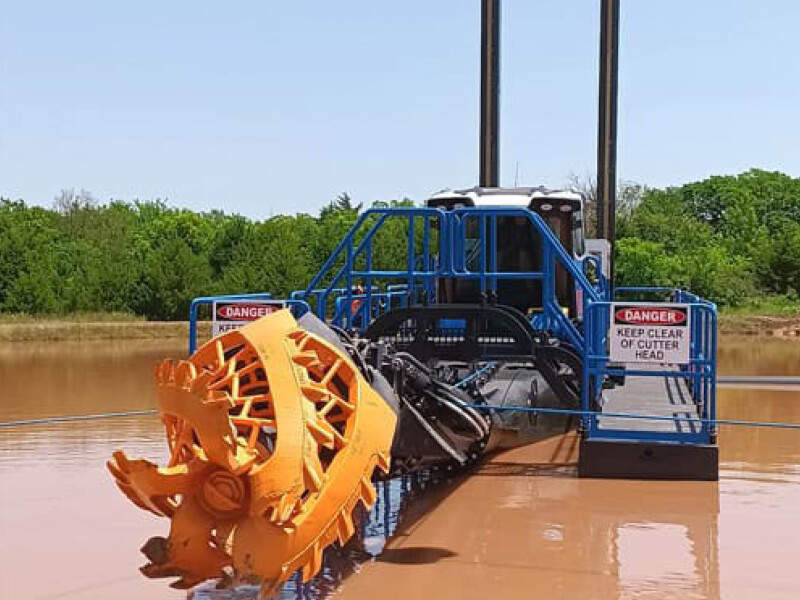
The portable dredger market is a key factor in the industry's continued growth. Baltimore-based Ellicott Dredge Enterprises LLC owns three portable dredger brands: Ellicott, Mud Cat, and IMS. Philip Grove, Director of Business Development for the parent company, stated that the company has seen growth in both Ellicott cutter suction dredgers and Mud Cat and IMS auger units. Despite supply chain disruptions and international trade volatility, the portable dredger market is thriving. To improve efficiency, Ellicott has consolidated operations at two shipbuilding locations, developed proprietary and patented dredging components, and adopted emission-compliant diesel engines and modern "digital dredging" features, including GPS-guided precision operations, remote monitoring, and real-time data diagnostics. DSC Dredge builds to order, specializing in dredging equipment with pipe diameters ranging from 8 inches to 24 inches. Company owner Wetta stated that DSC's equipment is mostly portable, can be disassembled and transported by land; a truck carrying a portable dredger can travel at 55 mph, whereas barges typically travel at only 6 to 10 mph, saving significant time and efficiency. When shore power or site power is available, DSC operates dredgers via the grid to reduce direct emissions. The company built a 24-inch dredger for a client that can run on its own diesel generator set or plug into the grid. DSC is also considering natural gas and liquefied natural gas (LNG) as potential fuel options. In terms of precision guidance for dredging equipment, advancements have been made in multibeam sonar technology, and operations can be controlled via buttons, seats, or even voice. Satellite-based communications allow the company to remotely access equipment, using Starlink services beyond cellular network coverage. DSC provides one year of free Starlink service for the equipment it sells, with an annual fee of less than $2,000 thereafter. VMI recently introduced the Titan 8 and Titan 10 cutter suction dredgers, featuring modular designs that can be secured using anchors or spuds. Optional equipment includes suction valves and density meters. Maximum digging depths for the two models range from 20 ft to 51 ft 3 in. The Titan 8 has a dry weight of 5,385 lbs to 82,665 lbs, and the Titan 10 has a dry weight of 56,380 lbs to 87,810 lbs. Power options from Caterpillar, John Deere, and Cummins range from 375 hp to 536 hp.
Related Products



Industrial and Commercial Point-Type Gas Detector
Jinan Benan Technology Development Co., Ltd.

YHTank8400N Solvent-Free Liquid Epoxy Coating
JIANGSU YUNHU NEW MATERIAL TECHNOLOGY CO., LTD.
Acoustic Mineral Fiber Ceiling Tile 595x595x12mm
Shanxi Pano Trading Co., Ltd
Pure Polyurethane Wall Panel BD-AEF-PIR-01
Baodu International Engineering Technology Co., Ltd.
ERW Welded Pipe (Black Pipe and Hot-dip Galvanized Steel Pipe)
Handan Zhengda Steel Pipe Co., Ltd.