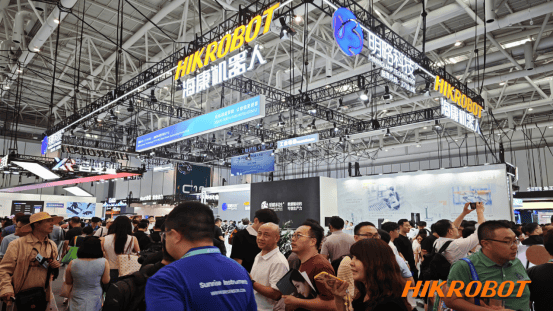
Chinese Embodied Intelligence Company Reconova Lists in Hong Kong, Raising HK$529 Million
en.Wedoany.com Reported - On July 8, 2026, Reconova (07656.HK) officially listed on the Main Board of the Hong Kong Stock Exchange, becoming the first company positioned as a "visual embodied intelligence" enterprise to list under Chapter 18C of the Hong Kong Exchange's listing rules for specialist technology companies. The IPO offered a total of 28.087 million shares, with net proceeds of approximately HK$529 million. The Hong Kong public offering was oversubscribed by 3,646.06 times, while the international offering was oversubscribed by 3.08 times. No cornerstone investors or over-allotment options were arranged.

Founded in Xiamen in 2012 by Zhan Donghui and four partners from Huawei, Reconova has focused on three major scenarios over its 14-year history: civil aviation, commercial spaces, and safe driving. According to Frost & Sullivan, based on 2025 revenue, the company ranked first in China's civil aviation enterprise visual intelligence product market, with a market share of 8.7%, covering two-thirds of China's hub airports with annual passenger throughput exceeding 10 million. Over 90% of smart access products at Beijing Daxing International Airport and Beijing Capital International Airport come from Reconova. In the commercial space sector, its Xinghan commercial system has been deployed in over 60 large shopping malls nationwide, ranking fourth in market share. In the safe driving sector, the Recadas safety risk management platform serves over 500,000 long-haul trucks.
Financial data shows that from 2023 to 2025, the company's revenue increased from RMB 242 million to RMB 443 million, with a compound annual growth rate of 35.2%; gross profit rose from RMB 98.82 million to RMB 167 million, with gross margins improving across all business segments. Notably, the gross margin for the civil aviation business jumped from 51.8% to 59.2%. The business structure has also been reshaped, with the combined revenue share of smart commercial and smart safe driving businesses rising from 46% to 61.1%. Smart commercial revenue grew from RMB 81.181 million in 2023 to RMB 154 million in 2025, a year-on-year increase of 59.3%; smart safe driving revenue increased from RMB 30.373 million to RMB 116 million, a year-on-year increase of 68.0%. The company has shifted from relying solely on the civil aviation scenario to a diversified, synergistic growth model.
In terms of technology approach, Reconova adopts a strategy of "building the brain first, then adding limbs," with its technology system described as a three-layer architecture: "foundation technology—fusion technology—component technology." The underlying foundation technology encompasses self-developed computer vision algorithms, optical imaging control, and large-scale datasets. The intermediate fusion technology achieves collaborative optimization of algorithms, optics, hardware, and data through AI-ISP and multi-sensor fusion. The top-level component technology outputs modular capabilities such as cognitive decision-making engines, optical imaging systems, interactive execution units, and data middle platforms. Based on this, the company has developed three visual intelligent agents: RecoSee, RecoAware, and RecoThink, corresponding to the three intelligence levels of "seeing clearly," "understanding," and "thinking."
Regarding R&D investment, from 2023 to 2025, the company's R&D expenditures were RMB 46.636 million, RMB 53.136 million, and RMB 71.898 million, respectively, accounting for 16.2% of revenue. As of December 31, 2025, the company held 188 registered patents and 128 software copyrights, and led or participated in the formulation of 22 artificial intelligence national standards. In April 2025, the national standard "Information technology—Extensible biometric data interchange formats—Part 1: Framework," led by Reconova with participation from the China Electronics Standardization Institute, was officially released.
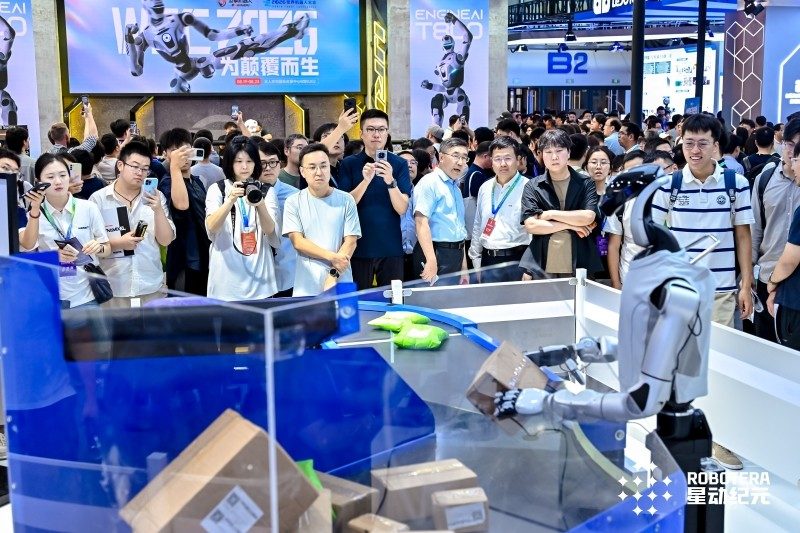
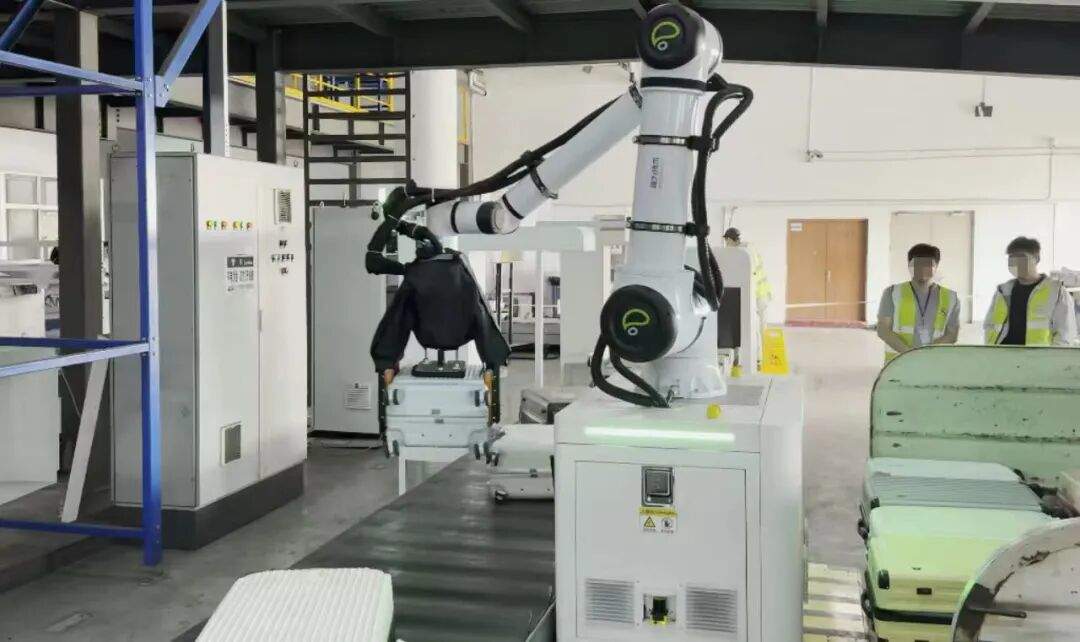
In terms of embodied intelligence products, Reconova launched the "Xiao Yi" airport luggage transfer robot in September 2025. This product is based on the self-developed VTFLA embodied intelligence technology architecture, integrating multimodal capabilities such as vision, language, action, touch, and force sensing. It features a self-developed flexible suction cup system that combines visual intelligence with force feedback to dynamically calculate grasping postures. In April 2026, the company iteratively launched the VTFLA end-to-end embodied large model, integrating visual, tactile, and force multimodal input perception on top of the traditional VLA framework. The prospectus disclosed that development of a wheeled dual-arm robot has been initiated, with a planned launch in 2027 and commercialization in 2028.
Regarding the overseas expansion strategy, the prospectus stated that approximately 10.4% of the net proceeds from this offering will be used to enhance marketing capabilities and expand overseas sales channels, with a target of overseas revenue exceeding domestic revenue within 3 to 5 years. The initial strategy focuses on top-tier airports in the Middle East (Doha, Dubai) and Southeast Asia (Singapore), followed by expansion into the long-tail market. Meanwhile, the "Xiao Yi" product will directly expand into the European and Japanese markets, using a hardware format to mitigate data compliance risks.
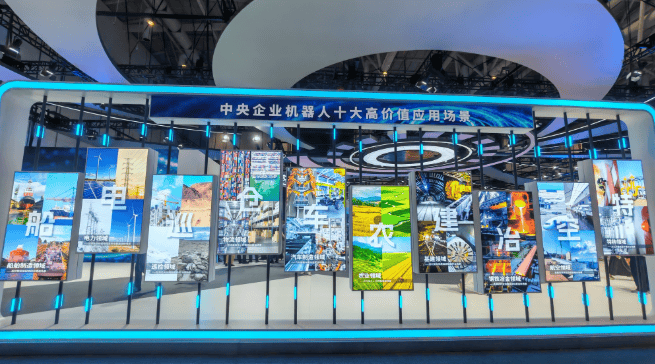
In terms of post-listing strategic planning, the prospectus shows that approximately 55.8% of the proceeds will be used to enhance R&D capabilities and product offerings, and approximately 26.3% will be used to establish production bases for in-house manufacturing, assembly, and testing of hardware and systems. The company's positioning for the next decade is as a productivity-focused commercial robot company, concentrating on product lines for material handling, depalletizing and palletizing, and specialized scenarios (solar photovoltaic, wind power), without involving humanoid robots or consumer-oriented household robots.
Related Products

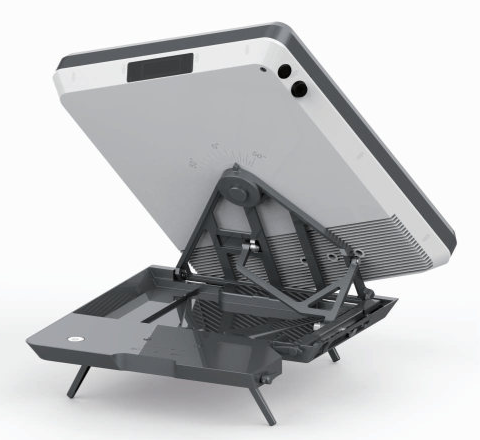
Flat Portable Satellite Terminal 0.35m Aperture Manual Portable Terminal
China Starwin Science & Technology Co., Ltd.
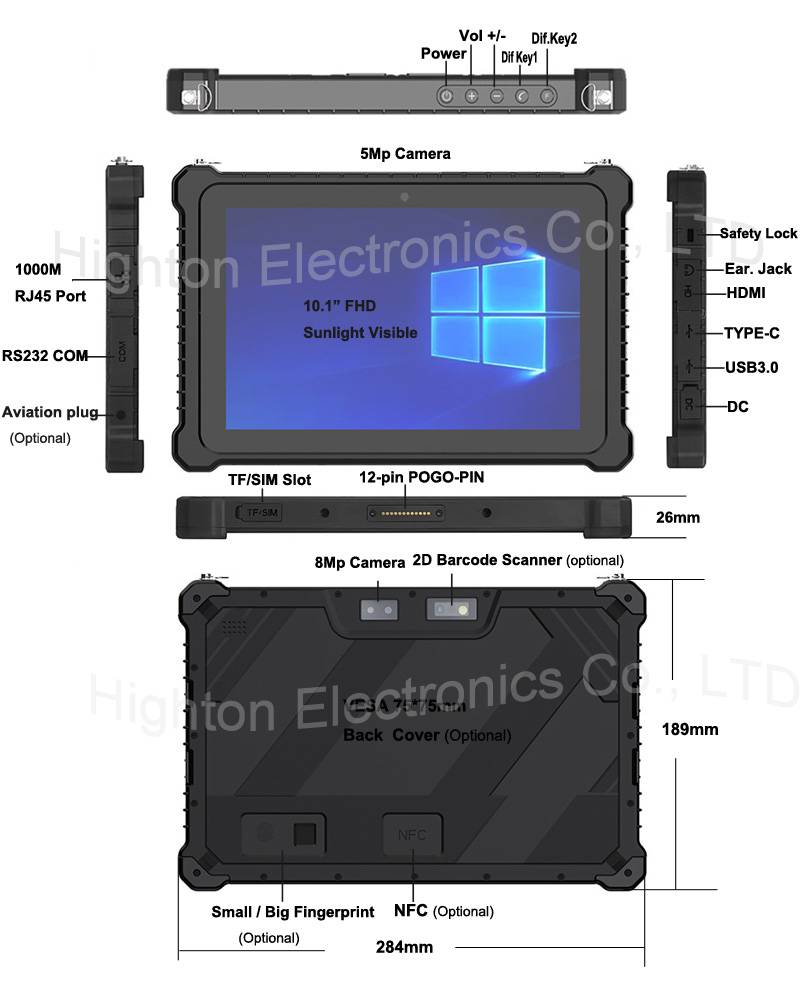
Hot Selling 10 Inch Intel N5100 I5 I7 FHD 8 +128GB 16+256GB Win10 Pro Win11 Pro 4G 5G Rugged Tablet PC Pad with NFC Barcode
Highton Electronics Co., Ltd.

Industrial and Commercial Point-Type Gas Detector
Jinan Benan Technology Development Co., Ltd.
Automatic Aiming Laser Remote Obstacle Removal Robot
Pinggao Group Weihai High-Voltage Apparatus Co., Ltd.