en.Wedoany.com Reported - Iraq has recently been pressuring the Organization of the Petroleum Exporting Countries (OPEC) to increase its production quota, a move that has raised market concerns about the effectiveness of OPEC's internal coordination mechanisms. As a founding member of OPEC, Iraq has long been plagued by civil war, sanctions, and terrorist attacks, severely damaging its energy industry. Baghdad believes that the current production quota does not reflect the country's actual capacity and reconstruction needs. The International Energy Agency estimates Iraq's technical capacity at approximately 4.9 million barrels per day, while OPEC's official quota allocated to it for July 2026 is only 4.4 million barrels per day. Iraq expects its capacity to reach 7 million barrels per day by 2026.
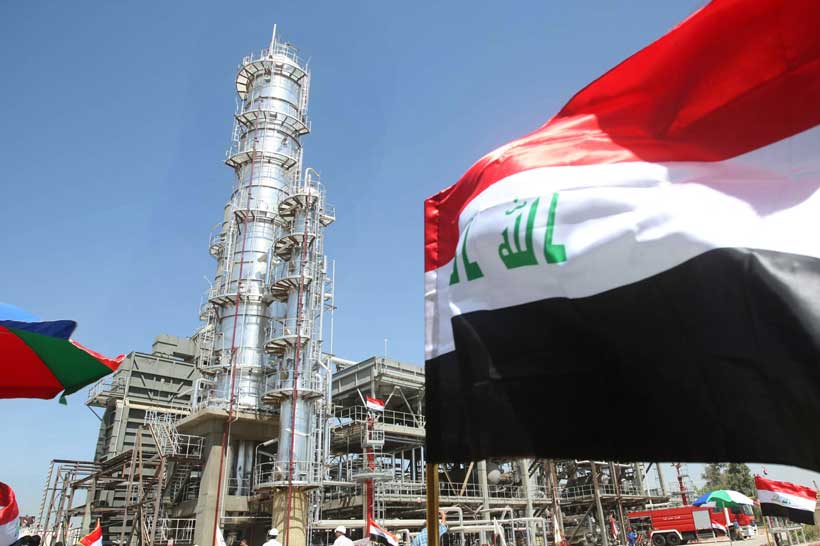
A key trigger for this crisis was the UAE's formal withdrawal from OPEC on May 1 of this year. Abu Dhabi chose to abandon cartel constraints to maximize the economic benefits of its energy reserves, a precedent that has exacerbated Iraq's dissatisfaction with its own quota. Iraq relies almost entirely on maritime exports via the Persian Gulf, and disruptions to the Strait of Hormuz shipping lane have already caused severe economic losses. In May of this year, Iraq's export volume sharply declined to 1.5 million barrels per day.
Saudi Arabia, as the de facto leader of OPEC, has borne the brunt of production cuts. To finance mega-projects under its "Vision 2030" plan, the country's fiscal breakeven oil price for crude demand stands at $108 to $111 per barrel, limiting its ability to punish Iraq by flooding the market with crude. Mizuho Securities warns that if Iraq exits and triggers a price war, excess oil on the market could drive prices below $50 per barrel.
Against this backdrop, Turkey has urged Iraq to increase crude oil exports via the Kirkuk-Ceyhan pipeline to 1.5 million barrels per day by July 27, in order to reduce dependence on the Strait of Hormuz. Major international oil companies such as BP and TotalEnergies are planning investments of up to $25 billion and $10 billion, respectively, in Iraq, hoping to profit from the country's vast output while requiring a stable operating environment. Iraq's newly developed export route to Turkey's Ceyhan port is reshaping its over-reliance on the Persian Gulf shipping lane.