India's Mahindra plans to launch 6 electric vehicles by 2031
en.Wedoany.com Reported - Mahindra Group adopts an "attack mode" strategy to accelerate development cycles, focus on high-end positioning and innovation, and drive its global electric vehicle business competition.
In a letter to shareholders at the annual general meeting, Mahindra Group Chairman Anand Mahindra explained that "attack mode" is a strategy in Formula E racing, where drivers choose to accelerate at the right moment under imperfect conditions. He noted that overtaking is difficult under ideal conditions because all drivers are going full speed. For Indian companies with ambitious global aspirations, including Mahindra's own automotive (including electric vehicle) business, this approach may be what is needed now.
In the new era of industry, achieving sustainable growth demands higher requirements for innovation and speed. As Indian automakers seek a stronger global presence, comparisons with Chinese manufacturers or "China speed" are becoming increasingly frequent. R Velusamy, Managing Director of Mahindra Electric Automobile Limited and President of the Automotive Business at Mahindra & Mahindra, believes that Indian automotive companies need to benchmark not only in technology but also in execution. In his view, three capabilities will determine long-term competitiveness: product quality (covering fit, finish, craftsmanship, and overall customer experience), development speed, and the ability to deliver compelling value for money.
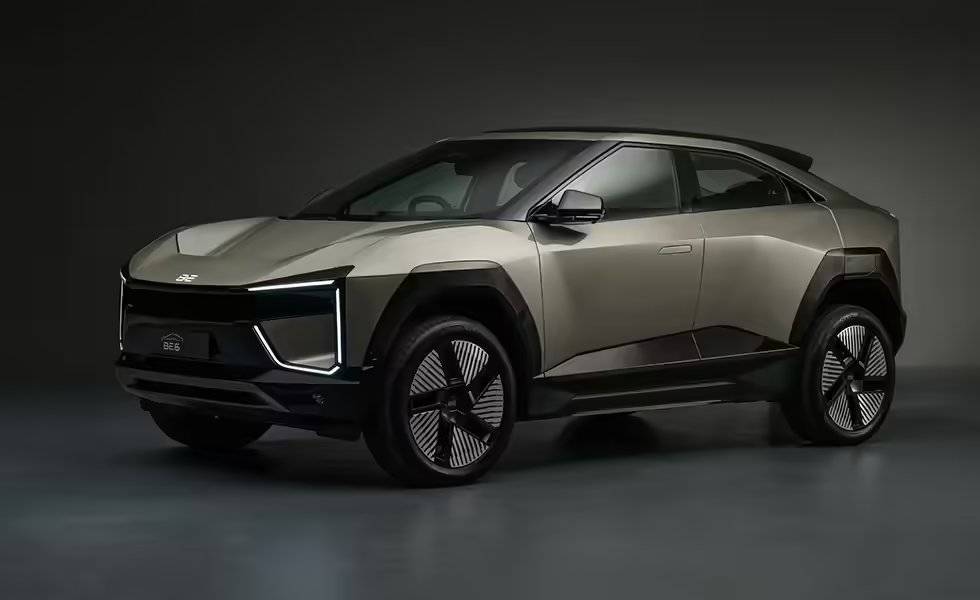
Velusamy stated that Chinese manufacturers have significantly shortened product development cycles and update existing models at a pace that forces global automakers to rethink traditional timelines. Understanding and responding to this speed is crucial. Mahindra itself has attracted industry attention in recent years by compressing the development timeline for its electric SUV projects. During his previous tenure as President of Technology and Product Development, Velusamy led the team to develop Mahindra's first native electric SUVs—the BE 6 and XEV 9e—within three years. When asked whether the company's new benchmark should reach "China speed," Velusamy responded that the next benchmark would be announced when achieved. Mahindra plans to launch six new electric vehicles by 2031.
While the Indian passenger electric vehicle market may still account for a small share of overall car sales, for Mahindra, this transformation has begun to reshape the brand's image. The domestic SUV manufacturer stated that the vast majority of customers choosing its new-generation native electric SUVs are first-time Mahindra buyers, indicating that its high-end EV strategy is helping the company transcend its traditional utility vehicle customer base and compete with buyers who might otherwise consider global or luxury brands. Velusamy noted that these products are priced above 250,000 rupees, and the company is transforming Mahindra from a typical "utility vehicle" brand into a player in the luxury segment. These comments preliminarily suggest that Mahindra's investment in the INGLO-based native electric platform is beginning to reshape the brand's market positioning. Unlike earlier electric products, the BE 6 and XEV 9e were conceived as technology-driven high-end SUVs, targeting buyers seeking software-rich, feature-intensive products, and have led the company's software-defined vehicle journey.
Velusamy's comments come as the Indian passenger electric vehicle market has significantly improved after a relatively sluggish period last year. Driven by new product launches, improvements in charging infrastructure, and enhanced consumer confidence, electric passenger car sales have regained momentum in recent months, with industry growth significantly outpacing the overall passenger vehicle market. Mahindra believes the ecosystem has reached an inflection point, with electric vehicles accounting for an estimated 9% of the overall passenger vehicle market. According to research data from the Federation of Automobile Dealers Associations (FADA), retail sales in the Indian electric passenger vehicle market in June this year grew 108% year-on-year, compared to a base of 15,318 units in June last year. Mahindra's retail sales were 7,766 units, with a market share of 25%, ranking second. Velusamy believes that the overall ecosystem has matured significantly over the past few years, and geopolitical developments affecting fuel prices, along with continued government support for electrification, have further boosted consumer confidence.
For Mahindra, the current challenge is less about creating demand and more about meeting it. The company produces approximately 6,500 to 7,000 native electric SUVs per month and expects production to exceed 8,000 units in the near term as manufacturing operations stabilize. Although its electric vehicle plant in Chakan has an annual production capacity of 200,000 units, about 120,000 units are currently in use. Velusamy stated that the company cannot supply enough to the market. Unlike traditional capacity expansion plans, Mahindra's production ramp-up is closely tied to its universal INGLO electric architecture, and as production volumes for this platform increase, manufacturing efficiency and component economies are also expected to improve.
Velusamy believes the biggest change lies in the type of customers Mahindra now serves. Unlike traditional SUV buyers, high-end electric vehicle customers may expect frequent software updates, seamless digital interfaces, connected services, and continuous feature enhancements. Customer feedback from this new owner group has been fed back into future product development. The company views this as an ongoing learning process rather than a one-time product launch. Continuous improvement on a foundation of good quality is also crucial for Mahindra's success in expanding into international electric vehicle markets. Mahindra has previously outlined its ambition to build an international high-end SUV business, expecting electric vehicles to play a significant role in this strategy in the coming years, and considers the UK as one of the key overseas markets for its electric vehicles.
For Mahindra, electrification serves a larger strategic purpose than merely participating in a new propulsion technology segment. The company's native electric program is helping to reposition the brand in the premium mobility space, attract new customer segments, and build capabilities for software-led vehicle development—all while preparing for a future where global competitiveness is determined by both execution speed and engineering excellence.