Food and Agricultural Sorting Is Becoming a Quality Recognition System
en.Wedoany.com Reported - In food processing, fruit grading, grain screening, nut sorting, seafood processing and agricultural product processing, Intelligent Sorting Machines are moving beyond simple size grading. They are becoming quality recognition systems that can identify color, shape, defects, foreign materials and product differences.
As consumers and retailers demand higher food safety, better appearance and more consistent quality, food manufacturers are adopting automated sorting to improve standardization. Traditional food sorting often depends on manual inspection and mechanical screening. Manual sorting is flexible, but it is limited by efficiency, consistency and hygiene control. Mechanical screening is useful when material size differences are clear, but it cannot fully identify color defects, mold, insect damage, breakage, foreign objects or maturity differences.
Intelligent sorting equipment uses high-speed cameras, spectral detection, laser recognition, X-ray inspection, weight sensing and AI image analysis to make more detailed judgments. In fruit and vegetable sorting, machines can classify products by size, color, surface defects, shape and maturity. In nuts and grain processing, they can remove discolored kernels, moldy grains, stones, glass, metal and other impurities. In meat and seafood processing, X-ray and vision systems can help detect bones, foreign objects and size differences.
For export-oriented food companies, stable sorting quality is also connected with customer inspection, food safety certification and brand reputation. A small amount of contamination or inconsistent grading can affect shipment acceptance and downstream processing efficiency.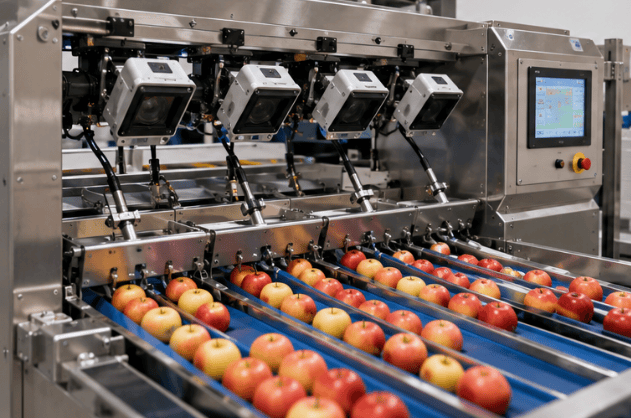
The main challenge is material complexity. Food and agricultural products have natural variation. They may be irregular in shape, different in color, wet on the surface or reflective under lighting. Production environments may also include dust, oil, moisture and temperature variation. Sorting machines therefore need not only strong recognition capability, but also hygienic design, suitable protection levels, safe food-contact materials and easy maintenance.
In the future, food sorting equipment will develop toward higher precision, greater flexibility and better data integration. Machines will not only sort accurately. They will record batch quality, track defect ratios, analyze raw material differences and connect with production management systems. For food processors, intelligent sorting is not only a labor-saving tool. It is an important part of quality control, loss reduction and traceable production.
Related Products

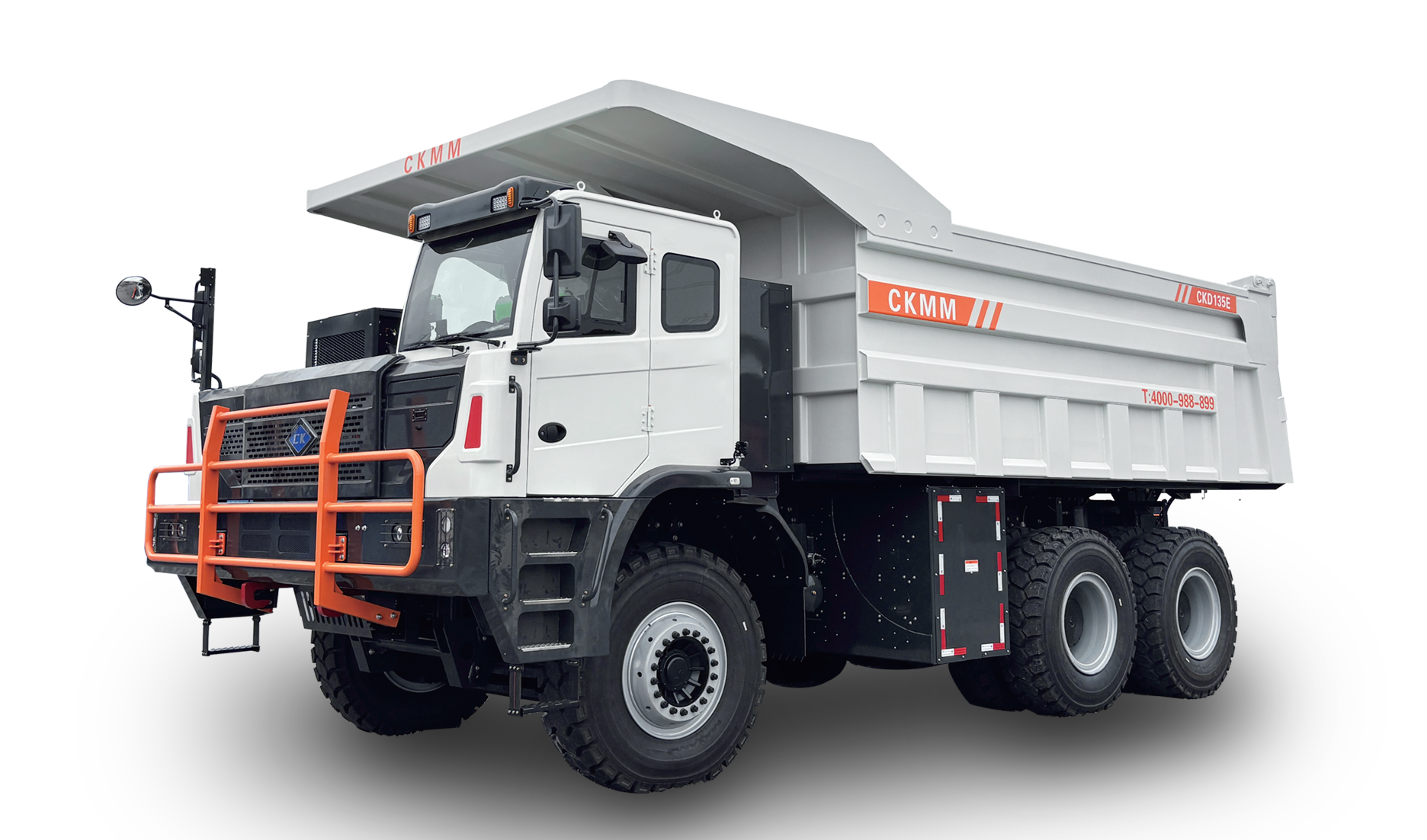
CKD135E Pure Electric Wide-body Dump Truck
Jiangsu Changkuang Engineering Machinery Co. Ltd.
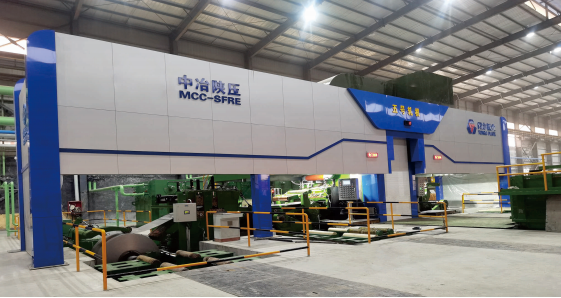
1050-1750mm Steel Strip Single-stand Reversible Cold Rolling Production Line
MCC-SFRE HEAVY INDUSTRY EQUIPMENT CO., LTD.
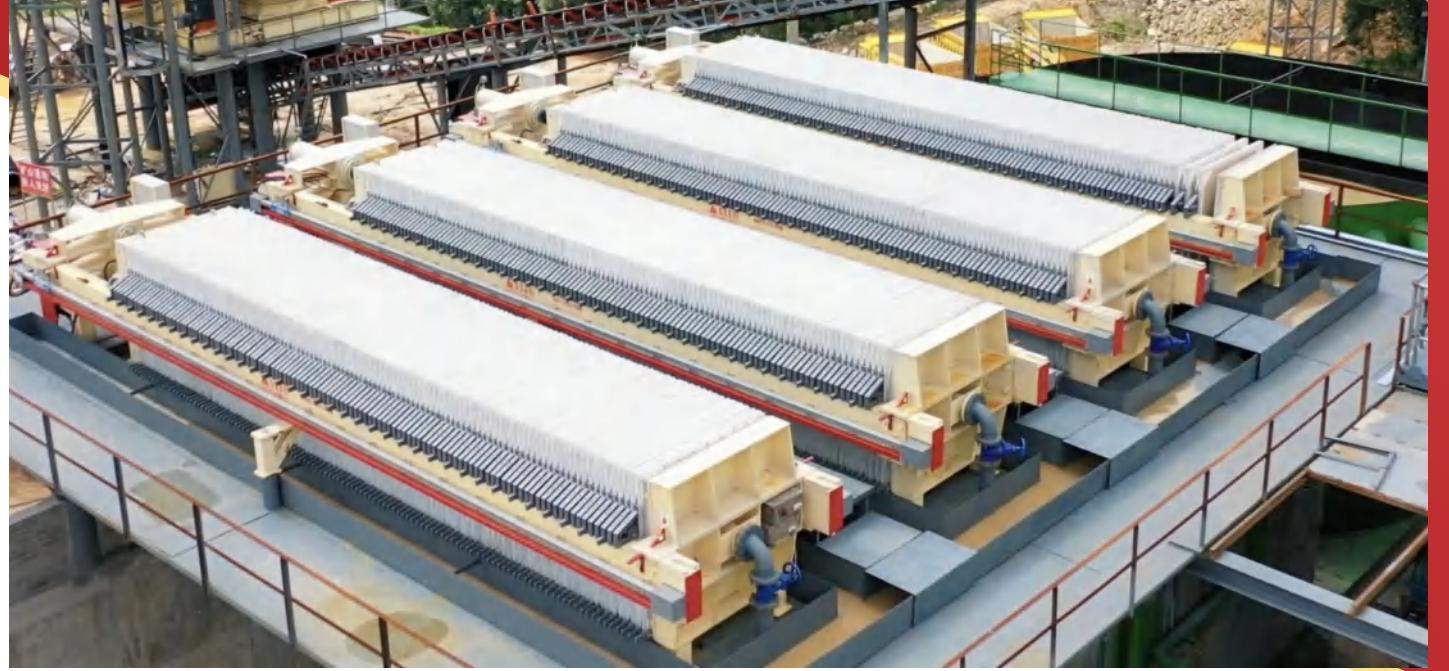
Hydraulic Plate and Frame Filter Press
Guangdong Leimeng Intelligent Equipment Group Co., Ltd.

Industrial and Commercial Point-Type Gas Detector
Jinan Benan Technology Development Co., Ltd.
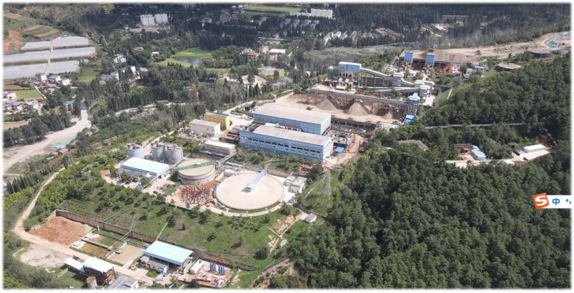
Yunnan Phosphorus Chemical Group Co., Ltd. 2 Million t/a Phosphorus Ore Mining and Beneficiation Project
China Bluestar Lehigh Engineering Corporation