United Airlines Evaluates Launching Ultra-Long-Haul Routes from San Francisco to Delhi and Bengaluru, India
en.Wedoany.com Reported - United Airlines is assessing the feasibility of launching two new ultra-long-haul routes from San Francisco International Airport (SFO) to Indira Gandhi International Airport (DEL) in Delhi and Kempegowda International Airport (BLR) in Bengaluru, India. The distances are 7,706 miles (approximately 12,401 kilometers) and 8,701 miles (approximately 14,003 kilometers), respectively. For reference, Qantas's renowned ultra-long-haul Perth (PER) to London Heathrow (LHR) route is only 300 miles (about 483 kilometers) longer than the latter.
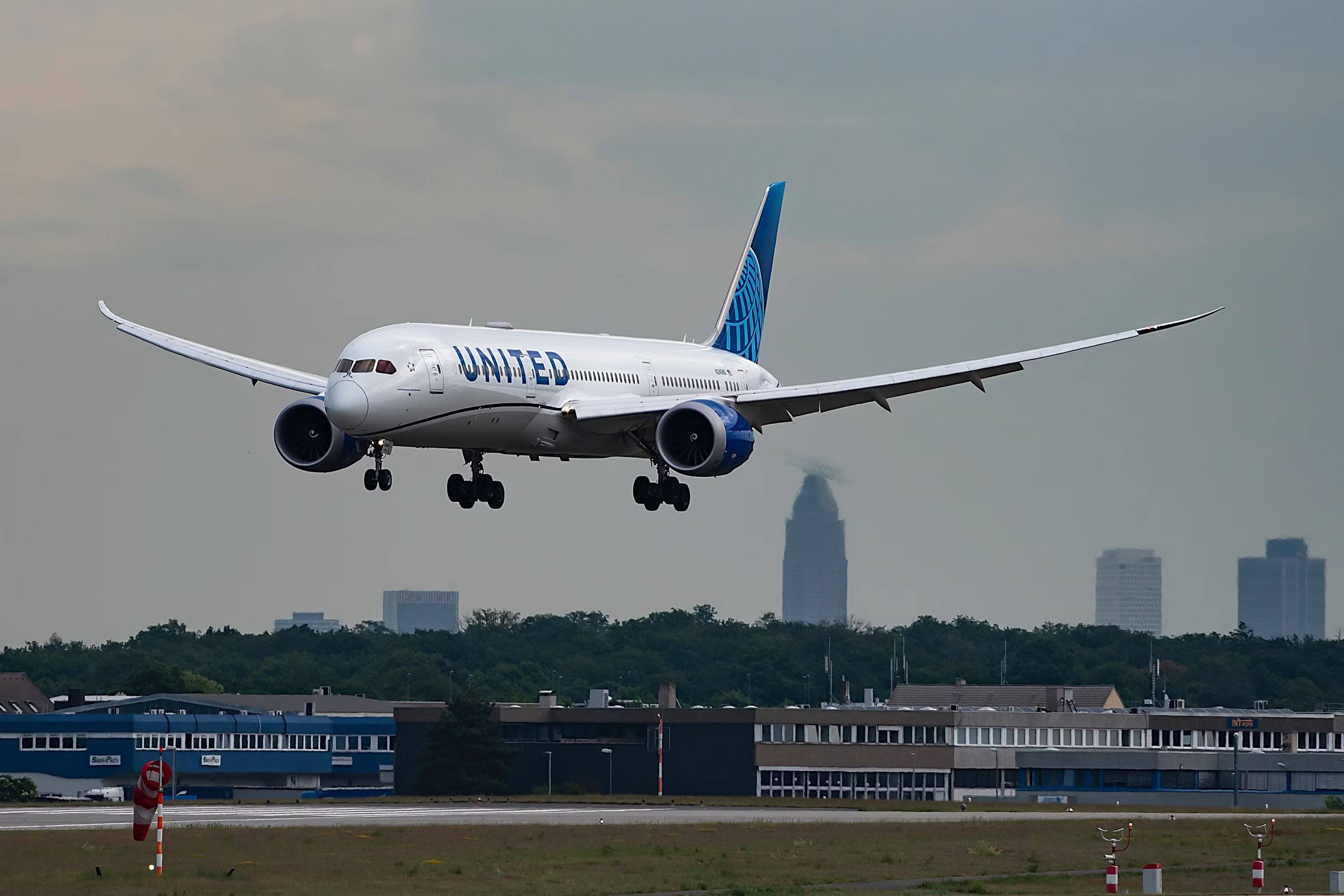
If approved, these routes would complement the existing daily San Francisco-to-Delhi flight operated by Star Alliance member Air India. That flight currently requires a stop in Kolkata (CCU) due to operational restrictions following multiple airspace closures. Previously, Air India also operated routes from Mumbai (BOM) and Bengaluru to San Francisco, but these were suspended in February of this year due to aircraft availability issues.
Currently, United Airlines operates only one U.S.-to-India route: Newark Liberty International Airport (EWR) to Delhi. This 7,324-mile (approximately 11,786-kilometer) route has been in service since 2005, with a brief interruption during the pandemic. Between 2020 and 2023, the airline also briefly operated a route from Chicago O'Hare International Airport (ORD) to Delhi. The table below lists the distances of relevant alternative routes, all great-circle distances traversing closed airspace: Newark to Delhi at 7,324 miles (11,786 km); San Francisco to Delhi at 7,706 miles (12,401 km); San Francisco to Bengaluru at 8,701 miles (14,003 km); and Chicago O'Hare to Delhi at 7,484 miles (12,044 km).
The United States and India maintain strong political, economic, and cultural ties. Over 5 million Indian-origin residents live in the U.S., forming the largest Indian diaspora globally. U.S. airlines have long viewed India as a lucrative market, but the vast distance between the two countries has historically posed challenges to the economic viability and operational feasibility of nonstop flights. New-generation efficient twin-engine jets, such as the Airbus A350 and Boeing 787, combined with increased demand driven by India's rapid economic growth in recent years, are changing this landscape. However, recent regional geopolitical tensions and subsequent capacity reductions still highlight the vulnerability of ultra-long-haul operations.
The economics of ultra-long-haul routes are extremely stringent, with strong premium demand being key to success. Fuel consumption rises sharply with weight; a 19-hour flight consumes significantly more fuel than the sum of two shorter segments. In terms of costs, European competitors like British Airways, Air France, and Turkish Airlines offer more cost-effective connections via their respective hubs. Additionally, long-haul routes require more crew members, longer rest periods, and significantly higher capital costs per flight. Yet, if direct demand is sufficiently high, revenue can cover costs, and such routes can quickly become profit engines. When premium demand is strong, fewer economy seats and lower overall weight further improve profit margins. Examples include Singapore Airlines' all-premium cabin flight from Singapore to New York JFK, and Qantas's Perth-to-Europe routes.
Delhi, as India's largest city, hosts the country's busiest airport, which is also the primary hub for Star Alliance partner Air India, boasting substantial origin and destination (O&D) traffic. Geographically, Delhi is closer than most Indian cities, helping to reduce operational challenges. However, the breakthrough may lie in the southern city of Bengaluru. In the 12 months ending October 2025, booking data shows 156,000 round trips between San Francisco and Bengaluru, with an average one-way fare of $1,600 across all cabins and airlines, indicating strong revenue potential. Only about 25% of these passengers used Air India's direct service. San Francisco and Bengaluru are closely linked through artificial intelligence (AI), deep tech, and venture capital (VC) flows, with corporate contracts generating significant business travel and revenue predictability. The Indian-American tech community, with above-average spending power, fuels visiting friends and relatives (VFR) demand, particularly for premium cabins. United Airlines is targeting this market with its new "Elevated" Polaris cabin, featuring up to 64 business class seats on the Boeing 787-9.
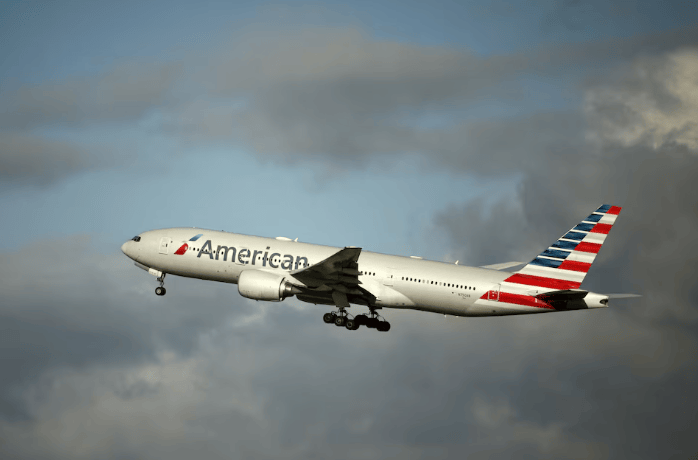
American Airlines and Delta Air Lines are also positioning themselves in the Indian market. In 2021, American Airlines resumed India service after a nine-year hiatus, operating a daily flight from JFK to Delhi using a 285-seat Boeing 787-9. The airline had planned to launch a route from Seattle-Tacoma International Airport (SEA) to Bengaluru, but it was indefinitely postponed in December 2023, primarily due to airspace closures. Delta Air Lines previously served India via direct JFK-to-Mumbai flights and European stopovers, and between 2005 and 2006, it operated a Boeing 767 route to Chennai (MAA) via Paris Charles de Gaulle Airport (CDG). Currently, Delta relies on its joint venture partners Air France, KLM, and Virgin Atlantic to transport passengers to India via their hubs. As part of a memorandum of understanding (MoU) with India's largest airline, IndiGo, Delta announced plans to launch a direct flight from Hartsfield-Jackson Atlanta International Airport (ATL) to Delhi, but no official launch date has been set. Airspace closures may impact its initiation process.
Beyond the Big Three U.S. carriers, Air India and IndiGo may also expand U.S.-India capacity in the future. Air India is awaiting the end of airspace closures, stable fuel prices, and the delivery of new aircraft, and is expected to expand its U.S. network again. IndiGo has initiated international expansion, ordering up to 60 Airbus A350-900 aircraft, with deliveries planned from 2027. However, as a low-cost carrier, it remains uncertain whether IndiGo possesses or seeks the premium demand required for ultra-long-haul routes. Among other U.S. airlines, Alaska Airlines is shifting to a Seattle-based hub operation and launching its first long-haul service, leaving open the possibility of taking over the India route that American Airlines abandoned.
Related Products


Pantograph-Catenary Comprehensive Detection Device (1C)
CHENGDU TANGYUAN ELECTRIC CO., LTD.







Industrial and Commercial Point-Type Gas Detector
Jinan Benan Technology Development Co., Ltd.

3m intelligent buoy combining navigation safety and real-time marine monitoring integrated navigation and marine monitoring system for real-time maritime data
Chengdu Dixin Technology Co., Ltd.