en.Wedoany.com Reported - SK Hynix has announced a total investment plan of 57.4 trillion won, focusing on expanding domestic semiconductor production facilities and procuring extreme ultraviolet (EUV) lithography equipment. According to the securities filing submitted by the company to the U.S. Securities and Exchange Commission (SEC), the investment funds include proceeds from the public offering of American Depositary Receipts (ADRs). Of this, 45.5 trillion won will be used to build the first-phase wafer fab of the Yongin Semiconductor Cluster and the Cheongju P&T7 advanced packaging plant, while 11.9 trillion won will be allocated to secure EUV lithography equipment.
The first-phase wafer fab (Fab1) of the Yongin Semiconductor Cluster is planned to receive 31 trillion won to expand front-end production capacity, while Cheongju P&T7 will receive 19 trillion won to enhance HBM advanced packaging capabilities. The remaining portion of the investment will be raised through operating cash flow and borrowings. The EUV equipment is scheduled to be delivered in batches by the end of next year. This strategy aims to strengthen both front-end and back-end processes simultaneously to alleviate bottlenecks in the high-bandwidth memory (HBM) supply chain.
In the traditional general-purpose DRAM market, wafer production capacity directly determines supply volume. However, HBM requires vertical stacking of multiple DRAMs and involves multiple steps such as through-silicon vias (TSV), advanced packaging, and final testing, meaning production bottlenecks can occur at any stage from front-end to back-end. As the proportion of EUV lithography processes in HBM and next-generation DRAM rapidly increases, securing advanced equipment has become a key variable affecting production capacity. Industry insiders believe that in the AI memory competition, what determines HBM supply volume and market competitiveness is no longer simply wafer output, but the balanced assurance of processes across EUV, TSV, advanced packaging, and testing.
SK Group Chairman Chey Tae-won stated that the competitive landscape of the memory industry in the AI era has fundamentally changed. At a press conference held in New York on the 10th local time, he noted that the current rate of demand growth far exceeds the rate of supply increase, and the market is no longer operating according to past cycles. He also predicted that artificial intelligence is still in its early stages, and achieving artificial general intelligence (AGI) will require extensive learning, with the trend of explosive demand growth expected to continue for a considerable period.
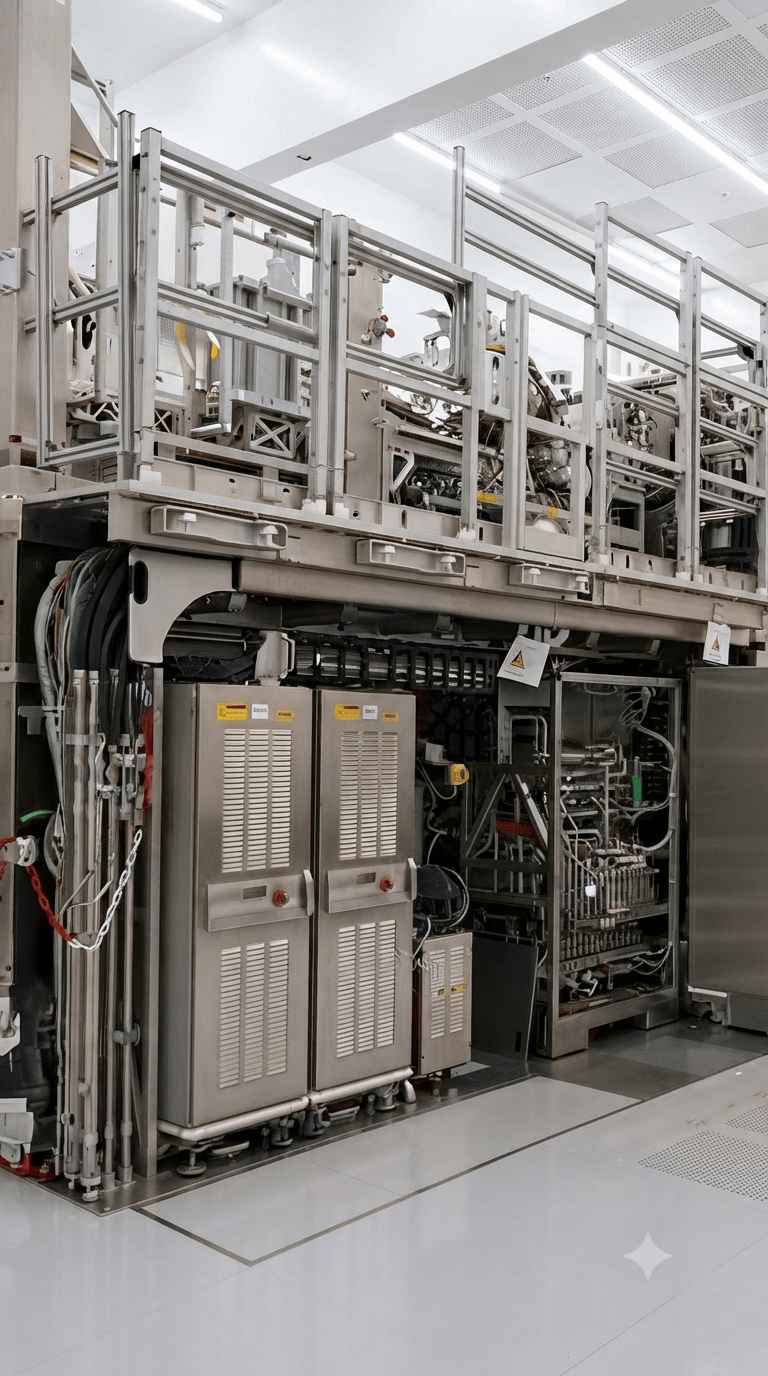
SK Hynix is developing Yongin as a front-end production base for next-generation DRAM and Cheongju as a base for HBM advanced packaging and next-generation memory production, thereby improving the efficiency of the AI memory supply chain. According to the company, Cheongju M15X has adopted EUV processes and advanced cleanroom automation technology, serving as a standard blueprint for future new wafer fabs. M15X began wafer input in the first quarter of this year and will gradually expand capacity to meet AI memory demand.
In this investment, the 11.9 trillion won allocated for securing EUV lithography equipment accounts for over 20% of the total investment, seen as a key move in strengthening advanced process capabilities. Industry analysis suggests that, based on ASML's current latest EUV equipment prices, this amount could purchase approximately 40 units. If deployed as planned, SK Hynix is highly likely to possess a globally leading level of EUV infrastructure. The investment will be phased, with the company planning to invest 7.9 trillion won this year, followed by 12.2 trillion won in 2027, 9.3 trillion won in 2028, 8.3 trillion won in 2029, and 7.8 trillion won in 2030. In 2027, when the investment scale is largest, construction of the Yongin first-phase wafer fab and Cheongju P&T7, along with the introduction of EUV equipment, will proceed simultaneously.
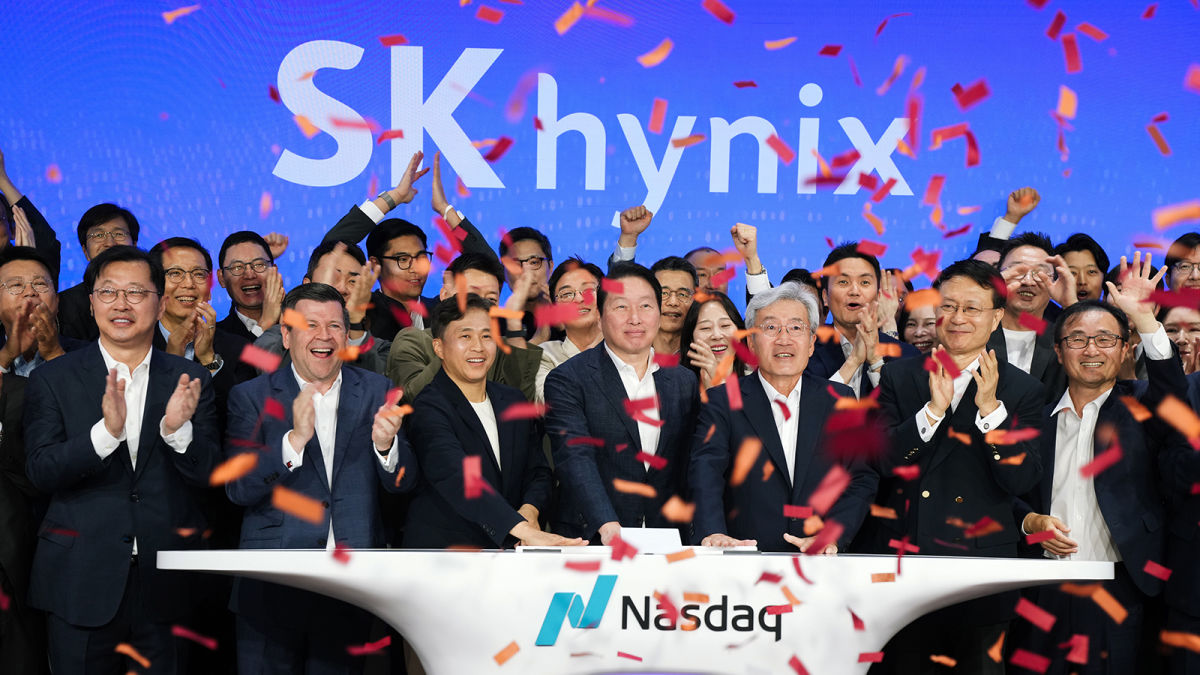
Industry evaluations suggest that the core of memory competition in the AI era has shifted from expanding output to securing advanced processes and packaging capabilities. Those who first obtain EUV equipment and advanced packaging technology will influence HBM supply volume and market dominance. SK Hynix CEO and President Kwak Noh-Jung stated at the ADR listing ceremony that HBM is already at the core of the AI revolution, and SK Hynix will play a role wherever artificial intelligence is present. He emphasized that leadership is achieved through continuous proof.