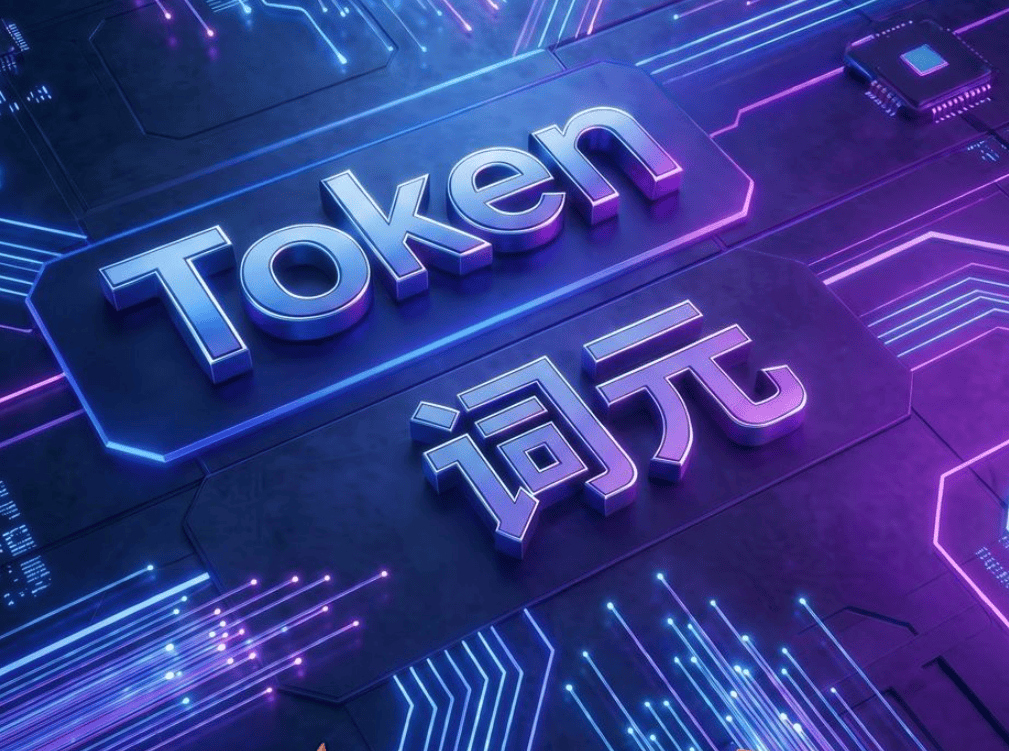
China's Sugon Plans 8 Billion Yuan Convertible Bonds to Boost AI Computing Clusters and Domestic Storage
en.Wedoany.com Reported - Recently, China's Sugon (Sugon Information Industry Co., Ltd.) announced three AI infrastructure upgrade plans, covering the construction of advanced computing cluster systems for AI, next-generation high-performance AI training-inference integrated machines, and domestically produced advanced storage systems. All three projects will be implemented by Sugon at its existing sites without requiring new land acquisition, focusing on bridging the technological chain between super nodes, high-speed interconnects, heterogeneous computing scheduling, large model training-inference equipment, and high-performance storage.
This is not a simple server expansion. The advanced computing cluster system has a construction period of four years, with core tasks including developing next-generation computing super node hardware systems, high-speed interconnect systems, system-level basic software stacks, and heterogeneous computing resource management and operation platforms. Sugon plans to further increase the computing density and efficiency of individual super nodes, expand the interconnect scale between accelerator cards, while reserving upgrade interfaces for future high-performance chips and new hardware architectures, enabling the cluster to continuously scale based on large model training, inference, and scientific computing tasks.
Among these, high-speed interconnect will be key to determining whether the entire system can scale. According to the project plan, the new-generation interconnect system will target high-communication-load scenarios such as distributed training, parallel computing, and massive data exchange, aiming to achieve linear scalability for clusters of 100,000 cards and reserve technological headroom for clusters of one million cards or more. As the number of accelerator cards increases, computing tasks no longer depend solely on single-card performance; inter-card communication latency, data exchange efficiency, and cross-node coordination capabilities directly impact overall computing utilization. Therefore, this project will develop the interconnect network and super node hardware within the same system, rather than simply assembling different devices into a cluster.
The software component will be upgraded simultaneously. Sugon plans to use a unified basic software environment to shield underlying hardware differences, optimize memory management, input/output, and parallel communication, and uniformly manage different types of computing hardware such as CPUs, GPUs, and NPUs. Once the system is built, it will dynamically schedule tasks for large model training, inference, scientific computing, and cloud services, reducing adaptation costs between different chips, servers, and software platforms. The project proposes that through hardware-software co-optimization, the total cost per card will be reduced by over 30% compared to existing solutions, and energy consumption per token when processing models with hundreds of billions of parameters will be reduced by 50%. These metrics still need to be verified in subsequent R&D, testing, and large-scale deployment.
While computing clusters address large-scale resource organization, training-inference integrated machines target enterprise data centers and single-application scenarios. This project has a construction period of three years, with product forms covering 8-card AI integrated machines, 16-card AI integrated machines, and desktop-level liquid-cooled workstations. The 8-card and 16-card devices can be deployed as basic computing units in data centers or computing centers, while desktop-level liquid-cooled workstations are designed for smaller-scale, more distributed model applications. The hardware will use domestically produced CPUs and AI accelerator cards, improving coordination efficiency between processors and accelerator cards through a unified computing framework.
Equipment delivery methods will also change. Currently, some AI servers are primarily delivered as standalone hardware with limited integration with models and software tools. Next-generation products will integrate hardware platforms, system software, training and inference engines, model development kits, performance optimization tools, and operation and maintenance monitoring capabilities into a single device, accompanied by a one-stop large model deployment and management platform, training-inference acceleration toolchains, and an integrated machine service platform. The goal is to centralize model import, adaptation, debugging, deployment, and operation management within a single system, lowering the technical barrier for enterprises building private large model environments.
Domestically produced storage is another main thread among the three projects. This project also has a three-year construction period and will be based on domestically produced CPUs, input/output controllers, and network controllers to develop domestically produced all-flash arrays, using domestic PCIe Switches to replace some non-domestic components. The hardware system will also adjust the PCIe topology, introduce new-generation processors, and improve storage scalability while reducing overall power consumption. For large model training and multimodal data processing, the storage system must not only store massive amounts of data but also continuously provide high-bandwidth, low-latency data reading capabilities to computing nodes; otherwise, accelerator cards may become idle while waiting for data.
Storage software will not merely upgrade around traditional file reading and writing. The project will add support for SMB, NFS, and AI-specific protocols, upgrade "super tunnel" and efficient index management technologies, while strengthening the reliability design of file systems, persistent data, application data, and cache data. Subsequent products will cover new-generation distributed storage, high-speed parallel file storage, intelligent storage, and cloud-native storage to accommodate frequent data calls, massive unstructured data processing, and multi-node concurrent access during large model training.
The three projects have been filed under numbers Jin Gao Xin Shen Tou Bei [2026] No. 124, 125, and 126, all to be implemented at Sugon's existing sites. According to current arrangements, the computing cluster system has a longer construction period, while the training-inference integrated machine and domestically produced storage projects have relatively concentrated timelines. Subsequent milestones will mainly focus on core equipment R&D, software platform development, prototype testing, system integration, and large-scale application validation.
From the project structure, Sugon is integrating super nodes, high-speed interconnects, computing scheduling, integrated machines, and storage systems into a single AI infrastructure system. Computing nodes are responsible for executing tasks, interconnect networks handle large-scale data exchange, unified software platforms manage heterogeneous resources, training-inference integrated machines support enterprise-side model deployment, and domestically produced storage continuously supplies data for training and inference. Only when these components are upgraded simultaneously can the computing power of a 100,000-card cluster be transformed into actual, manageable, and long-term operational computing capacity.
Related Products



Conveyor Belt Intelligent Monitoring System
LUO YANG WIRE ROPE INSPECTION TECHNOLOGY CO., LTD.

MUX Series Communication Interface Device for Security and Stability Control System
Nanjing NR Electric Co., Ltd.

Multi-function Marine Monitoring Low-altitude Detection Radar Sea-air Boundary Ocean Dynamic Environment Measurement
Chengdu Dixin Technology Co., Ltd.
One-Stop Steward Service for the Entire Logistics System Integration Chain
Zhongding Intelligent (Wuxi) Technology Co., Ltd.