China's Yueqing Technology Achieves Design and Simulation of Humanoid Robot Dynamics Models
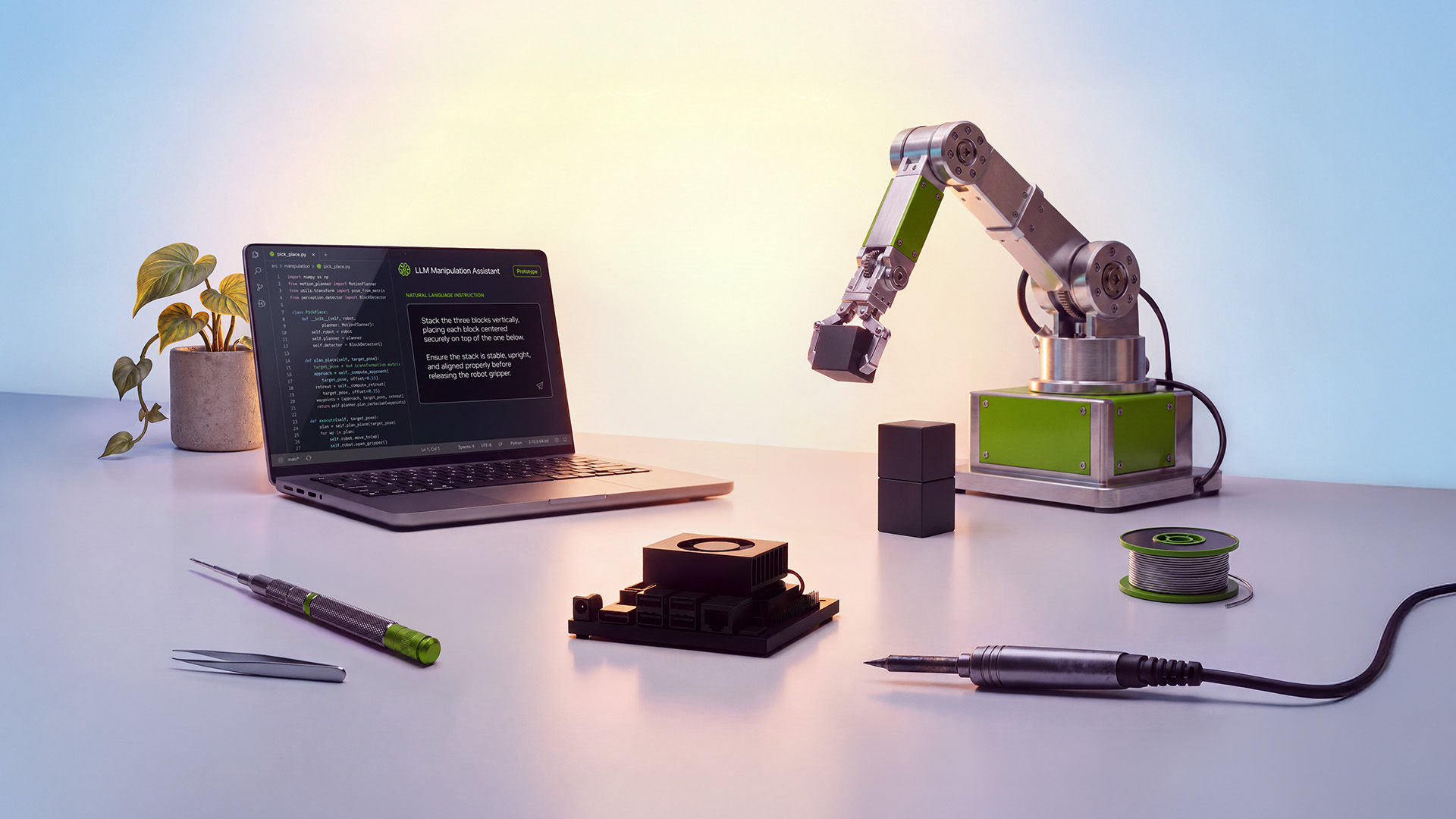
en.Wedoany.com Reported - Nanjing Yueqing Technology, using its iRobotCAM embodied intelligent design software, has achieved the design and simulation of humanoid robot dynamics models, rapidly generating kinematic models through a skeletal joint design architecture.
As companies in the automotive and 3C electronics sectors, such as XPeng, Seres, GAC, and Honor, enter the embodied intelligence field, the popularity of humanoid robots as a typical form continues to rise, with application scenarios generating more demands. To adapt to different environments, humanoid robots require redesign and retraining in areas such as increased load capacity and form modification.
The core of embodied intelligent product design lies in two stages: structural design and simulation. Traditional workflows involve 3D modeling software like Catia, Solidworks, NX, and Inventor for structural design, and tools like Matlab and Adams for underlying mathematical solving in simulation. iRobotCAM's technical architecture is based on a CAD 3D geometric framework, connecting upstream design and downstream simulation. Its skeletal joint design architecture enables rapid design and generation of kinematic architecture models, and is compatible with mainstream simulation software such as Isaac Sim and OpenSim.
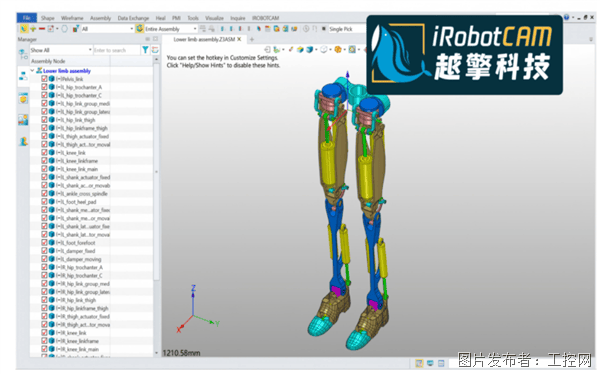
In the design process, iRobotCAM first imports data formats from various 3D software, including Catia, Solidworks, NX, Creo, and Inventor, based on a 3D geometric kernel. By importing robot dog files in multiple files, a 3D structural diagram of the robot dog can be established in the software, and the modeling functions of the Zhongwang 3D platform can be used to modify and establish reference coordinates for each component.
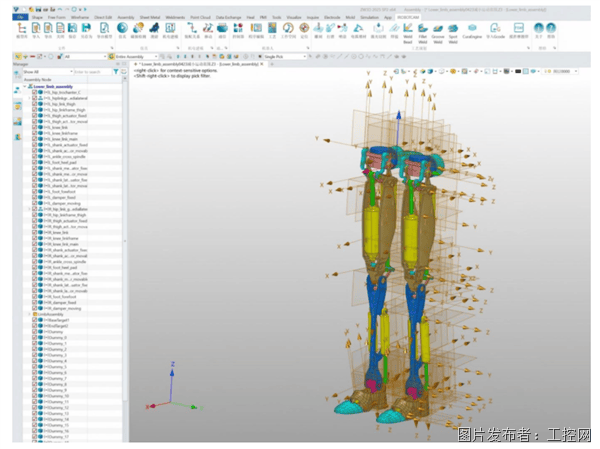
Through the assembly management function, material properties for each part can be quickly set, and physical characteristics such as inertia can be calculated.
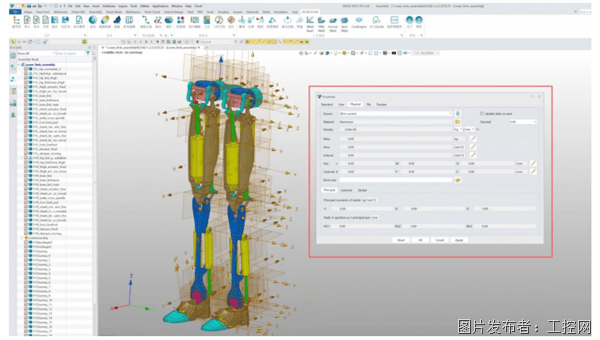
Using the mechatronic design function, mechatronic objects and kinematic pairs can be established, including collision body detection.
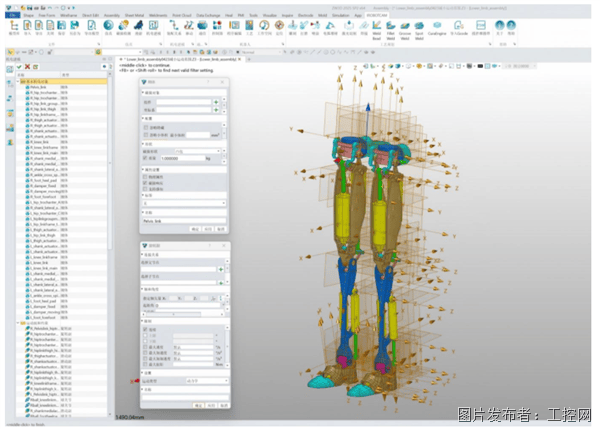
For components with a parallel structure, kinematic group design can be performed.
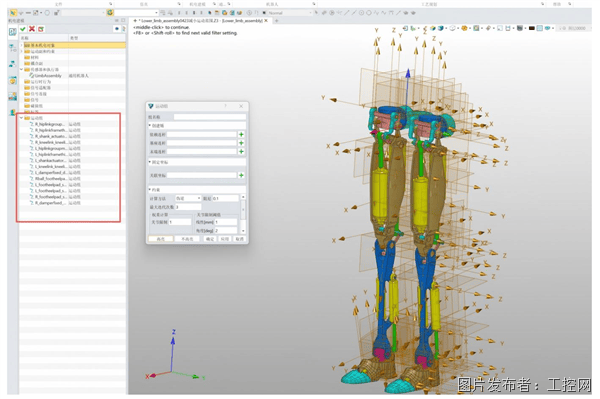
Through the skeletal robot joint design panel, all joint mechanisms of the robot can be linked together to form a complete embodied intelligent general-purpose robot.
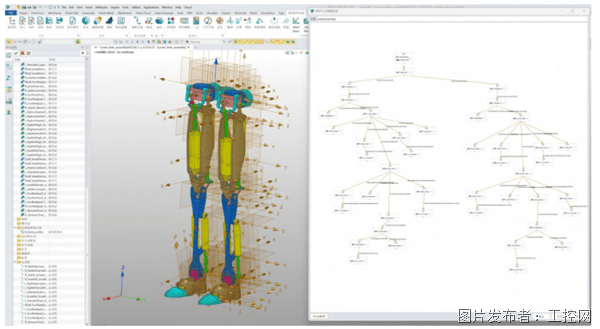
Using the URDF import and export functions, universal URDF files or MuJoCo XML can be generated, seamlessly meeting the simulation requirements of mainstream biomechanics engines such as MuJoCo, Simbody, OpenSim, and Isaac Sim.
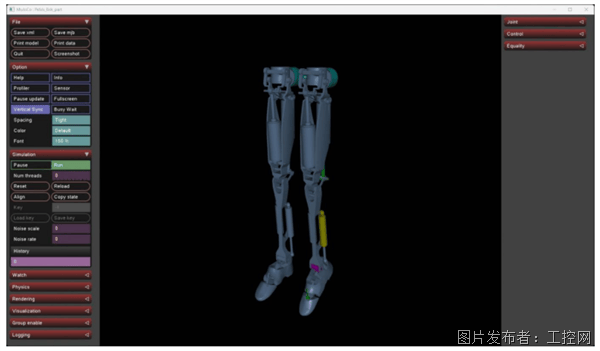
With the iRobotCAM tool, the modification process for embodied intelligent models like humanoid robots is simplified. A comprehensive dynamics model ensures correctness from the data source, accelerating the efficiency of simulation training for robot application scenarios.