MasOrange Completes 5G SA Construction in 245 Rural Municipalities in Galicia, Spain
en.Wedoany.com Reported - Spanish telecom operator MasOrange, together with its Galician brand R, has announced the completion of its rural 5G network construction plan in the autonomous community of Galicia, having built or activated all planned communication infrastructure in the 245 municipalities with fewer than 10,000 inhabitants included in the project. Following the project's completion, MasOrange and R's 5G network now covers 97% of Galicia's population, with plans to further expand local 5G coverage to near-universal levels by 2026.
The focus of this construction was not on densely populated major cities, but on rural areas with dispersed populations, complex terrain, and relatively difficult network construction conditions. The 245 municipalities account for approximately 80% of all municipalities in Galicia, yet their residents represent only about 20% of the autonomous community's population. This means the operator needed to deploy communication sites, transmission links, and supporting facilities across a large geographical area, with each site capable of covering and serving a relatively limited number of users.
MasOrange and R deployed 5G standalone (SA) networks in these municipalities. Compared to non-standalone (NSA) approaches that rely on existing 4G core networks, 5G SA requires the construction or upgrade of radio access systems, core networks, transmission facilities, and related network management capabilities, enabling rural sites to directly access the complete fifth-generation mobile communication system. The operator stated that the network can provide more stable mobile connectivity in remote and hard-to-reach areas, while reducing data transmission and service response latency.
During project implementation, MasOrange and R completed the construction and activation of communication infrastructure within the planned scope. This statement implies that the work involved not only software upgrades at existing sites but also new construction in some rural areas, activation of wireless equipment, and site network access, bringing 5G services to regions previously lacking high-performance mobile networks.
The challenges of rural 5G network construction differ from those of urban capacity expansion. Some villages and towns in Galicia have small populations with significant distances between settlements. Mountainous areas, coastal regions, and nature reserves further complicate site selection, equipment transportation, power access, and construction permitting. Some communication towers also required reinforcement or modification to accommodate new 5G wireless equipment and meet long-term operational requirements.
In this coverage round, Negrade Muñiz in the province of Lugo has also been connected to the 5G network. With a population of 237 in 2025, this municipality is the least populated in Galicia. Among the 25 least populated municipalities in Galicia, 23 have been included in this construction scope, including areas such as Atecheira, Laroco, Pontedeva, and Ribeira de Piquín, each with fewer than 500 residents.
The network construction in these areas extends 5G infrastructure from provincial capitals and densely populated regions to low-density areas. Local households and businesses can use the mobile network for remote work, high-definition video transmission, and internet services. Some areas lacking fiber access can also obtain high-speed communication services via the 5G network, though actual usage speeds will still be affected by factors such as site distance, wireless frequency bands, terrain obstructions, and indoor environments.
The deployment across 245 municipalities completed by MasOrange and R is part of Spain's rural 5G construction plan. MasOrange previously stated that it has completed related rural 5G projects in 1,461 municipalities nationwide with fewer than 10,000 inhabitants, upgrading over 2,800 mobile communication nodes. Some of these areas lacked mobile network coverage from other operators before project implementation.
Following the completion of the Galicia project, the construction focus will gradually shift from batch site activation to network optimization and coverage supplementation. Due to rural building structures, mountain obstructions, and settlement distribution potentially causing insufficient indoor signals, R also plans to improve communication quality inside some buildings through indoor mobile signal solutions, combined with Wi-Fi calling services to supplement indoor areas that are difficult to directly cover with mobile networks.
From an engineering perspective, this project has formed a continuous communication infrastructure consisting of rural mobile sites, 5G radio access equipment, core networks, and transmission systems. The sites provide wireless signals to villages and towns, the transmission network connects each site to the operator's backbone system, and the 5G core network handles user access, data processing, and service management, enabling rural networks spread across different provinces and municipalities to be integrated into a unified operational system.
With all planned facilities in the 245 municipalities built or activated, MasOrange and R's next phase involves continuing to verify the coverage stability, network capacity, and actual usage levels of rural sites. Key milestones to watch going forward include further increases in Galicia's 5G population coverage, activation of sites in remaining areas, deployment of indoor coverage solutions, and the actual operational performance of rural networks in enterprise communication and public service scenarios.
Related Products


Mine Explosion-proof and Intrinsically Safe Industrial Ethernet Ring Network (10 Gigabit/Gigabit)
Chongqing Mas Sci&Tech Co., Ltd.

Comprehensive Mining Automation Control System
Beijing Tianma Intelligent Control Technology Co., Ltd.


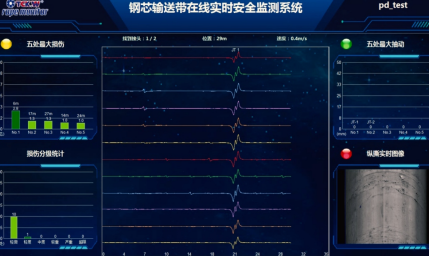
Conveyor Belt Intelligent Monitoring System
LUO YANG WIRE ROPE INSPECTION TECHNOLOGY CO., LTD.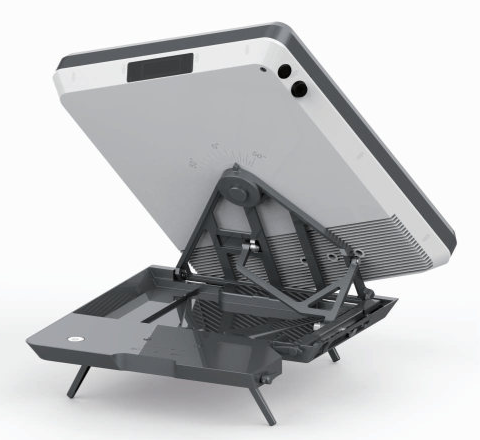
Flat Portable Satellite Terminal 0.35m Aperture Manual Portable Terminal
China Starwin Science & Technology Co., Ltd.
G.652.D Wavelength-extended Non-dispersion Shifted Single-mode Optical Fiber
HONGAN GROUP CO., LTD.
Multi-function Marine Monitoring Low-altitude Detection Radar Sea-air Boundary Ocean Dynamic Environment Measurement
Chengdu Dixin Technology Co., Ltd.