China's Haiguang Information Unveils Cloud-Edge-Device Computing Power System
en.Wedoany.com Reported - Domestic computing power provider Haiguang Information recently presented its complete "Cloud-Edge-Device" computing power system at the 2026 Photosynthesis Organization Intelligent Computing Application Conference. Utilizing a three-tier architecture of CPU, DCU, and embedded chips, it addresses challenges such as utilization efficiency, adaptation costs, and ecosystem fragmentation as computing power shifts from the cloud to the edge and terminal devices. CITIC Securities estimates that by 2026, AI penetration rates in smartphones and PCs will reach 45% and 62% respectively. An IDC report shows that shipments of AI chips for IoT and edge terminals surged over 110% year-on-year, indicating that computing power is rapidly extending to the periphery of the physical world.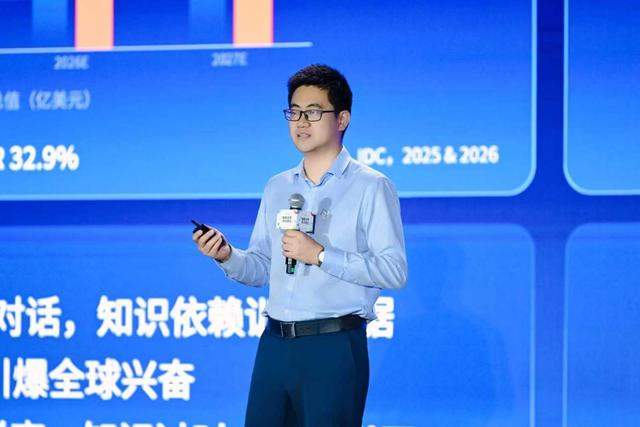
The domestic computing power industry currently faces three major hurdles. Yang Zeyuan, Chief Analyst of Computer Science at CITIC Securities, pointed out that in key infrastructure sectors such as finance, energy, and transportation, relying entirely on the cloud is impractical, making a hybrid heterogeneous distributed computing platform an inevitable choice. Xu Zhaohui, Chief Engineer of Postal Savings Bank of China, stated in a speech that the banking and financial industries require general computing, intelligent computing, high-performance computing, and edge computing, each suited to specific scenarios. Computing chips must possess parallel computing technology and good ecosystem openness and compatibility. The second hurdle stems from high enterprise adaptation costs. Migrating from the CUDA ecosystem to domestic platforms involves multiple steps, including operator adaptation, model reconstruction, and performance optimization, resulting in significant migration costs and learning curves for small and medium-sized enterprises. The third hurdle is the fragmentation of the software ecosystem. The independent software stacks of domestic chip manufacturers force developers to repeatedly learn toolchains and rewrite operator libraries. Du Xiawei, Assistant President of Haiguang Information and General Manager of the Intelligent Computing Products Department, stated that the Token economy is driving changes in IT architecture, and full-stack hardware-software collaboration is key to transforming domestic computing power from "usable" to "easy to use."
Haiguang Information's "Cloud-Edge-Device" computing power system is built on three pillars. At the CPU level, it is natively compatible with the x86 ecosystem, handling general computing and system scheduling functions, providing independently controllable general computing support for key industries such as government, finance, and energy. At the DCU level, as a domestic GPGPU, it leverages the DTK heterogeneous computing platform to seamlessly adapt to the CUDA ecosystem. It has already adapted over 400 large models, covering mainstream AI frameworks, allowing enterprises to migrate code seamlessly with almost no secondary development. The DCU's high-concurrency inference capability supports the transition of AI from training to inference deployment. At the embedded chip level, it features low power consumption, high reliability, and ultra-wide temperature adaptability, with specialized optimization for scenarios such as industrial control and edge computing, addressing industry pain points like weak edge computing power, slow real-time response, and difficulty adapting to harsh environments. Running through the three-tier architecture is inherent security capability. Haiguang embeds cryptographic technology, confidential computing, trusted computing, and vulnerability defense at the chip level, achieving "native security" without the need for external security devices, building a chip-level active defense system in the industrial control and embedded fields.
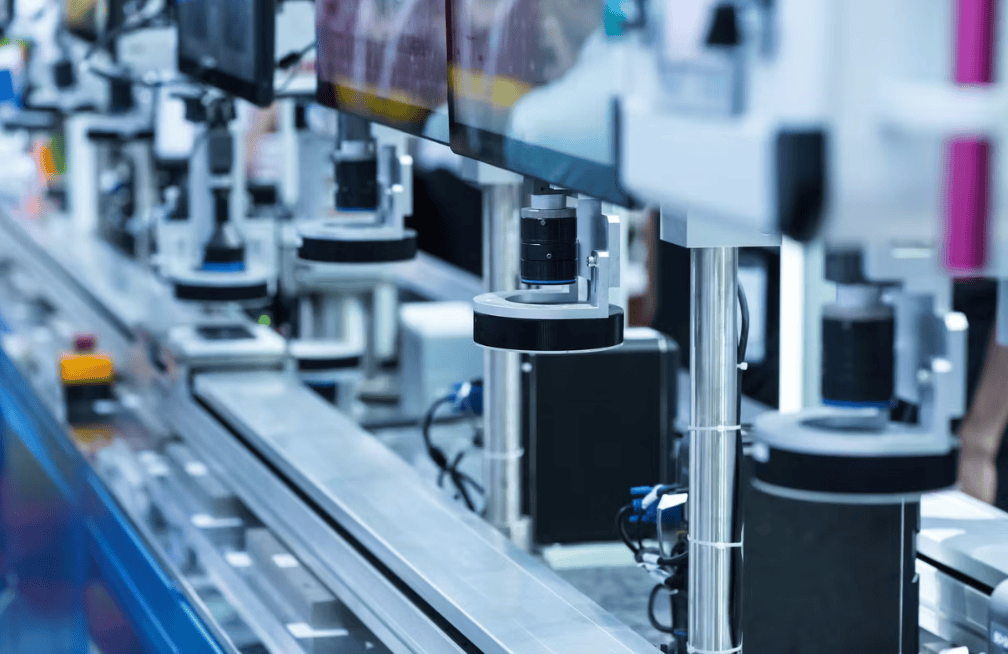
The financial industry has entered a phase of large-scale deployment. Based on Haiguang's DCU, Postal Savings Bank of China has deployed an OCR text recognition model, providing unified image recognition capabilities for 31 business systems. This achieves stable recognition with high availability, high concurrency, elastic scheduling, and resource isolation, resulting in dual improvements in financial AI security and energy efficiency. In industrial and energy scenarios, domestic computing power is transitioning from "usable" to "easy to use." Zhang Kaohua, Embedded Product Expert at the Photosynthesis Organization, stated that edge-side AI is reshaping hardware interaction logic and intelligent boundaries through "computing power sinking." Haiguang's embedded chips are applied in scenarios such as intelligent inspection robots and EtherCAT high-precision motion control, with deployments in the semiconductor and precision manufacturing sectors. In response to industrial security threats like Stuxnet and Triton, Haiguang's inherent security capability builds a hardware-level active defense system from the chip level, providing full-chain trusted assurance for critical infrastructure. To date, Haiguang, through the Photosynthesis Organization, has completed adaptation and optimization with over 6,000 ecosystem partners and tens of thousands of software and hardware items.
Du Xiawei stated, "Alone, you go fast; together, you go far." Building an open ecosystem platform and enabling full-stack software collaboration to empower the Tokenization of industries is the essential path for domestic computing power to lower usage barriers and broaden application boundaries.
Computing power goes down, industry goes up. In the second half of the AI industry competition, the focus is not on who has the flashiest demo, but on who can truly turn computing power into accessible productivity for all industries. From the cloud sinking to the edge, from data centers extending to factory floors, the domestic computing power industry is transforming from "having" to "excelling." The key lies in shifting from "scrambling for production capacity" to "prioritizing the ecosystem."
Related Products

20 Inch 1600*900 Full HD 60Hz TFT LED Monitor with VGA and DP Interfaces for Desktop Computers-Business Use
Guangzhou Zanying Optoelectronics Technology Co., Ltd.


Conveyor Belt Intelligent Monitoring System
LUO YANG WIRE ROPE INSPECTION TECHNOLOGY CO., LTD.
TWP16 P-Band Tropospheric Wind Profile Radar
China Huayun Meteorological Technology Group Co., Ltd.

MUX Series Communication Interface Device for Security and Stability Control System
Nanjing NR Electric Co., Ltd.
Automatic Aiming Laser Remote Obstacle Removal Robot
Pinggao Group Weihai High-Voltage Apparatus Co., Ltd.