en.Wedoany.com Reported - South Korean network operator Dreamline will build an international submarine optical cable landing station in the Saemangeum National Industrial Complex in Gunsan City, North Jeolla Province, with a project value of approximately 34 billion won and covering about 5,180 square meters. The Saemangeum Development Agency, Jeonbuk Special Self-Governing Province, Gunsan City, the Korea Rural Community Corporation, and Dreamline have signed a project agreement. Construction is scheduled to begin in January 2027, with international communication services expected to commence in 2029. The landing station will connect to the approximately 8,900 km long AUG East submarine cable system, linking the international cable with South Korea's domestic fiber optic network, data centers, and backbone communication facilities.
AUG East connects Asian markets including South Korea, Japan, Singapore, Indonesia, Malaysia, the Philippines, Brunei, and Taiwan (China), and is planned to be operational around the third quarter of 2029. The system involves 11 participating companies. In addition to Saemangeum in South Korea, landing nodes will be established in multiple countries and regions along the route, forming a cross-border data transmission channel covering East and Southeast Asia. Dreamline is responsible for building the landing facility on South Korea's west coast. Its role is not simply to receive submarine cable signals but to complete submarine fiber optic terminal connections, deploy optical transmission equipment, monitor international lines, perform data routing, and manage backhaul to the domestic network.
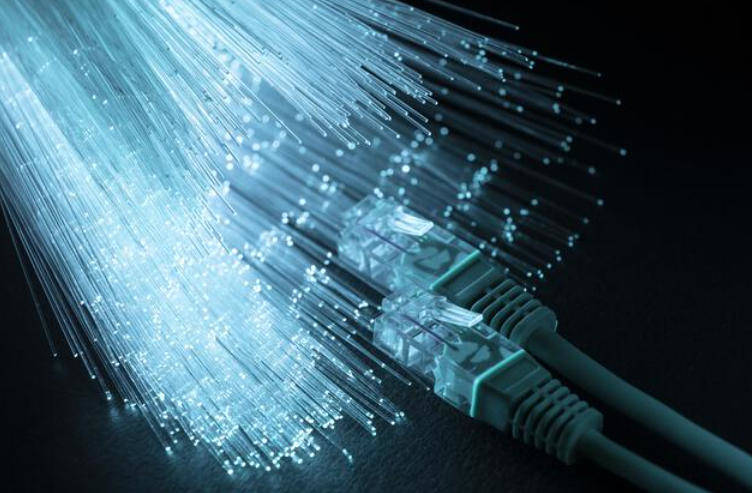
The landing station is planned for Zone 2 of the Saemangeum National Industrial Complex. After the international submarine cable reaches land from the offshore area, it must pass through a submarine cable landing duct, a beach manhole, and a terrestrial optical cable to connect to the station building. Inside the station, equipment such as submarine cable terminal units, optical amplification systems, power supply and distribution, backup power, cooling, fire protection, and network security facilities must be installed. After international data undergoes optical-to-electrical conversion and routing distribution, it must also be connected to a domestic low-latency fiber optic backhaul network leading to Seoul and other major cities before it can enter the operator's backbone network, cloud platforms, and data centers. From this perspective, the landing station is essentially a core conversion node between the "submarine line, coastal facility, terrestrial backbone network, and data center," rather than a standalone communication room.
South Korea's existing international submarine cable landing facilities are mostly concentrated in the southeastern coastal areas such as Busan and Geoje. Dreamline's decision to locate the AUG East South Korea node on the west coast aims to increase the geographical dispersion of international communication lines and reduce network risks associated with the over-concentration of landing facilities. When a coastal area is affected by natural disasters, construction damage, or local power and communication failures, landing nodes on different coasts can provide alternative paths for international data. Dreamline currently operates approximately 58,000 km of fiber optic network in South Korea. Once the new landing station is operational, it can leverage its existing domestic transmission resources to route international traffic to the capital region and major data center clusters.
Saemangeum is currently hosting data center and artificial intelligence infrastructure projects, and Hyundai Motor Group also plans to build an AI data center in the area. Large model training and inference require continuous transmission of model parameters, datasets, and business requests between data centers, cloud platforms, and overseas computing nodes. In addition to the computing equipment itself, international bandwidth, transmission latency, and network path stability also affect computing power utilization efficiency. With the AUG East landing station located near the planned AI data center in the area, it can reduce the path where international data must first detour to the southeastern coast of South Korea and then travel back to the western region via long-distance domestic lines, providing a more direct cross-border communication outlet for the Saemangeum data center.
Dreamline will subsequently need to complete the detailed design of the landing station, coordinate the submarine cable landing route, construct the station building, install optical transmission equipment, and connect the domestic backhaul network. The project must also maintain schedule alignment with the offshore laying of AUG East and other landing stations along the route. Even if the South Korean station building is completed early, it must wait for the entire submarine cable to be laid, system testing to be completed, and multi-country line integration before it can officially commence operations. The start of construction in January 2027 and the commencement of communication services in 2029 are currently the two clearest project milestones.