Northumberland County, Canada Broadband Project Lays 1 Million Meters of Underground Communication Conduit
en.Wedoany.com Reported - Recently, Northumberland County, Canada announced new progress in the construction of a high-speed broadband network covering the entire county, with the cumulative length of underground communication conduit laid exceeding 1 million meters, approximately 1,000 kilometers; the length of fiber optic cable inserted into the conduit has surpassed 600 kilometers. As most of the underground infrastructure gradually takes shape, the project is transitioning from large-scale line construction to user connection and broadband service activation.
The project is jointly implemented by Northumberland County, Canada and Canadian telecommunications company Axle Telecom. Axle Telecom, a subsidiary of Windsor Private Capital in Canada, is primarily responsible for broadband network construction and subsequent user connections. The project is scheduled to be substantially completed by the end of 2026, at which time it will provide broadband access to over 11,000 households and businesses that currently lack high-speed network services or have insufficient network quality. The construction scope includes rural areas of Northumberland County, Canada and the Alderville First Nation community in Canada.
Based on the construction progress disclosed to date, the project's focus has shifted from merely laying main conduits and regional fiber optics to extending roadside communication facilities further to residences, farms, and businesses. Axle Telecom will contact property owners along the route to arrange free fiber optic connections from the roadside communication infrastructure to user properties on a voluntary basis. After completing the terminal line construction, residents and businesses can choose to activate high-speed internet services as needed. Some areas where line construction and equipment commissioning have been completed have already begun to connect to the network.
Approximately one-third of households in Northumberland County, Canada were previously without high-speed broadband coverage or had insufficient coverage. Due to the dispersed distribution of residences and businesses in rural areas and the long distances between individual users, network construction cannot rely solely on the short-distance household connection model common in cities. Instead, it requires first establishing long-distance underground conduit and regional fiber optic networks, then building terminal connections from along the roads. The cumulative laying of 1 million meters of communication conduit indicates that the project has completed a considerable scale of basic channel construction, reserving line conditions for subsequent increases in fiber core count and access nodes.
The project adopts a construction method combining underground communication conduit with fiber optic lines. The communication conduit is primarily used to protect the optical cables and provide channels for line maintenance, replacement, and future expansion; the fiber optics handle actual data transmission. With over 600 kilometers of fiber optic cable laid, the project's focus will gradually shift to fiber splicing, branch line construction, user-end introduction, network equipment commissioning, and service activation. The project team has not yet disclosed the number of fiber cores, central office equipment scale, user terminal suppliers, or specific activation timelines for each area.
Unlike projects that only perform partial upgrades to existing networks, the Northumberland County, Canada broadband project is building a fixed communication infrastructure covering multiple rural communities. Once completed, the network will serve household users and support local farms, businesses, medical institutions, and public service facilities in using remote work, online education, telemedicine, and digital business services. For areas not included in the current construction scope, Northumberland County, Canada stated that it will continue to study new construction funding and cooperation plans to expand high-speed broadband coverage.
Based on the disclosed construction details, the project may continue to generate demand for communication conduit, optical cables, fiber splice closures, splitting equipment, user access terminals, and line construction services. The most clear engineering milestone at this stage is the transition from regional mainline construction to property-level connections. As the scale of user access expands, fiber splicing, household installation, line testing, and network activation will become the main construction activities in the second half of 2026.
Related Products

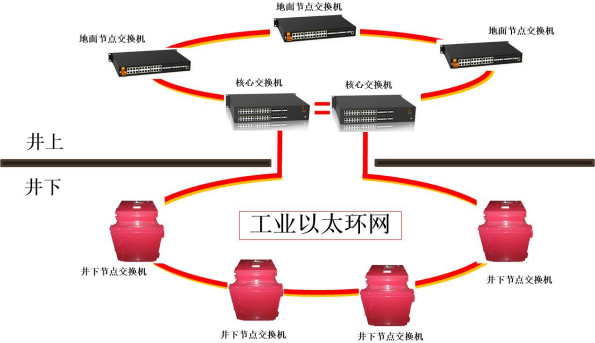
Mine Explosion-proof and Intrinsically Safe Industrial Ethernet Ring Network (10 Gigabit/Gigabit)
Chongqing Mas Sci&Tech Co., Ltd.
MUX Series Communication Interface Device for Security and Stability Control System
Nanjing NR Electric Co., Ltd.





Industrial and Commercial Point-Type Gas Detector
Jinan Benan Technology Development Co., Ltd.