Kenya Launches Digital Infrastructure Construction for 10,382 Schools
en.Wedoany.com Reported - On July 13, Kenya launched a national plan to equip junior secondary schools with information and communication technology (ICT) teaching facilities. The first batch of equipment will be deployed in Elgeyo-Marakwet County, gradually expanding to 10,382 public junior secondary schools nationwide. The project will equip schools with interactive smart teaching screens, teacher laptops, and related digital devices. It will also leverage Kenya's ongoing national fiber optic network to connect to online teaching and digital public service platforms, integrating school communication networks, classroom terminals, and teaching systems into a unified digital infrastructure. The initial phase covers 176 junior secondary schools, marking the project's transition from preliminary planning to equipment installation and regional deployment.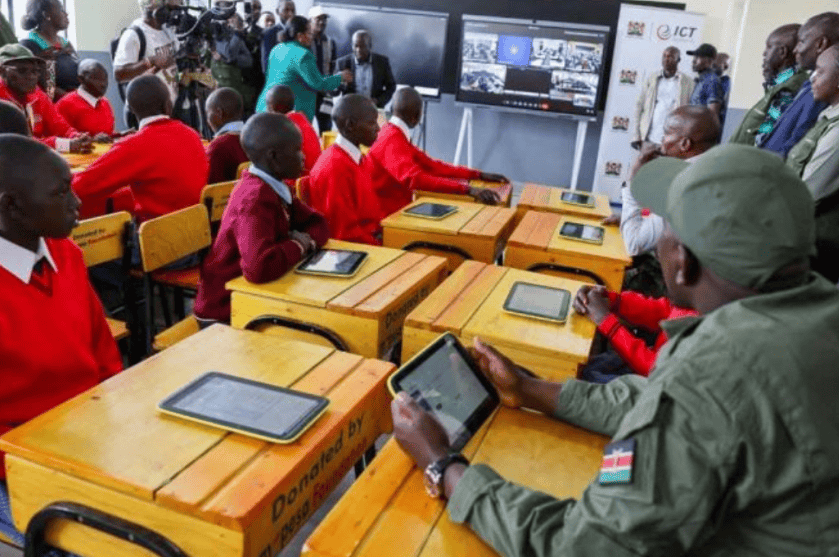
Named the "National Junior Secondary School ICT Learning Integration Program," the project was launched by Kenyan Deputy President Kithure Kindiki at Kaptarkok Junior Secondary School and is part of Kenya's Digital Economy Acceleration Project. The construction does not simply involve distributing computers to schools but synchronously implements classroom display devices, teacher terminals, school local area networks (LANs), and broadband access conditions. During the launch event, schools in different regions, including Elgeyo-Marakwet, Nyeri, Nairobi, Kakamega, and Mombasa, participated in a synchronized lesson taught by a single teacher via the network, demonstrating the operation of a cross-regional teaching system on existing communication infrastructure.
The 10,382 schools nationwide are widely distributed, with varying fixed network conditions, power availability, and existing equipment bases across different regions. Subsequent project phases require completing fiber optic or other broadband line access based on the school's location, building campus networks, installing interactive smart screens and teacher terminals, and performing network configuration, account management, and operational testing for the equipment. For schools already connected to fiber optics, the focus will be on deploying terminal equipment and teaching platforms; for areas with insufficient network coverage, the priority is to resolve the access issue between the school and the regional communication node. Only when transmission lines, campus networks, terminal equipment, and backend platforms are simultaneously operational can digital classrooms provide long-term remote teaching and multi-school interactive services.
This program advances in tandem with Kenya's Digital Highway Project. The Kenyan government has proposed building 100,000 kilometers of national fiber optic infrastructure, with over 37,000 kilometers already laid. The new fiber optics will not only connect schools but also link government agencies, digital service centers, and other public facilities, providing transmission channels for online government services, cybersecurity, cloud services, and local digital industries. Once integrated into this network, schools can directly utilize national-level digital infrastructure to carry teaching data and online courses, avoiding the need for each school to build isolated communication systems.
From an engineering perspective, this construction phase will form a continuous chain: "national fiber optic backbone network—regional access network—school LAN—smart teaching terminals." National and regional fiber optic lines handle cross-regional data transmission; school access nodes bring external broadband into the campus; the LAN connects different classrooms and teacher terminals; and interactive smart screens serve as the front-end devices for using digital resources and remote courses in the classroom. When multiple schools conduct synchronized lessons, the network must ensure continuous transmission of video, audio, and teaching content. Therefore, access bandwidth, wireless coverage, and equipment operational stability will directly impact the project's practical effectiveness.
Kenya has already trained over 62,000 teachers in using digital technology for teaching to support the deployment of new equipment and network facilities. As the project enters the national rollout phase, the focus will gradually shift from the first 176 schools to bulk equipment procurement, regional transportation and installation, network activation, and the establishment of an operation and maintenance system. Key engineering milestones to watch include the completion of equipment deployment in the first batch of schools, the start of campus network construction in more counties, continued increases in national fiber optic mileage, and the timeline for all 10,382 schools to be connected to the unified digital teaching system.
Related Products


Conveyor Belt Intelligent Monitoring System
LUO YANG WIRE ROPE INSPECTION TECHNOLOGY CO., LTD.
GYTA Type Non-Self-Supporting Aerial/Duct Optical Cable
TONGDING INTERCONNECTION INFORMATION CO., LTD.
Automatic Aiming Laser Remote Obstacle Removal Robot
Pinggao Group Weihai High-Voltage Apparatus Co., Ltd.



Hot Selling 10 Inch Intel N5100 I5 I7 FHD 8 +128GB 16+256GB Win10 Pro Win11 Pro 4G 5G Rugged Tablet PC Pad with NFC Barcode
Highton Electronics Co., Ltd.

Mine Explosion-proof and Intrinsically Safe Industrial Ethernet Ring Network (10 Gigabit/Gigabit)
Chongqing Mas Sci&Tech Co., Ltd.
MUX Series Communication Interface Device for Security and Stability Control System
Nanjing NR Electric Co., Ltd.