en.Wedoany.com Reported - On July 13, US tech company Meta announced an additional $40 billion investment in its artificial intelligence data center located in Richland Parish, Louisiana. This project is Meta's largest data center initiative to date, with the initial construction scale set at $10 billion; with this additional investment, the total project scale is expected to expand to approximately $50 billion. The new funds will continue to be used for the data center campus, AI computing equipment, and related infrastructure construction, but Meta has not yet disclosed details on additional building area, GPU count, phased deployment plans, or specific construction scope.
Located near Holly Ridge in Richland Parish, the data center spans approximately 2,250 acres, with an originally planned building area of about 4 million square feet. Construction includes multiple data center buildings, server rooms, campus roads, power supply and distribution facilities, cooling systems, and fiber optic communication networks. The project was officially announced and construction began in December 2024, with Mortenson, Turner Construction, and DPR Construction involved in implementation. During peak construction, over 5,000 workers are expected to be on site. Meta positions this facility as a core computing base to support large model training and next-generation AI system operations.
With the additional $40 billion, the project's focus will not only be on expanding the number of server rooms but also on simultaneously increasing high-density server racks, GPU computing clusters, data storage equipment, and high-speed network systems. Training large AI models requires a significant number of computing nodes to continuously exchange model parameters. Within a single campus, it is typically necessary to build high-speed fiber optic networks, switch clusters, and cross-building data channels to organize different server buildings into a unified computing system. Meta previously disclosed that the Richland Parish data center is expected to provide over 2 gigawatts of computing power; its Hyperion project is also planned to scale to 5 gigawatts, indicating that the campus may ultimately form an AI computing cluster composed of multiple ultra-large server rooms.
Such a massive expansion of computing power imposes far higher demands on the power system than typical cloud data centers. GPU servers require a stable and continuous power supply during operation and generate substantial heat, so the addition of computing capacity must be synchronized with the construction of substations, transmission lines, backup power, and cooling systems. Meta has partnered with US utility company Entergy on the campus's energy supply, with related plans including new power generation facilities, transmission lines, and energy storage systems. Current proposals suggest equipping the campus with over 7 gigawatts of power resources, including new natural gas generators and approximately 240 miles of transmission lines, along with supporting renewable energy projects. Some energy facilities still require regulatory approval, and the final construction scale and operational timeline may be adjusted based on the data center's phased needs.
The campus's cooling and water treatment systems also need to expand with the computing scale. High-density AI servers generate significantly more heat than traditional servers, requiring the project to use liquid cooling, chilled water circulation, or other efficient heat dissipation methods to control chip and server room temperatures. Meta has previously expanded road, water supply, and wastewater treatment facilities around Richland Parish, with related local infrastructure investments exceeding $300 million to improve transportation and public service conditions needed for data center construction and long-term operation.
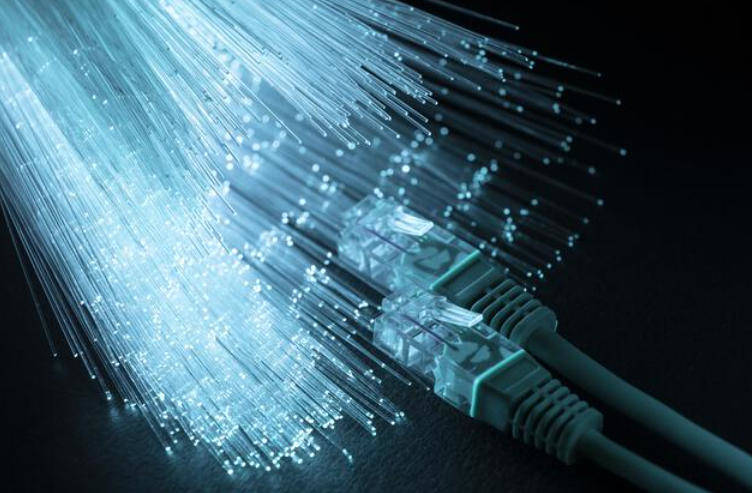
From a structural perspective, the additional investment will further shape the project into a complete AI infrastructure comprising an "ultra-large data center campus, multi-gigawatt power system, high-speed fiber optic network, and massive GPU cluster." Within the campus, servers and storage equipment need to be connected via high-bandwidth networks, while externally, the campus must connect to the US domestic backbone network and international communication networks, enabling training data, model files, and inference tasks to be transmitted between different data centers. As computing power continues to expand from the 2-gigawatt level to higher scales, the number of fiber optic ports, switching network capacity, and data center interconnection bandwidth must also be increased accordingly.
The project was originally planned to complete major construction around 2030, but the $40 billion additional plan may further expand the campus area, equipment count, and construction phases. Key milestones to watch include the start of new data center building construction, the launch of the first batch of AI computing clusters, approval of power generation and transmission facilities, and whether the campus's computing power can be gradually deployed along the path from 2 to 5 gigawatts. Meta has not yet disclosed a detailed timeline for the $40 billion additional construction, and the specific project scope still awaits further announcements from the company or the state of Louisiana.