U.S. NSF Launches Integrated Quantum System Construction
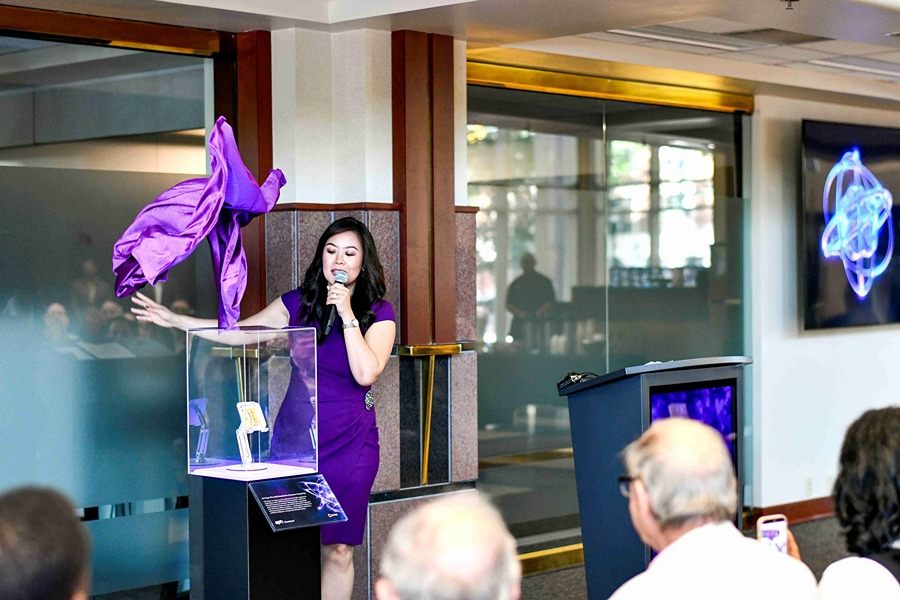
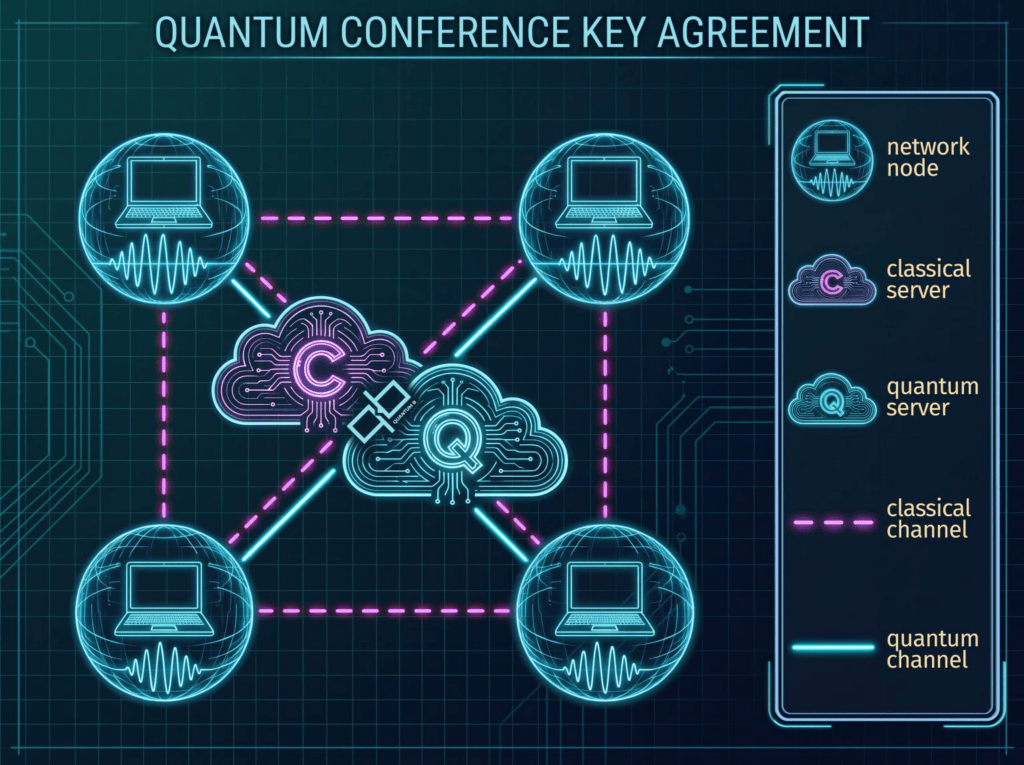
en.Wedoany.com Reported - The U.S. National Science Foundation (NSF) has recently launched Project Triad, aiming to integrate quantum sensing, quantum networking, and quantum computing into a single operational system, building an integrated quantum infrastructure for experimental validation and industrial transformation. The initiative will leverage three types of projects—the National Quantum Virtual Laboratory, X-Labs, and Quantum+X—to bridge quantum information acquisition, transmission, and processing, enabling different quantum devices to operate collaboratively in a unified environment.
The core task of Project Triad at this stage is to build a proof-of-concept integrated quantum system. Quantum sensors are responsible for acquiring environmental or physical object information, quantum networks transmit quantum data between different devices, and quantum computing systems handle subsequent processing. The U.S. NSF stated that the system must maintain quantum coherence throughout the entire process of information collection, communication, and computation, preventing quantum information from degrading into classical data during transmission or device interconnection.
The National Quantum Virtual Laboratory will undertake the primary facility integration and testing tasks. This laboratory is still in the design phase, and the U.S. NSF plans, pending funding availability, to advance some projects from design to implementation by December 2026, and to build quantum systems where research teams can conduct experiments, testing, and performance evaluations. The "virtual laboratory" here does not merely provide software or remote conferencing platforms; rather, it connects quantum devices, experimental facilities, and research teams across different regions to form a shareable national-level R&D and validation resource.
Regarding system interconnection, the U.S. NSF X-Labs will focus on addressing interfaces between quantum devices, photonic components, and quantum information transmission. The hardware approaches adopted by quantum computers, sensors, and communication devices are not entirely identical. To form an integrated system, it is necessary to build networks and photonic infrastructure capable of connecting different quantum nodes, and to verify the stability of quantum information over long-distance transmission. Among the design teams previously selected by the U.S. NSF are a quantum network scheme spanning approximately 60 miles, as well as R&D projects targeting chip-scale quantum sensors, fault-tolerant quantum logic, and dynamic quantum circuits.
Quantum+X is responsible for connecting the integrated quantum facility with enterprise application scenarios. The U.S. NSF is seeking partners in industries such as energy, finance, biotechnology, and pharmaceuticals to validate applications including navigation and secure communications, underground resource detection, precision medical imaging, and industrial material monitoring using the unified quantum environment. Relevant projects will first assess technical feasibility in experimental and testing environments, then determine which systems are suitable for scaling up and deployment by enterprises.
This initiative does not imply that the United States has already built a nationwide quantum communication network, nor has it disclosed the length of new experimental buildings, fiber optic cables, the number of quantum computers, or the total investment amount. What can be confirmed at this stage is that the U.S. NSF has launched a unified infrastructure initiative spanning quantum sensing, communication, and computing, and has proposed advancing some projects into implementation by the end of 2026. Subsequent construction progress will still depend on funding arrangements, device interface development, quantum network testing, and proof-of-concept system integration results.
Related Products


Comprehensive Mining Automation Control System
Beijing Tianma Intelligent Control Technology Co., Ltd.
One-Stop Steward Service for the Entire Logistics System Integration Chain
Zhongding Intelligent (Wuxi) Technology Co., Ltd.
20 Inch 1600*900 Full HD 60Hz TFT LED Monitor with VGA and DP Interfaces for Desktop Computers-Business Use
Guangzhou Zanying Optoelectronics Technology Co., Ltd.
Mine Explosion-proof and Intrinsically Safe Industrial Ethernet Ring Network (10 Gigabit/Gigabit)
Chongqing Mas Sci&Tech Co., Ltd.


TWP16 P-Band Tropospheric Wind Profile Radar
China Huayun Meteorological Technology Group Co., Ltd.

Multi-function Marine Monitoring Low-altitude Detection Radar Sea-air Boundary Ocean Dynamic Environment Measurement
Chengdu Dixin Technology Co., Ltd.
Automatic Aiming Laser Remote Obstacle Removal Robot
Pinggao Group Weihai High-Voltage Apparatus Co., Ltd.