South Korea's SK Hynix Restructures HBM Supply Chain, Establishes Three Major Bases in South Korea and the U.S.
en.Wedoany.com Reported - SK Hynix will use the funds raised through its American Depositary Receipt (ADR) public offering to restructure its artificial intelligence (AI) semiconductor supply chain. Key initiatives include opening a semiconductor cluster in Yongin, expanding next-generation High Bandwidth Memory (HBM) and DRAM production capacity in Cheongju, and building an advanced packaging production base in Indiana, USA.
SK Hynix is dispersing its semiconductor production bases to Yongin and Cheongju in South Korea, and Indiana in the U.S., aiming to meet AI memory demand and stabilize the supply chain. A significant portion of the advanced packaging materials and components used in HBM products comes from a limited number of suppliers. If HBM demand continues to grow, potential bottlenecks could arise, including shortages of advanced packaging materials and components, extended supply lead times, rising raw material prices, and constraints due to limited suppliers. To mitigate the risk of critical raw material supply disruptions, SK Hynix has signed multi-year contracts with key material suppliers and is pursuing policies such as diversifying supply sources, expanding procurement from South Korean suppliers, and strengthening long-term partnerships with core suppliers.
In terms of capacity expansion, SK Hynix is focusing on Cheongju and Yongin. Cheongju is considered a core hub capable of rapid production expansion within the AI memory supply chain. To meet growing AI memory demand, SK Hynix opened the cleanroom of the M15X expansion facility at its Cheongju M15 site last year and began wafer input in the first quarter of this year. Cheongju M15X will be used in the short term to expand production of next-generation DRAM and HBM. Increased wafer input will boost the supply of DRAM needed for HBM production, helping to secure supply for AI customers during surges in HBM demand while alleviating supply shortages.
![SK Group Chairman Chey Tae-won, SK Hynix CEO Kwak Noh-jung, and SK Hynix Outside Director and Board Chairman Ko Seung-beom ring the bell to mark the start of ADR trading on the Nasdaq at the 'Opening Bell' event held in New York, USA, on the morning of the 10th (local time). [Photo=SK Hynix]](https://img.wedoany.com/2026/0714/20260714051432897.jpg)
The Yongin semiconductor cluster is positioned as a strategic production base for supply chain recovery. SK Hynix plans to build new production facilities within the cluster to address future memory demand and secure a long-term growth foundation. While Cheongju serves as the HBM production base, Yongin will focus on expanding front-end production and establishing a new production axis. In the short term, the first Yongin plant will secure new wafer capacity to respond to surging AI memory demand and expand DRAM cell production capacity needed for HBM. Additionally, the plant will help disperse production capacity currently concentrated in Icheon and Cheongju. In the medium to long term, the goal is to prepare a foundation for expanding production to meet future AI memory demand growth, enhance supply chain resilience through production base diversification, and build a next-generation memory production platform.
In Indiana, USA, SK Hynix will build an advanced packaging facility to expand the AI supply chain, address bottlenecks, and meet U.S. customer demand. HBM supply cannot be increased solely by mass-producing DRAM chips; advanced packaging capabilities in the final process stage are critical. Indiana will serve as a capacity expansion base for the back-end process stage, where supply chain bottlenecks often occur. By building an advanced packaging plant locally, SK Hynix aims to shorten the geographical distance to U.S. customers, strengthen its response to major U.S. tech clients, and localize the supply chain, thereby improving supply stability and mitigating geopolitical risks. Additionally, participating in the U.S. semiconductor ecosystem will allow flexible adaptation to U.S. semiconductor policies. Room has also been reserved for further development of new processes to expand the supply chain. When asked by U.S. CNBC whether SK Group has plans to build a wafer fab in the U.S., Chairman Chey Tae-won explained that if there is a possibility, there is no reason not to do it, but building a memory wafer fab is not easy, requiring electricity, clean water, site space, manpower, and a supply chain ecosystem.
Related Products


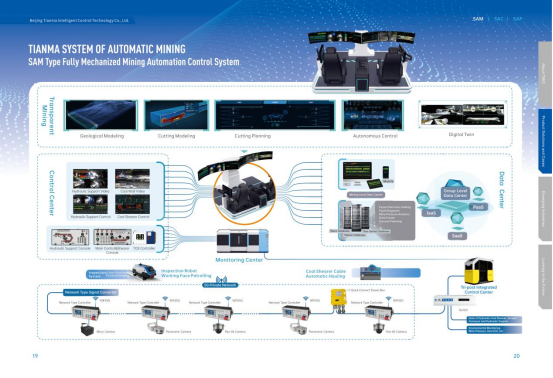
Comprehensive Mining Automation Control System
Beijing Tianma Intelligent Control Technology Co., Ltd.

G.652.D Wavelength-extended Non-dispersion Shifted Single-mode Optical Fiber
HONGAN GROUP CO., LTD.


Hot Selling 10 Inch Intel N5100 I5 I7 FHD 8 +128GB 16+256GB Win10 Pro Win11 Pro 4G 5G Rugged Tablet PC Pad with NFC Barcode
Highton Electronics Co., Ltd.

GYTA Type Non-Self-Supporting Aerial/Duct Optical Cable
TONGDING INTERCONNECTION INFORMATION CO., LTD.
MUX Series Communication Interface Device for Security and Stability Control System
Nanjing NR Electric Co., Ltd.

20 Inch 1600*900 Full HD 60Hz TFT LED Monitor with VGA and DP Interfaces for Desktop Computers-Business Use
Guangzhou Zanying Optoelectronics Technology Co., Ltd.