en.Wedoany.com Reported - The GSM-R private radio system for Luxembourg's railways, based on 2G technology, is approaching the end of its support lifecycle. Its successor, FRMCS (Future Railway Mobile Communication System), has moved from the specification phase to the preparation for actual deployment, with the first European tenders now released. Against the backdrop of railways across Europe being at different transition stages—some already conducting trials and proof-of-concepts, while others are still expanding GSM-R—achieving a smooth migration without disrupting daily operations became the core topic of Eviden's webinar. Guests included Franck Lett, Global Sales Director for Transportation at Eviden, and Mathieu Perrus from the Infrastructure Engineering Department of Luxembourg's national operator, CFL.
The driving forces behind the migration are fourfold: the aging 2G technology underpinning GSM-R, with diminishing vendor support; FRMCS's ability to meet the foundational needs of railway digitalization, broadband, low latency, and automation; cybersecurity, built into FRMCS as a native feature to address increasingly frequent cyberattacks on railways; and regulatory clarity establishing FRMCS as the future European standard. FRMCS plays a key role in supporting the accelerated deployment of ETCS (European Train Control System), enabling Level 2 deployment by providing the modern communication layer required for continuous monitoring. The timeline has been adjusted; vendors indicate that long-term support for GSM-R may extend to around 2040, but most European migrations are brownfield projects, necessitating avoidance of a one-time switchover.
Unlike GSM-R's single architecture, FRMCS adopts a layered structure, divided into a transport layer (5G network) and a service layer (mission-critical communication services). Eviden focuses on the service layer, providing an MCX core (including mission-critical push-to-talk, data, and video services), along with MCX clients for Android and iOS, a browser-based dispatcher system, a recording system capable of capturing voice, video, and data, as well as a centralized management system, SDK, and in-vehicle equipment under development (such as voice cabin radio and the telecommunications on-board architecture, TOBA). This architecture is fully virtualized, with all components running as virtual machines on standard commercial off-the-shelf hardware. A single server can host the MCX server, dispatcher, recorder, management platform, and interworking functions, helping to reduce both capital and operational expenditures.
The Interworking Function (IWF) bridges the MCX world with legacy communication systems such as GSM-R, TETRA, P25, DMR, and PBX. During the migration from GSM-R to FRMCS, the IWF decouples the GSM-R domain and the MCX domain, allowing both to evolve independently while maintaining interoperability. Based on open 3GPP and ETSI standards, the IWF performs functional mapping between the two domains during operation without altering the user experience. This includes converting GSM-R functional numbers to MCX identities (SIP URIs), converting group calls to MCX group calls, and ensuring the validity of Railway Emergency Calls (REC) and text messages when crossing domains.
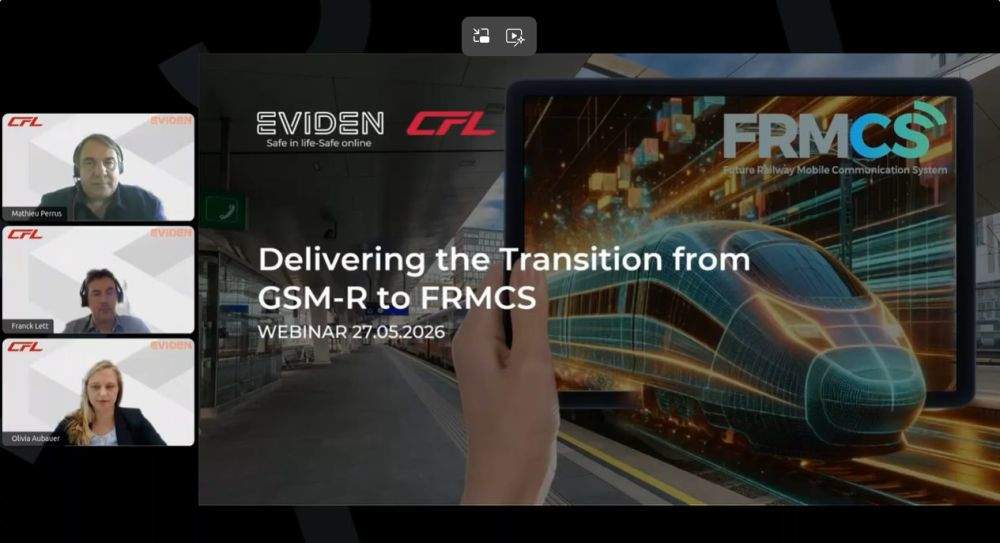
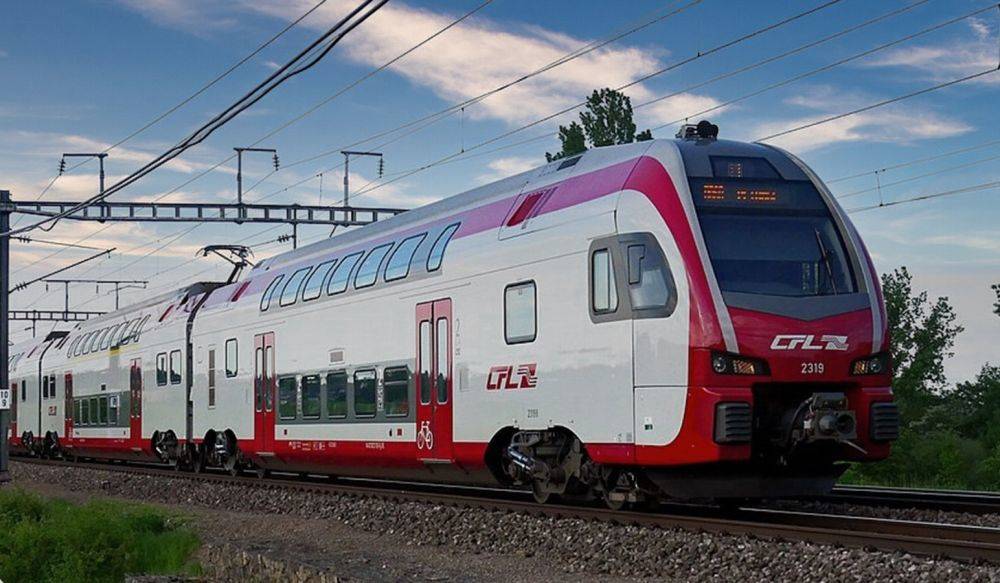
CFL operates approximately 275 kilometers of dense track, with around 1,000 train movements daily, requiring significant cross-border traffic with Belgium, Germany, and France. Its existing backbone network includes approximately 100 GSM-R radio cells, about 80 dispatcher workstations, and around 250 onboard cabin radios. Based on GSM-R Release 4, it is primarily used for circuit-switched voice with limited data capabilities. Since CFL's signaling system is entirely based on ETCS Level 1 (relying on European balises rather than continuous radio communication), and there are no plans to upgrade to ETCS Level 2, FRMCS will only replace GSM-R for operational communications without affecting the signaling system. The migration pressure stems from the end of the GSM-R lifecycle and aging analog systems, including shunting radios, track telephones, copper cable infrastructure, and dispatcher systems that need to be adapted to MCX.
CFL's strategy is based on three pillars: MCX services, a 5G network covering both core and radio access, and dedicated railway spectrum in the n100 (900 MHz) and n101 (1900 MHz) bands. The first proof-of-concept deployed a complete MCX system in an "overlay" manner on a public 5G network without negotiating quality of service, aiming to validate the architecture and gain operational experience. According to Perrus, this phase has been successfully completed. The second proof-of-concept will tackle the more challenging aspects of GSM-R interworking, CFL Wi-Fi interworking, high-availability design, and staff training. If the trials are successful, a nationwide deployment in 2027 will replace all legacy dispatchers, followed by a full FRMCS upgrade starting in 2028 or 2029, aligning with the first version of the specification and the CCS TSI, with a gradual transition to CFL's own 5G network.
Eviden's IWF played a key role in the FP2-MORANE-2 project, which aims to validate the current FRMCS specifications (version 2.2 and selected version 3 candidates) to produce a stable version 3 as the first version for commercial deployment. MORANE-2 conducts laboratory tests at three locations and field tests on five lines across four countries. Eviden is the sole supplier of GSM-R interworking functions in the project, one of only two MCX suppliers, and one of five dispatcher system suppliers. In the German field setup, Eviden provides the MCX application server and IWF, connecting to Nokia's GSM-R network subsystem and 5G core, with field tests scheduled to begin in January 2027.
Regarding network resilience, Perrus described a system isolation "bubble" design that allows trains to operate in degraded mode during an attack, with the MCX system also hardened through penetration testing. On the integration of legacy radios, Lett acknowledged that challenges remain: local interworking for TETRA, though defined by 3GPP, is unevenly implemented by vendors and often tied to licenses, potentially reintroducing vendor lock-in. The industry has workarounds, such as the ISI (Inter-System Interface), but no consensus on a unified solution has been reached. The current reality is that the FRMCS standard itself is maturing on schedule through MORANE-2, with friction points primarily stemming from brownfield realities and how to cleanly bridge TETRA and GSM-R. CFL's advice to other operators is to start planning and testing early, as the migration pace is dictated by interworking and legacy assets, not the specification itself.