en.Wedoany.com Reported - On July 15, the China Nuclear Energy Strategy and Policy Research Institute (hereinafter referred to as "CNESRI") and Harbin Engineering University (hereinafter referred to as "HEU") jointly established a Joint Research Center. Wang Zhenqing, Secretary of the Party Committee and Chairman of CNESRI, led a delegation to visit HEU and held discussions with Yin Jingwei, Deputy Secretary of the Party Committee and President of HEU. The two sides exchanged views on topics including nuclear discipline talent cultivation, scientific research, and think tank construction, and jointly unveiled the plaque for the CNESRI-HEU Joint Research Center. Kang Yexi, Member of the Party Committee and Vice President of CNESRI, attended the discussions, while Han Duanfeng, Member of the Standing Committee of the Party Committee and Vice President of HEU, presided over the symposium.
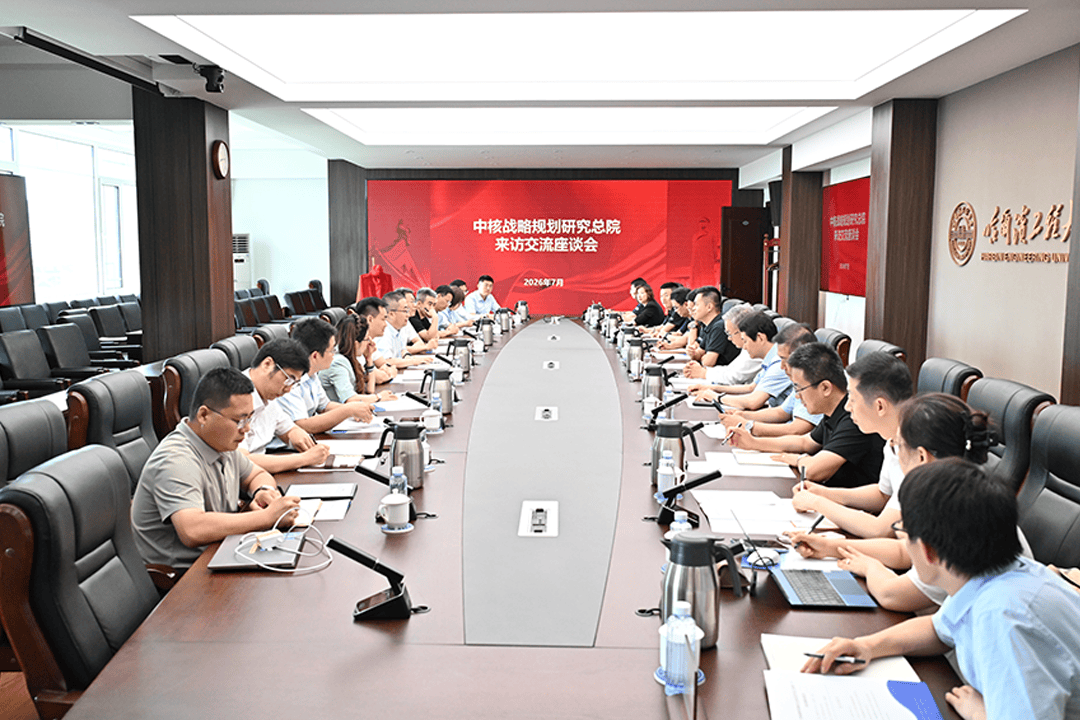
Wang Zhenqing introduced the development history and core tasks of CNESRI. He stated that HEU is an important base for talent cultivation and scientific research cooperation in the nuclear industry, expressing hope that the two sides would leverage the Joint Research Center to build a cooperation platform, establish a regular exchange mechanism, and focus on comprehensive cooperation in areas such as nuclear policy advisory research, cutting-edge technology development, high-level talent cultivation, and AI agent development, contributing wisdom to the development of China's nuclear industry.
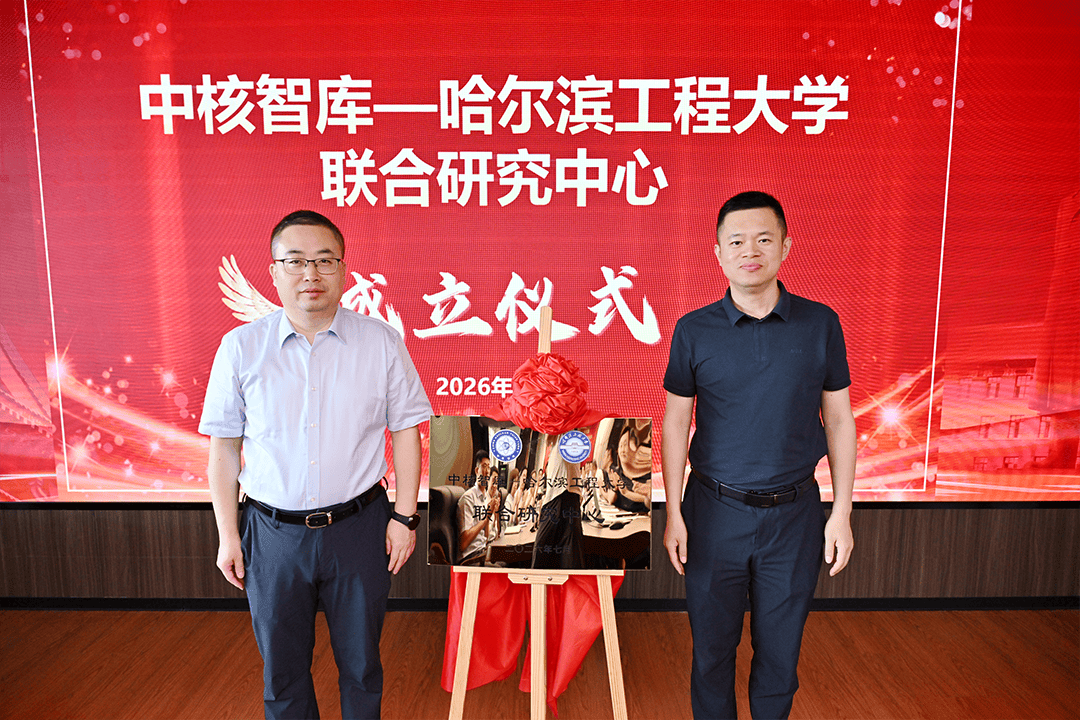
Yin Jingwei welcomed Wang Zhenqing and his delegation, expressing gratitude for the long-term support from the China National Nuclear Corporation. He noted that CNESRI adheres to the philosophy of "soft outcomes creating hard value, soft science supporting hard development," achieving remarkable results in think tank construction. Looking ahead to the "15th Five-Year Plan" period, he expressed hope that the two sides would take the establishment of the Joint Research Center as an opportunity to drive disciplinary development through enterprise needs, jointly tackle challenges in areas such as nuclear strategy decision-making, industrial policy, and international nuclear energy governance, and promote the construction of a strong nuclear industry nation.
The head of HEU's Research Institute introduced the university's scientific research innovation. The head of CNESRI's Strategic Development and Science and Technology Innovation Department presented the institute's basic situation and key tasks. Participants from both sides engaged in in-depth exchanges on topics including think tank construction, nuclear safety, AI agent development in the nuclear field, and international nuclear power talent cultivation.
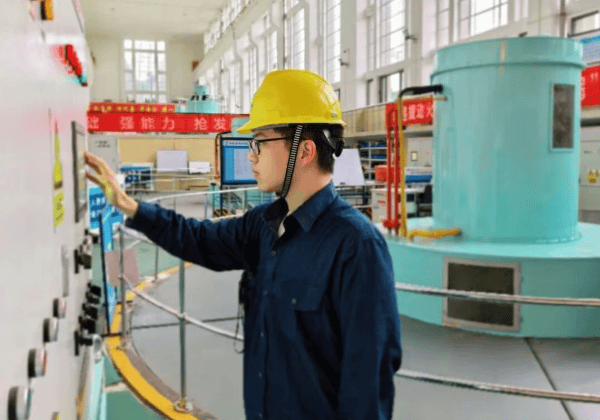
After the symposium, Wang Zhenqing and his delegation conducted in-depth research at the College of Nuclear Science and Technology and the College of Shipbuilding Engineering, and visited the HEU Memorial Hall and the laboratories of the College of Nuclear Science and Technology.
Relevant leaders and faculty representatives from HEU's Research Institute, College of Shipbuilding Engineering, College of Nuclear Science and Technology, School of Economics and Management, College of Foreign Languages, and College of Humanities, as well as leaders and relevant personnel from CNESRI's General Office, Strategic Development and Science and Technology Innovation Department, Institute of Strategy, Institute of Planning, Institute of Intelligence, Institute of Intellectual Property and Technology Transfer, Institute of Standardization, and Publishing House, attended the symposium and exchanges.