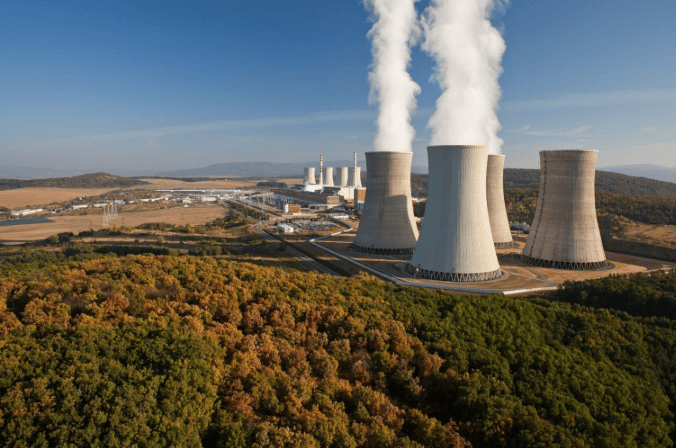
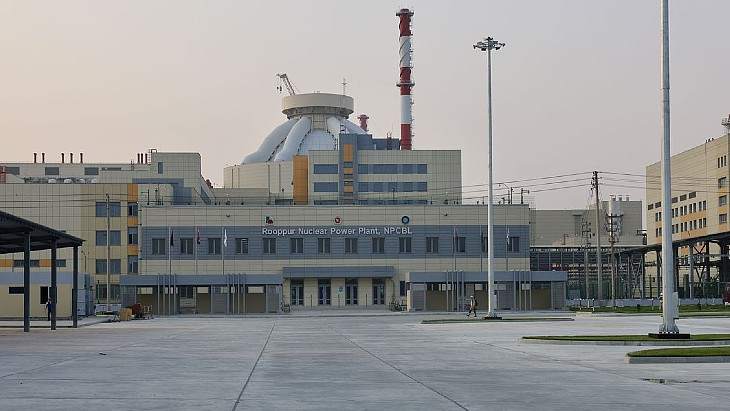
Bangladesh's Rooppur Nuclear Power Plant: 2.4 GW Expected to Achieve Full Operation by 2028
en.Wedoany.com Reported - Bangladesh's first nuclear power plant, the Rooppur Nuclear Power Plant located on the banks of the Padma River in the west, is equipped with two Russian-designed reactors with a total installed capacity of 2.4 GW. It is expected to meet nearly 15% of the country's electricity demand upon full operation in 2028, serving as an important example for developing countries exploring reliable clean energy sources.
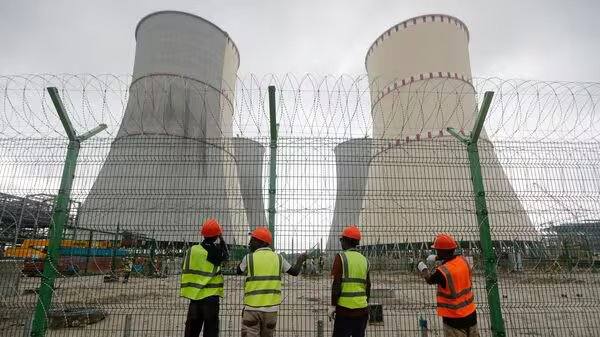
During construction, the project has attracted a large number of tourists to take selfies in front of four giant ivory-colored cooling towers, becoming an unexpected attraction. Bangladesh's primary motivation for developing nuclear power is to reduce dependence on imported fossil fuels, thereby protecting the economy from disruptions in global energy supply. Recent disruptions in oil and gas supply from the Persian Gulf due to the Iran conflict have led to fuel shortages and long queues at gas stations in the country.
The Rooppur project took over a decade to develop and faced multiple challenges during construction, including the COVID-19 pandemic, the Russia-Ukraine war, and geopolitical tensions in the Middle East, causing the first reactor to miss its original target of starting operations in 2023. The project is now led by the government of Prime Minister Tarique Rahman, who took office after the February elections, and is seen as a key initiative to revitalize economic growth after the country emerged from years of authoritarian rule that ended in 2024.
According to data from the World Nuclear Association, the project is estimated to cost approximately $12.65 billion under an agreement with Russia's Rosatom, including initial fuel supply. Due to the significant depreciation of the Bangladeshi Taka against the US dollar, the cost of the project in local currency has risen by nearly 25% compared to when it was approved a decade ago.
Md. Zahedul Hassan, Managing Director of Nuclear Power Plant Co. Bangladesh Ltd., stated that the first reactor is expected to begin full commercial operation in early 2027, with the second unit potentially following in 2028. Hassan believes that despite rising costs, the plant will create long-term value for Bangladesh by providing stable and reasonably priced electricity.
Md. Shafiqul Islam, a nuclear engineering professor at the University of Dhaka, pointed out that project delays have already had a huge financial impact on Bangladesh. Timely completion would not only avoid further cost escalation but also help reduce fossil fuel import expenses.
Bangladesh is also exploring next-generation nuclear technologies to further strengthen energy security. Iqbal Hassan Mahmood, Minister of Power and Energy, revealed that preliminary discussions have been held with potential suppliers regarding Small Modular Reactor (SMR) technology, including Rolls-Royce Holdings Plc and Chinese companies. Mahmood stated that the government is considering building plants with capacities of 300 to 400 megawatts, which are small enough to be constructed along riverbanks and can be deployed faster than traditional reactors, and made it clear that no more large-scale plants will be built.
Experts point out that nuclear power projects still face major obstacles such as high initial investment costs, long construction periods, and delays that can increase costs. However, key advantages of nuclear energy include low carbon emissions, reliability, and round-the-clock power generation capacity. As countries accelerate their transition to clean energy, nuclear power is seen as a baseload power source that can complement intermittent renewable energy sources like solar and wind. Bangladesh's Rooppur project may provide an important reference for other developing economies seeking energy security and pursuing decarbonization goals.
Related Products

0.66kV Power Supply Instrument Transformer
Guangdong Sihui Instrument Transformer Works Co., Ltd.

Mineral-insulated Compact Busway (Fire-resistant Busduct)
Zhuhai Guangle Electric Busway Co., Ltd.

Off-Grid Fuel Cell Supercharging Station (180kW Configuration)
Shanghai REFIRE Group Limited
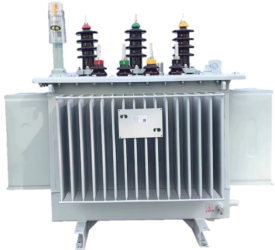
Oil-immersed Amorphous Alloy Core Distribution Transformer
Pinggao Group Smart Electric Co., Ltd.