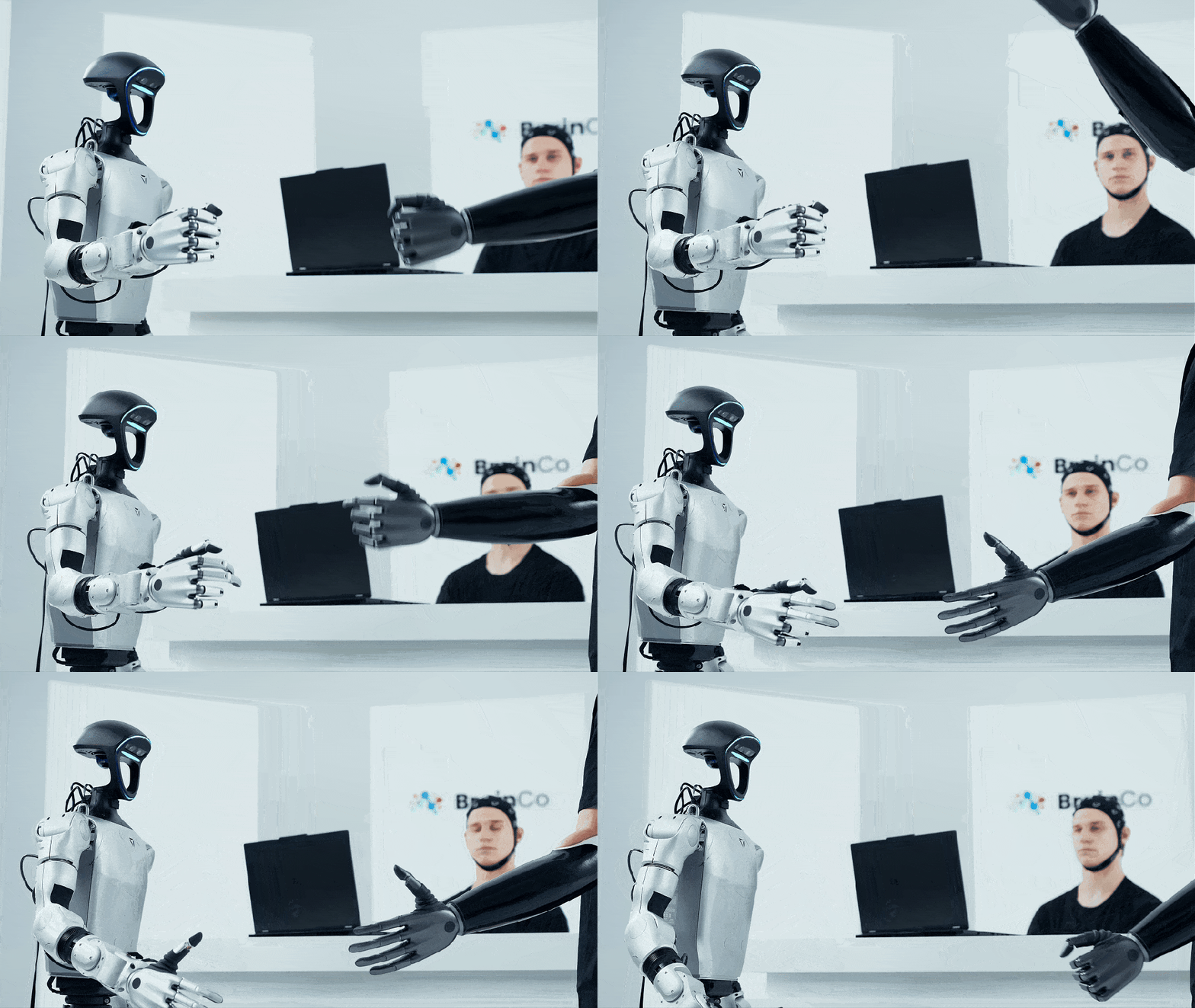
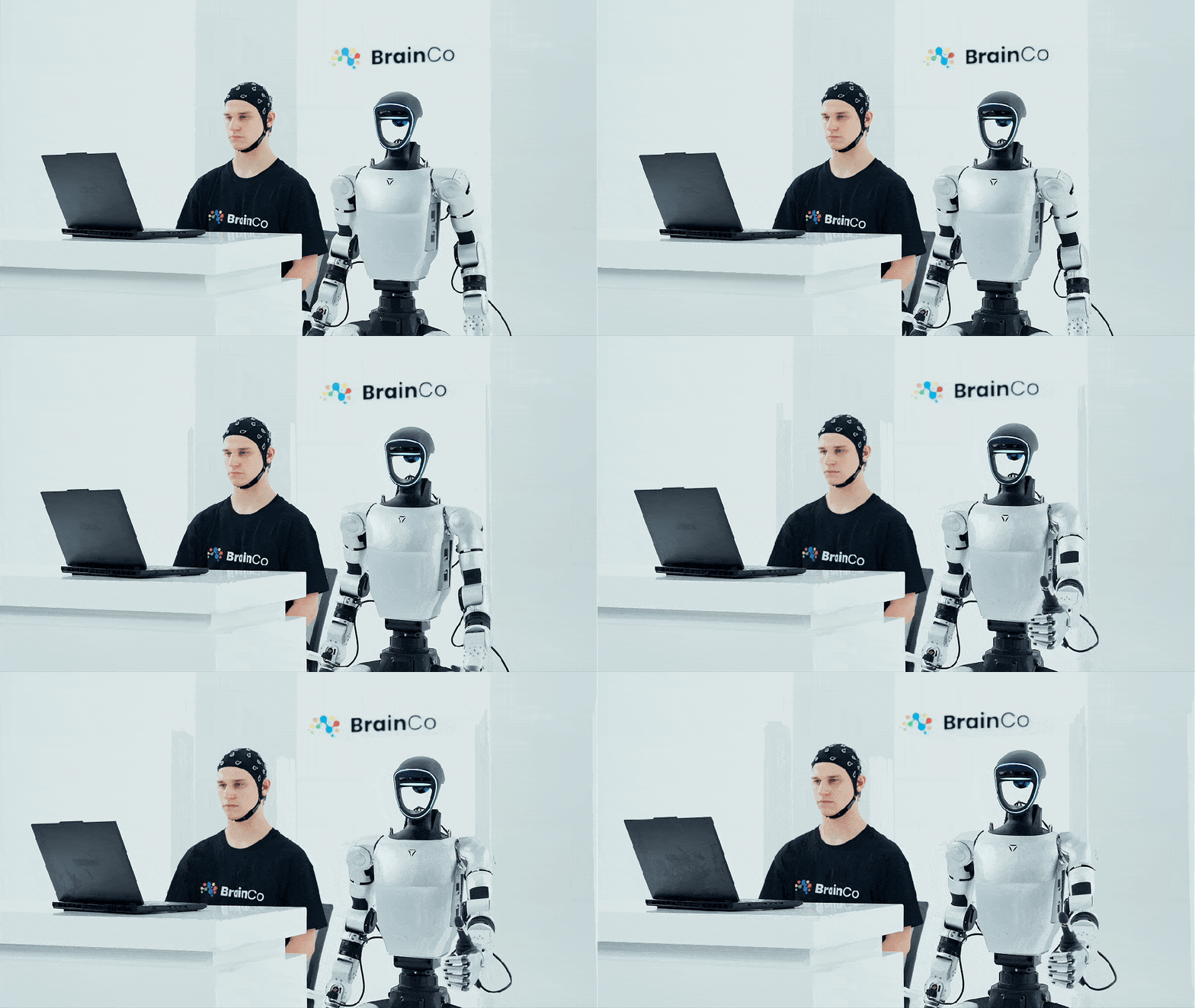
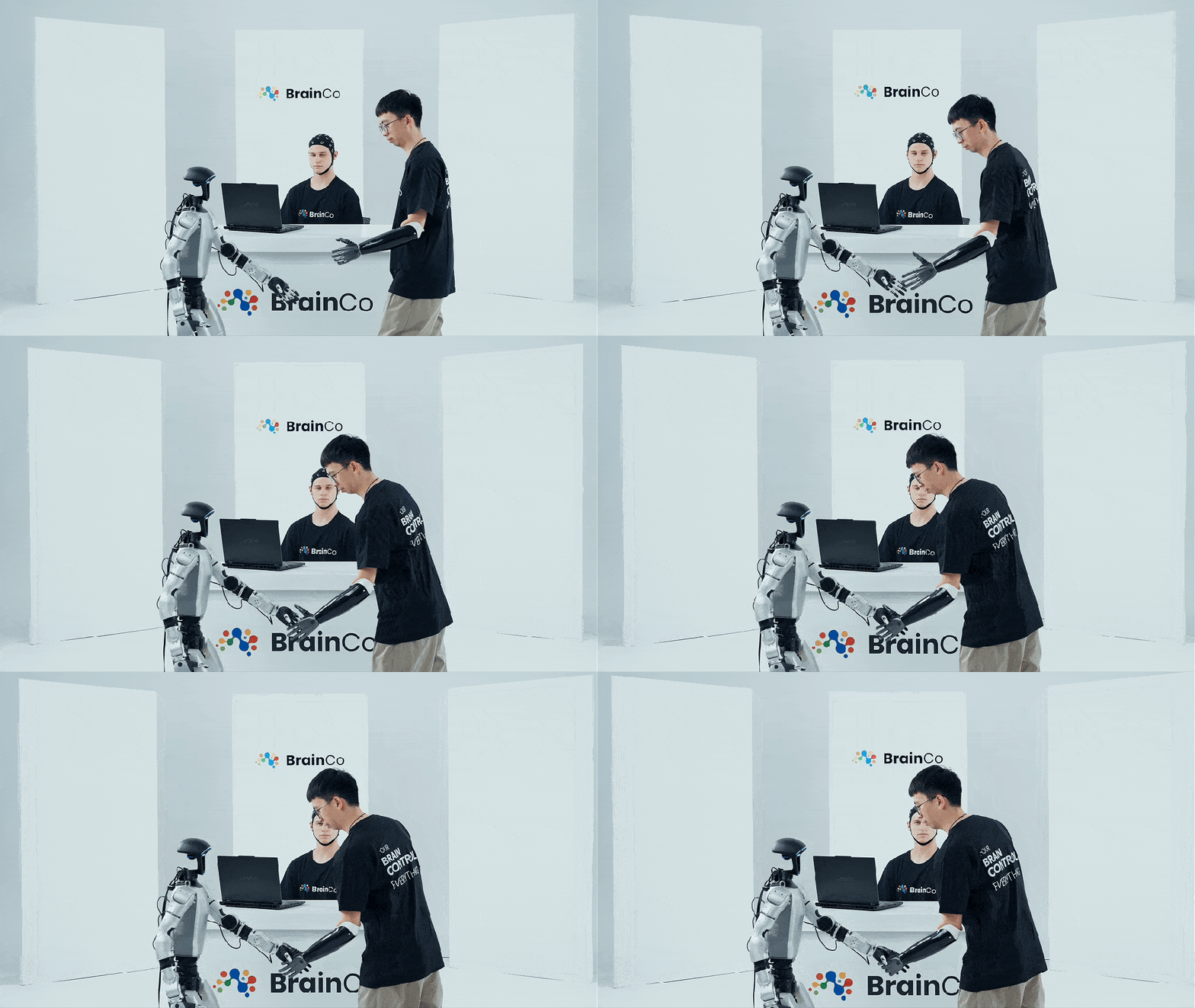
en.Wedoany.com Reported - China's Strong Brain Technology unveiled the BrainCo brain-controlled robot training platform at the 2026 World Artificial Intelligence Conference. Positioned as an integrated, graphical AI research platform for brain-controlled robot R&D and development scenarios, it enables researchers to unlock "mind" control of robots within 10 minutes.
The platform integrates EEG acquisition, experimental paradigms, neural decoding, control mapping, and robot execution into a unified software workflow, aiming to lower the system setup barrier for integrating brain-computer interfaces with robotics. Even researchers without a background in brain-computer interfaces can unlock "mind" control of robots within 10 minutes.
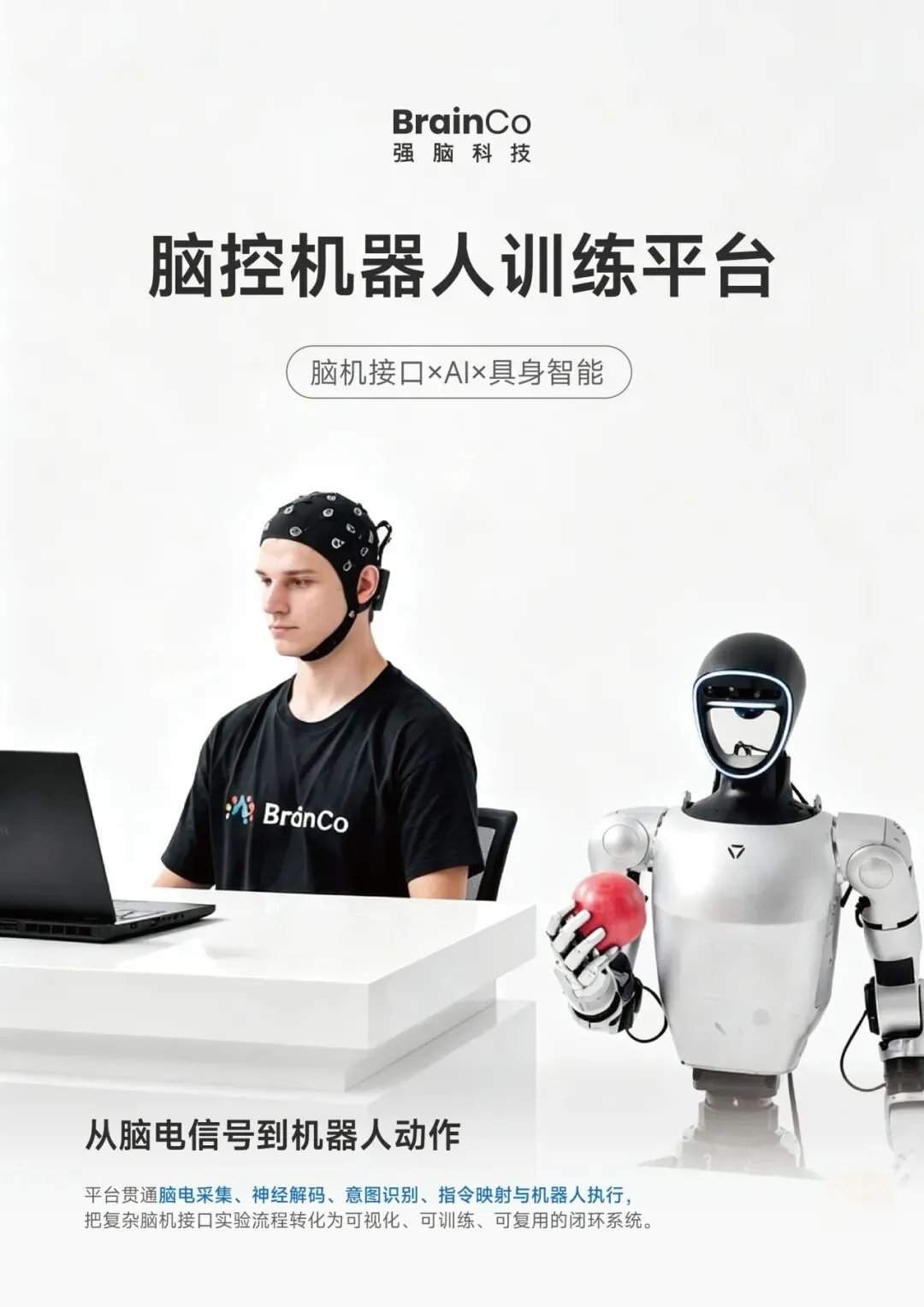
The working principle of brain-controlled robots involves collecting EEG signals related to specific tasks via sensors, using algorithms to identify intention-related patterns, and then converting the recognition results into executable instructions for the robot control system, driving the robot to perform corresponding actions. This establishes an information pathway between the human brain and the robot, allowing intentions to be directly translated into machine actions.

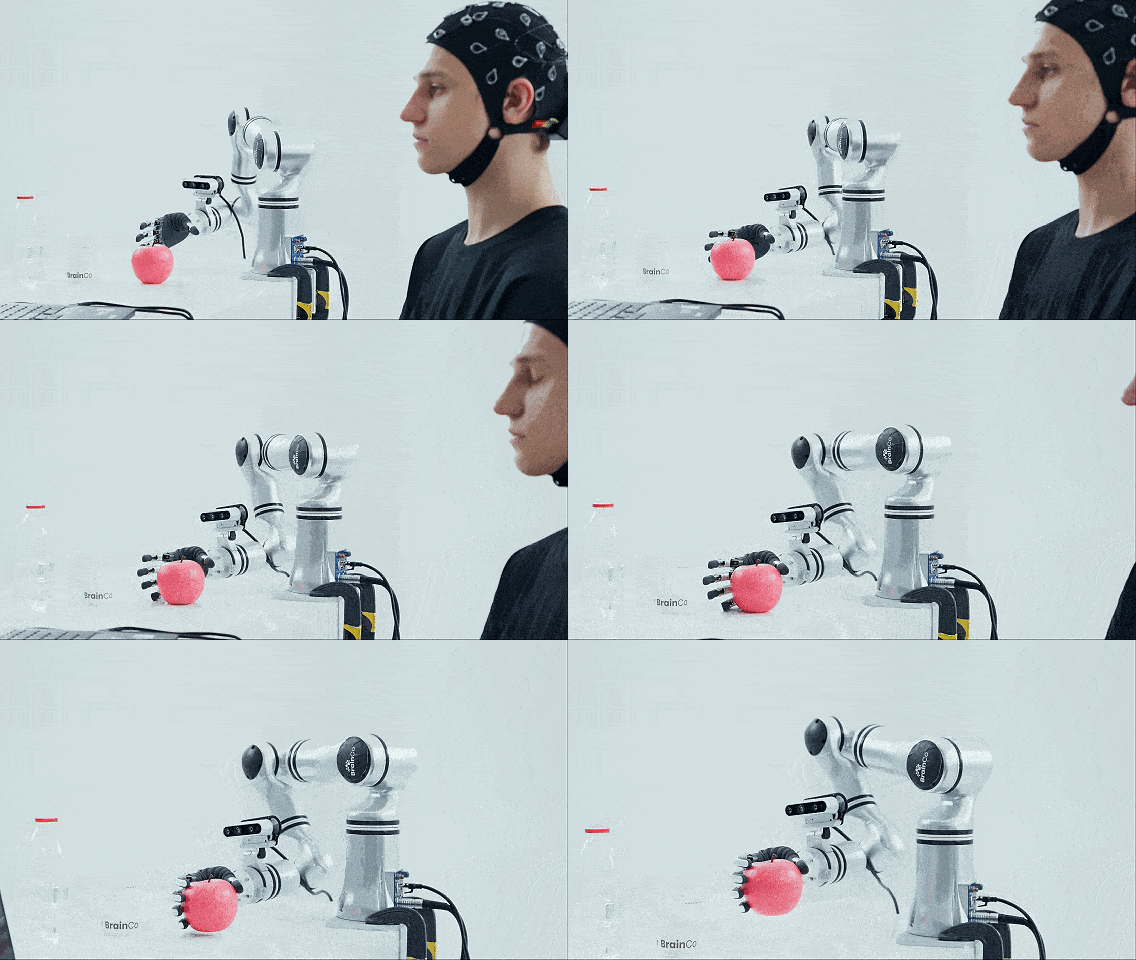
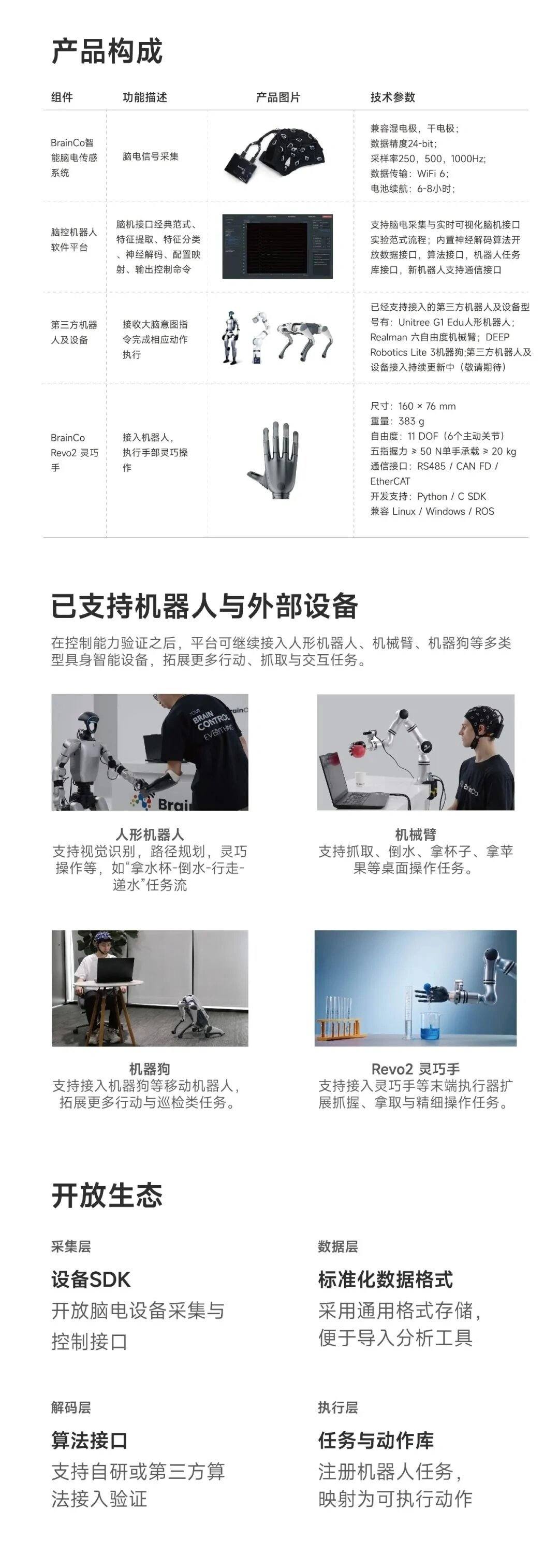
The brain-controlled robot AI research platform released by Strong Brain Technology consists of three parts: an EEG sensing system, a software platform, and a robot execution end. The EEG sensing system is responsible for EEG signal acquisition, compatible with multiple electrode types, supporting multi-channel, high-sampling-rate data collection, and capable of real-time wireless transmission.

The software platform handles the core tasks of signal processing and robot control, featuring built-in brain-computer interface experimental paradigm workflows and neural decoding algorithms. Researchers do not need to build underlying algorithms from scratch; they only need to configure the software platform to achieve the full workflow from signal acquisition to control output. The robot execution end already supports integration with various third-party robots and devices, including humanoid robots, robotic arms, and robot dogs, with the platform continuously adding new robot models.