en.Wedoany.com Reported - The world's largest chip foundry, Taiwan Semiconductor Manufacturing Co. (TSMC), once again exceeded market expectations in its second-quarter earnings report, driven by strong demand for artificial intelligence (AI). The company plans to significantly increase capital expenditure over the next three years, countering current concerns that AI investment is losing momentum.
TSMC Chairman and CEO C.C. Wei stated during the second-quarter earnings conference call on July 16 that the company maintains high confidence in the multi-year AI megatrend, with capital expenditure over the next three years set to be significantly higher than in the past three years. He did not disclose specific figures but noted that the momentum of the AI megatrend has not weakened.
According to the company's latest forecast, capital expenditure for 2026 has been raised to between $60 billion and $64 billion, up from the previous low range of approximately $50 billion. This represents an increase of about 52% to 62% compared to last year's $39.5 billion. Total capital expenditure for the first half of this year was approximately $26.3 billion.
Wei pointed out that agentic AI is expanding the role of central processing units (CPUs) in data centers, driving growth in semiconductor demand. TSMC collaborates with CPU customers using Arm, x86, and RISC-V architectures to support advanced technology and manufacturing capabilities, helping clients seize opportunities in the agentic AI market.
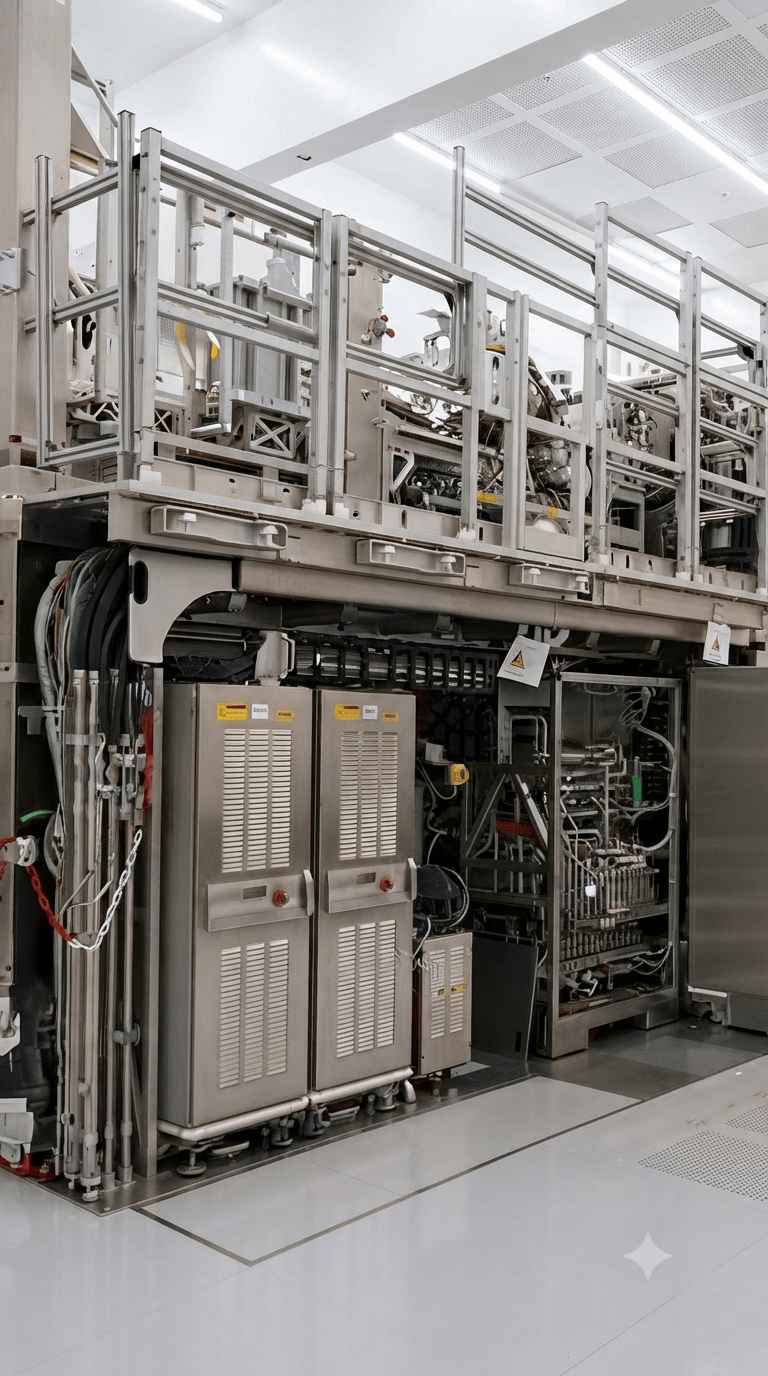
TSMC stated that the increased capital expenditure will primarily be used to meet demand driven by 5G, AI, and high-performance computing (HPC), while expanding manufacturing capacity in collaboration with customers. Equipment supply is proceeding as planned, with approximately 70% to 80% of this year's capital expenditure allocated to advanced process technologies, about 10% to specialized technologies, and the remainder to advanced packaging, testing, and mask manufacturing. Additionally, the company plans to invest an extra $100 billion in the United States to expand sub-2-nanometer manufacturing and advanced packaging facilities, adding more than four new wafer fabs, bringing total investment in the U.S. to approximately $265 billion. Construction progress in the U.S., Taiwan, and Japan will remain flexible, adjusted according to market demand.
On the technology roadmap, the A14 process is scheduled for mass production in 2028. As an evolution of the N2 process, A14 offers a 10% to 15% performance improvement at the same power, a 25% to 30% reduction in power consumption at the same speed, and nearly a 20% increase in logic density. The capacity ramp for this technology is expected to take five to seven years.
Financial data shows that TSMC's second-quarter net profit increased by 77% year-over-year to $21.9 billion, marking the ninth consecutive quarter of double-digit profit growth and exceeding analysts' average estimate of $19.6 billion. Revenue grew 36% year-over-year to $39.4 billion, with a gross margin of 67.7% and an operating margin of 60.3%.