China's Zhongqi Wuliang Launches Rack-Mounted Neutral Atom Quantum Computer Qinghe No. 1
en.Wedoany.com Reported - At the 2026 Shanghai World Artificial Intelligence Conference, Chinese deep tech startup Zhongqi Wuliang officially unveiled the neutral atom quantum computer Qinghe No. 1, a device that can be directly installed into standard data center server racks.
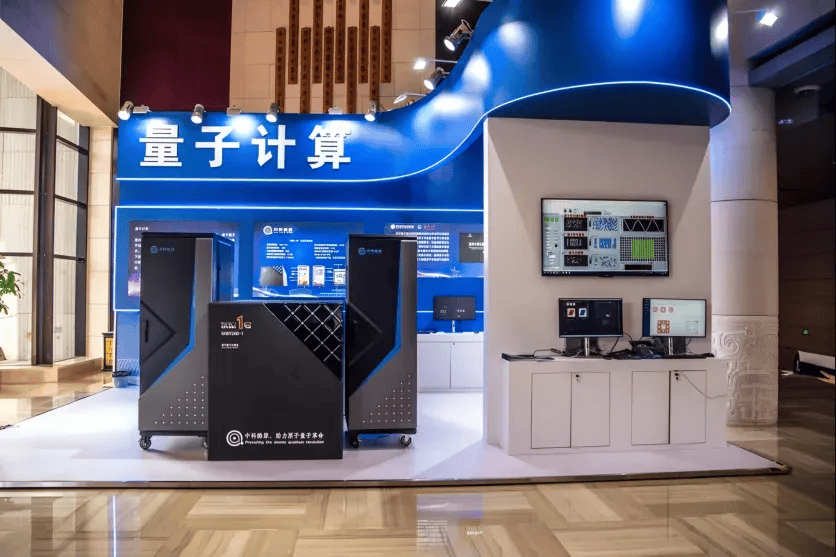
Zhongqi Wuliang, spun off from the Shanghai Institute of Optics and Fine Mechanics, Chinese Academy of Sciences, was founded by Lu Xudong. The company views its second-generation system as a significant step toward removing bulky cryogenic cooling equipment from enterprise quantum deployments.
Standard superconducting quantum architectures, such as those used by IBM and Google, require dilution refrigerators to cool physical circuits to approximately 15 millikelvin. These cryogenic devices demand specialized infrastructure, high energy consumption, and heavy vibration isolation, making them incompatible with traditional enterprise data centers. Neutral atom quantum processors operate on a different physical framework: optical tweezers use focused laser beams to trap individual atoms in a vacuum chamber; laser cooling cools atoms internally to microkelvin temperatures via laser pulses without the need for external liquid helium cooling circuits; and Rydberg blockade gates control two-qubit entanglement operations by exciting atoms to high-energy Rydberg states and utilizing dipole-dipole interactions.
Zhongqi Wuliang has packaged the vacuum chamber, control optics, and laser transmission system into a single rack-mount chassis, aiming to enable cloud providers to deploy quantum hardware alongside classical servers. Hardware integration has been accelerated through supply chain partner Xuanxiang Technology, which recently commercialized a metasurface chip capable of generating large-scale optical tweezer arrays to simplify optical alignment.
Qinghe No. 1 is the third commercially positioned neutral atom system launched by China's regional quantum hardware cluster in less than a year. Previously, Zhongke Kuyuan developed Hanyuan-1 in October 2025, a 100-qubit, room-temperature neutral atom system occupying three standard equipment racks, which has been delivered to a China Mobile subsidiary and exported to Pakistan. In May 2026, Zhongke Kuyuan launched Hanyuan-2, a dual-core cabinet system with power consumption below 7 kilowatts, designed for parallel processing or main and auxiliary core logical qubit encoding. In July 2026, Zhongqi Wuliang's Qinghe No. 1, with its single-rack form factor, represents the latest iteration with a smaller physical footprint.
This rapid hardware iteration is supported by Shanghai's industrial policies. The city has designated neutral atom technology as a core roadmap, establishing specialized innovation zones such as the Xuhui Incubation Area and Zhangjiang Quantum Bay, backed by national research funds and municipal subsidies.
While the server rack form factor represents a noteworthy engineering concept, technology buyers should note that Zhongqi Wuliang has not yet disclosed peer-reviewed metrics for Qinghe No. 1, such as independent qubit count, two-qubit gate fidelity, or coherence time. Third-party benchmarking will be crucial for evaluating its performance against established global neutral atom benchmarks, such as QuEra's commercial systems. The launch also comes amid growing global interest in neutral atoms, with Google Quantum AI initiating a dedicated neutral atom research project in Boulder, Colorado in early 2026, citing the modality's reconfigurable connectivity and scalability.
Related Products
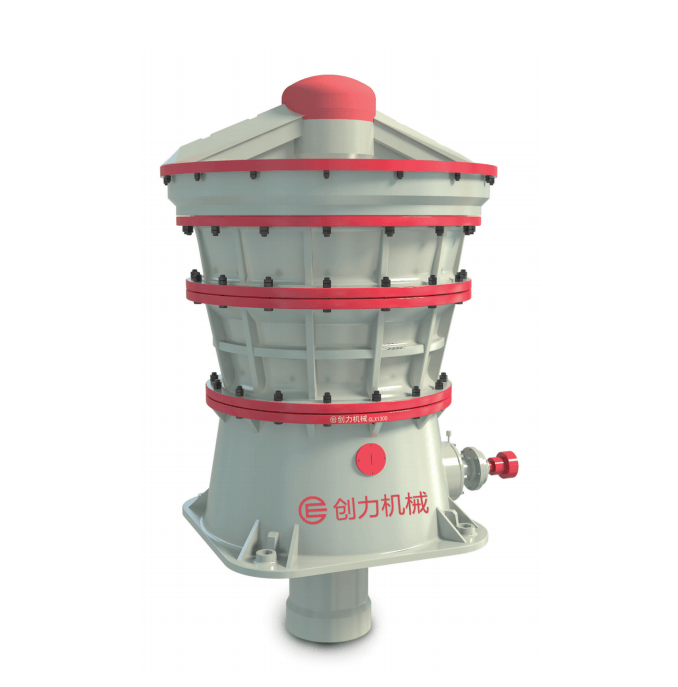

CLX Series Intelligent Hydraulic Gyratory Crusher
Guangdong CHUANGLI intelligent machinery Equipment Co., LTD
Strip Coating and Plating Production Line Equipment
MCC-SFRE HEAVY INDUSTRY EQUIPMENT CO., LTD.
Standard Nozzle Flowmeter
Jinggong Automatic Control Instrument Complete Technology Development Company
QLZNGJ Intelligent Steel Reinforcement Trolley
Luoyang China Railway Qiangli Machinery Co., Ltd.
High-Speed Railway Lifting, Transporting, and Erecting Equipment: Integrated Transport and Erection Machine
Hanjiang Heavy Industry Co., Ltd. of China Railway 11th Bureau Group
Pneumatic high-pressure wear-resistant ball valve
Zhejiang Deca Control Valve Meter Co., Ltd.
LBH4000 Batch Environmental Protection Asphalt Mixing Plant | Asphalt Batching Plant | Asphalt Mixing Plant
Jilin Province Road Construction Machinery Co., Ltd.