en.Wedoany.com Reported - Lithium Plus Minerals (ASX:LPM), based on a reassessment of drilling data from the Spotted Wonder project, has commenced fieldwork in the Arunta region of the Northern Territory this quarter, focusing on examining rubidium and beryllium mineralization in pegmatites.
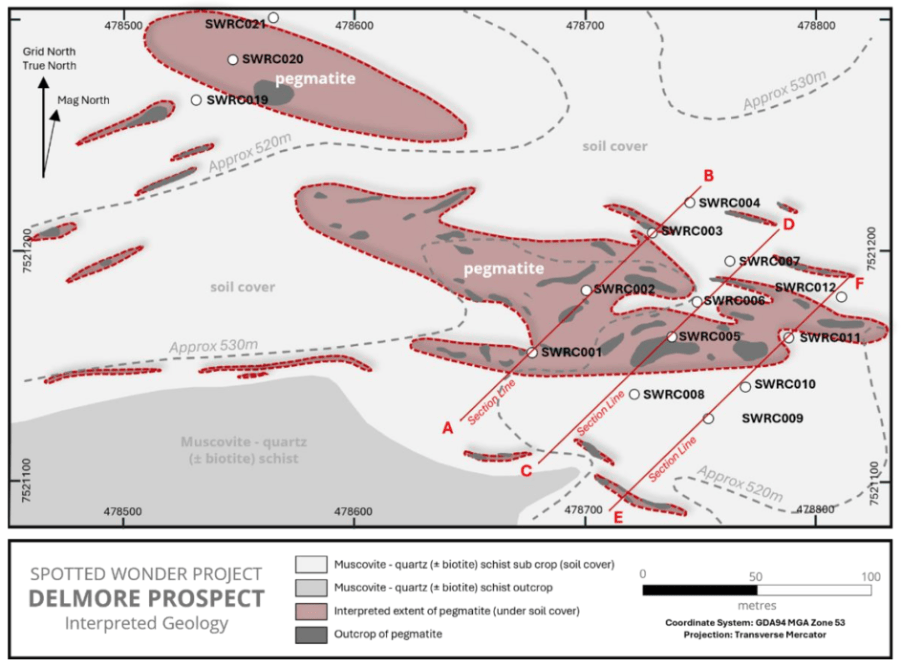
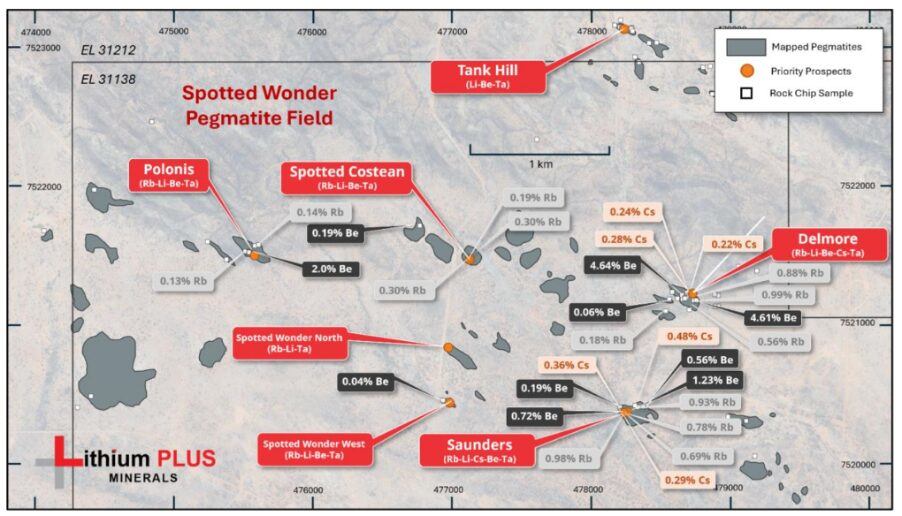
The company stated that this represents a significant expansion of its critical minerals portfolio, with rubidium being one of many China-linked commodities urgently sought by the U.S. government. Potentially high-value mineralization has been identified in the Delmore pegmatites at the Spotted Wonder project, which are enriched in rubidium, lithium, beryllium, cesium, and tantalum, with large amblygonite, lepidolite, and beryl crystals visible at the surface.
Lithium Plus Executive Chairman Bin Guo stated that early drilling results clearly demonstrate the continuity of rubidium mineralization within the target LCT pegmatite system. He noted that continuous intersections of 10 to 20 meters of pegmatite grading over 0.2% Rb2O from surface or near-surface, along with associations with lithium and beryllium, further enhance the potential value. He also emphasized that while preliminary results require further drilling and mineralogical assessment to establish formal resources, the continuity of intersections provides a solid foundation for the next phase of exploration.
Given the near-surface nature of the mineralized zones and the presence of high-value LCT-type minerals, the company believes these prospects offer significant potential for rapid, cost-effective resource definition. In the highly prospective Alcoota area of the Aileron Province, Spotted Wonder and Delmore have been identified as further exploration targets with the potential to supply high-value critical minerals. The project, drilled in 2018, has confirmed continuous shallow mineralization from surface or near-surface across multiple drill holes and along strike.
Key assay results confirmed wide, near-surface rubidium intervals, including 12 meters at 0.22% rubidium oxide and 0.13% lithium oxide from surface (SWRC001), and 19 meters at 0.27% rubidium oxide from surface (SWRC005). The fieldwork aims to trace significant zones of high-value lithium, beryllium, and rubidium within the Delmore prospect area and conduct a comprehensive reassessment of pegmatites in the region.
Rubidium is essential for high-precision timing, advanced electronics, and scientific research, most notably in atomic clocks that provide precise timing for GPS, telecommunications, and data networks. Beryllium, valued for its high-temperature resistance and toughness in metallic, alloy, or oxide forms, is important in the nuclear, electronics, and ceramics industries. Planned activities include detailed mapping and rock chip geochemical sampling in the most promising pegmatite systems. Previously reported drill-ready pegmatite targets Polonis, Costean, and Saunders have also been included in the drill target prioritization.
Meanwhile, Lithium Plus stated it remains highly focused on advancing the low-cost Lei direct shipping ore lithium development and exploration at its flagship Bynoe lithium project. The project is located near local infrastructure, approximately 70 kilometers from Darwin Port, adjacent to Core Lithium's (ASX:CXO) Finniss lithium project, which has a market capitalization of A$775 million. Guo noted that with the approved mining lease and the recently updated mineral resource estimate for the Lei deposit, the company continues to advance development. LPM plans to submit supplementary environmental reports for the Lei project this quarter to secure key approvals, while advancing economic assessments for underground mining operations and the direct shipping ore pathway.