Wedoany.com Report-May 30, Indonesia’s coal exports declined in the first quarter of 2025, reaching 160 million tons compared to 171 million tons in the same period of 2024, an 11-million-ton drop, according to Surya Harjuna, Director of Coal Business Development at the Ministry of Energy and Mineral Resources. The reduction was attributed to lower demand from key markets, including China and India, alongside price-related factors.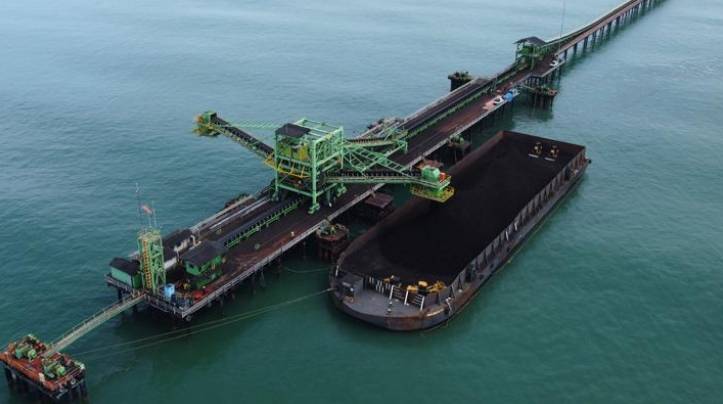
Speaking at an Investortrust discussion on May 30, 2025, Surya stated: “Chinese and Indian manufacturing machinery are slowing down, so there’s indeed a decrease.” He noted that global consumption trends, influenced by economic transitions in major importing countries, have impacted export volumes. The government’s coal reference price (HBA) also plays a role, but broader market dynamics are significant drivers.
Domestic coal consumption in Indonesia also fell, recording 12 million tons in early 2025 compared to 16 million tons the previous year. Surya explained: “The government had hoped for a more stable condition, but after Trump’s victory, the global situation shifted. The coal market also began to deviate from the initial predictions.” Despite these challenges, coal remains essential for meeting local energy needs, particularly for households, healthcare, and basic industries, without affecting trade balances.
Surya emphasized coal’s ongoing importance, stating: “The coal demand is still visible here, especially for the middle- and upper-class society who requires affordable energy.” The fuel continues to support Indonesia’s energy security, serving critical sectors and ensuring accessible energy for communities. The decline in exports and domestic use reflects global market fluctuations, but Indonesia’s coal sector remains a cornerstone of its energy strategy.
The government is focused on balancing domestic energy requirements with export opportunities, adapting to shifting global demand. Surya’s insights highlight the need for resilience in Indonesia’s coal industry, leveraging its resources to support economic stability and local energy access while navigating international market challenges.