en.Wedoany.com Reported - UK autonomous driving company Wayve and its partner Uber have been granted a private hire vehicle license by Transport for London (TfL), allowing them to deploy autonomous taxi operations in London. At this stage, human safety operators will remain in the vehicles.
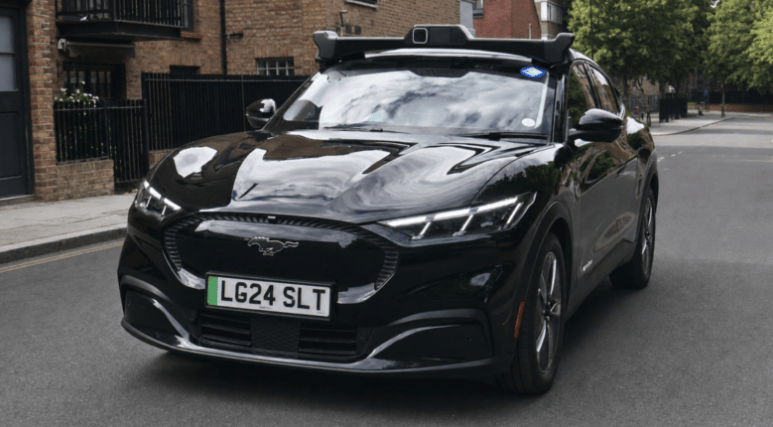
The operating vehicles are based on the Ford Mustang Mach-E, equipped with Wayve's autonomous driving AI hardware and software, featuring the Wayve AI Driver autonomous driving system, surround cameras, and radar. They have passed TfL inspections, confirming compliance with all of its policies and safety standards. The acquisition of this license satisfies the "triple lock" requirement that operators, drivers, and vehicles in private hire journeys must hold licenses from the same issuing authority. Relevant journeys will be conducted in accordance with the UK's Code of Practice for Automated Vehicle Trialling and Uber's TfL private hire operator license. During operation, the AI system handles the driving, while a trained individual holding a TfL private hire driver license remains in the vehicle to supervise the journey and take over control when necessary.
Over the past eight weeks, more than 100,000 Londoners have registered on Uber's interest list, hoping to be matched with Wayve autonomous journeys when the service launches. Late this summer, some passengers on the list will be invited to experience Wayve journeys and provide feedback, which the two companies plan to use to optimize the experience and inform the future of London transport, before proceeding with a full public rollout.
Wayve has previously partnered with Nissan to apply its autonomous driving technology to Nissan vehicles; has received investment from NVIDIA, Microsoft, Uber, and Mercedes, and established partnerships with these companies; and has also collaborated with Stellantis to develop a door-to-door hands-free driving feature. Wayve states that its AI-first approach (AV2.0) differs from traditional autonomous driving routes that rely on high-definition maps, hand-coded rules, or geofencing. The AI Driver system learns from experience like a human driver, enabling rapid adaptation to new roads, different vehicles, weather conditions, and urban environments. The technology has been built and trained on UK roads, tested in London's complex traffic conditions since 2018, and has since been validated for adaptability across more than 500 cities worldwide.
As for Uber, it has over 30 autonomous driving partners, completes millions of autonomous journeys annually, and is building a hybrid operating network where autonomous vehicles and human drivers work together.