Australia's ARC Awards AUD 4.3 Million in 2026 to Support Solar and Battery Research
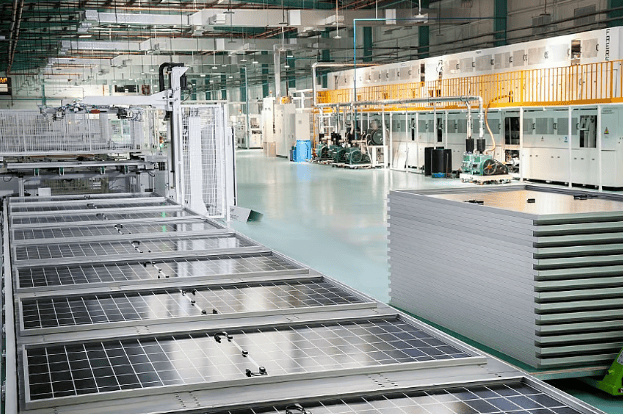
en.Wedoany.com Reported - Under the framework of its 2026 Future Fellowships, the Australian Research Council (ARC) will invest $344 million (USD 246 million) in 290 Australian university research projects. Of this, $4.3 million is allocated to six solar and battery energy storage projects.
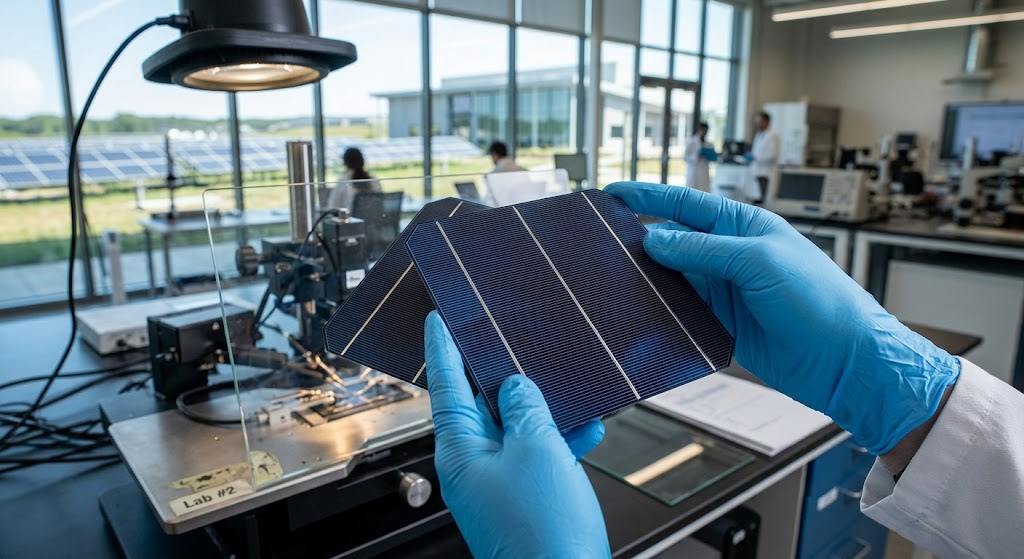
ARC Chief Executive Officer Professor Ute Roessner said these projects demonstrate the value of investing in research that expands knowledge, addresses complex challenges, and benefits Australians. Roessner said the breadth of research supported in this round shows the value of interdisciplinary investment, from basic research that expands knowledge to research addressing some of the practical challenges facing Australia.
In the solar field, Dr. Kaiwen Sun of the University of New South Wales (UNSW) Sydney received $1.1 million to develop all-chalcogenide tandem photoelectrochemical systems for unassisted, solar-driven green ammonia production.
Also from UNSW, Dr. Meng Zhang received $1 million for a project that will advance next-generation photovoltaics based on wide-bandgap perovskites, improving device efficiency and stability by deepening understanding of crystallization kinetics and anisotropy-driven defect management.
Associate Professor Lars Georigk of the University of Melbourne received $1.3 million to develop a computational chemistry toolkit that provides robust, freely accessible methods for accurately simulating molecular processes after light absorption, including how molecules interact after illumination. Expected outcomes include improved workflows for designing solar cells, molecular switches, and photochemical reactions.
Dr. Lifeng Wang of RMIT University received $997,000 to develop next-generation high-entropy materials and reveal how atomic-scale structure affects their performance, advancing knowledge in solar energy harvesting and conversion. The project will establish scalable manufacturing strategies to produce materials with higher stability, conductivity, and multifunctionality.
In the battery field, Professor Ashok Kumar Nanjundan of the University of Southern Queensland received $1.3 million to develop novel self-healing materials for next-generation sodium-ion batteries, combining advanced forms of graphene with flexible polymers to create electrodes that can repair minor cracks and damage during use.
By studying how these materials recover and store energy, the research will lead to batteries that are longer-lasting, safer, more sustainable, and manufactured without toxic solvents.
Related Products

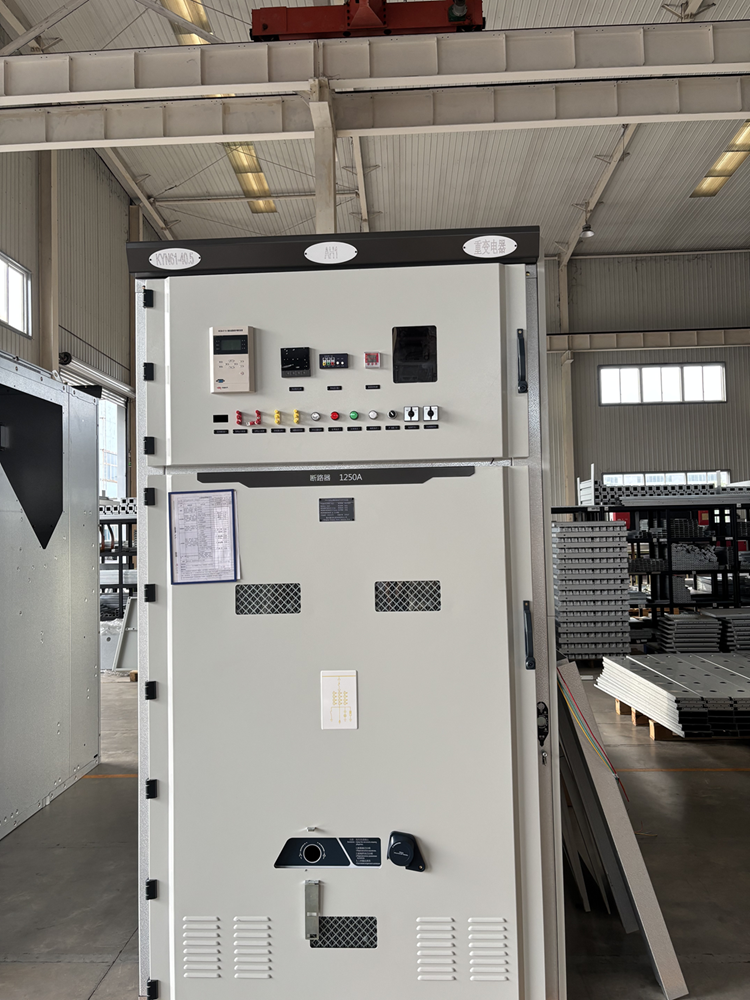
KYN61-40.5 Indoor AC Metal-clad Removable Switchgear
Chongqing Transformer Co., Ltd.
Hydrogen Production Technology: Hydrogen Purification by Pressure Swing Adsorption
Chengdu Yizhi Technology Co., Ltd.
Environmentally Friendly Flame-retardant PVC Double-layer Insulated Wire
Sichuan Chndo Cable Co., Ltd.