Wedoany.com Report-Jun 27, Mexico’s grain and oilseed production is projected to drop to a 25-year low of 32.4 million tons in 2025, an 8.4 million ton decrease from 2021’s 40.8 million tons, according to the Agricultural Markets Consulting Group (GCMA). This 20.59% decline, driven by persistent drought and water shortages in northern, northwestern, and central regions, will significantly impact corn, wheat, and sorghum, essential for food security and industrial supply chains.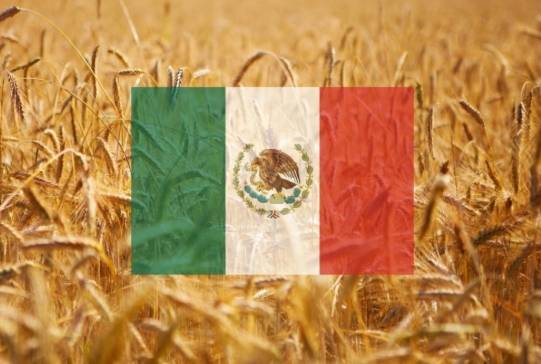
Corn production is expected to fall to 21.7 million tons, a 5.4% decrease from the previous year, with 19 million tons of white corn and 2.69 million tons of yellow corn. “The corn harvest has been declining for two years in a row due to drought,” said Juan Carlos Anaya, director of GCMA, highlighting Sinaloa and Sonora as the most affected states. Sinaloa’s output is forecast at 1.8 million tons, while Sonora’s is expected to be just 98,525 tons.
Water scarcity remains a critical issue. The National Water Commission (CONAGUA) reported on June 20, 2025, that Sinaloa’s 12 reservoirs hold only 6% of their capacity, a deficit of over 800 million cubic meters compared to last year. This shortage exacerbates production challenges, with national grain output projected to meet only 42% of demand in 2025, down from 53% in 2024.
To address the shortfall, imports are anticipated to rise by 6.1%, with corn imports reaching 25.1 million tons, primarily yellow corn from the United States (24.6 million tons) and 500,000 tons of white corn, for which Mexico remains self-sufficient. Wheat imports are expected to total 6.7 million tons.
In contrast, Queretaro shows potential for recovery. “Recent rains in the state could lead to a 50% increase in corn and bean yields compared to last year,” said Romualdo Moreno, president of the Queretaro Regional Livestock Union (UGRQ). However, the state faced challenges in 2024, with 48,989 tons of corn unproduced and 21,165 hectares unplanted due to drought, affecting 9,421 families, according to Rosendo Anaya, Queretaro’s agriculture secretary. The drought has also increased pest and disease issues for crops and livestock.
Mexico’s agricultural sector continues to grapple with water shortages, driving the need for adaptive strategies to ensure food security and stabilize supply chains in 2025.