India Sets Out Two-Pronged Strategy for Nuclear Expansion
Wedoany.com Report-Aug. 8, India's Minister of State, Jitendra Singh, outlined the key elements of the country's Nuclear Energy Mission in a written response to the Lok Sabha. A similar statement was earlier given to the Rajya Sabha on July 24. The mission targets achieving 100 GWe of nuclear capacity by 2047, supporting India’s broader energy strategy under the Viksit Bharat initiative, which aims for national development by mid-century.
The Rajya Sabha chambers inside India's New Parliament building
Announced by Minister of Finance Nirmala Sitharaman during her February budget speech, the Nuclear Energy Mission plays a central role in India’s commitment to reach net-zero carbon emissions by 2070. According to Singh, the mission aims to enhance nuclear power generation with minimal carbon emissions while supporting base load electricity demands traditionally met by fossil fuels.
Singh stated: "Nuclear Energy Mission envisages deployment of large as well as small nuclear power plants in green fields, in brown fields, as captive plants and for off-grid applications in remote locations. This initiative aims for an active partnership with private sector, R&D of small modular reactors (SMRs) and enabling measures for new advanced technologies."
The Bhabha Atomic Research Centre is developing three small modular reactor designs: the 200 MWe Bharat Small Modular Reactor (BSMR-200), a 55 MWe SMR, and a 5 MWt high-temperature gas-cooled reactor for hydrogen production through thermochemical processes. In-principle approval for constructing these demonstration reactors has been granted. Singh noted that construction is expected within 60 to 72 months following administrative clearance.
He added: "Lead units of BSMR & SMR are planned to be installed at DAE sites in collaboration with NPCIL. These plants are designed & developed considering deployment as captive power plant, for repurposing of retiring fossil fuel-based plants and for hydrogen production to support transport sector with prime objective of decarbonization by increasing the penetration of nuclear energy in industrial & transport sector."
India currently operates 24 nuclear reactors with a combined capacity of 8,780 MWe. An additional 18 reactors, including the 500 MWe Prototype Fast Breeder Reactor (PFBR), are under development, which will raise the total installed capacity to 22,380 MWe. Singh confirmed that reaching the 100 GWe target will involve deploying both existing and advanced nuclear technologies.
In a separate update, Singh reported progress on Gorakhpur Units 1 and 2 in Haryana. Though administrative and financial approval was granted in 2014, construction was delayed due to soil-related remediation following technical investigations. Site excavation began in 2018. First concrete for Gorakhpur 1 is expected in October, as procurement of long lead-time equipment is already underway, and some major components have arrived on-site.
The government lists the Gorakhpur units as “under construction,” although the IAEA’s PRIS database will only reflect this status after the initial reactor base mat concrete is placed.
India's Minister of State, Jitendra Singh, outlined the key elements of the country's Nuclear Energy Mission in a written response to the Lok Sabha. A similar statement was earlier given to the Rajya Sabha on July 24. The mission targets achieving 100 GWe of nuclear capacity by 2047, supporting India’s broader energy strategy under the Viksit Bharat initiative, which aims for national development by mid-century.
Announced by Minister of Finance Nirmala Sitharaman during her February budget speech, the Nuclear Energy Mission plays a central role in India’s commitment to reach net-zero carbon emissions by 2070. According to Singh, the mission aims to enhance nuclear power generation with minimal carbon emissions while supporting base load electricity demands traditionally met by fossil fuels.
Singh stated: "Nuclear Energy Mission envisages deployment of large as well as small nuclear power plants in green fields, in brown fields, as captive plants and for off-grid applications in remote locations. This initiative aims for an active partnership with private sector, R&D of small modular reactors (SMRs) and enabling measures for new advanced technologies."
The Bhabha Atomic Research Centre is developing three small modular reactor designs: the 200 MWe Bharat Small Modular Reactor (BSMR-200), a 55 MWe SMR, and a 5 MWt high-temperature gas-cooled reactor for hydrogen production through thermochemical processes. In-principle approval for constructing these demonstration reactors has been granted. Singh noted that construction is expected within 60 to 72 months following administrative clearance.
He added: "Lead units of BSMR & SMR are planned to be installed at DAE sites in collaboration with NPCIL. These plants are designed & developed considering deployment as captive power plant, for repurposing of retiring fossil fuel-based plants and for hydrogen production to support transport sector with prime objective of decarbonization by increasing the penetration of nuclear energy in industrial & transport sector."
India currently operates 24 nuclear reactors with a combined capacity of 8,780 MWe. An additional 18 reactors, including the 500 MWe Prototype Fast Breeder Reactor (PFBR), are under development, which will raise the total installed capacity to 22,380 MWe. Singh confirmed that reaching the 100 GWe target will involve deploying both existing and advanced nuclear technologies.
In a separate update, Singh reported progress on Gorakhpur Units 1 and 2 in Haryana. Though administrative and financial approval was granted in 2014, construction was delayed due to soil-related remediation following technical investigations. Site excavation began in 2018. First concrete for Gorakhpur 1 is expected in October, as procurement of long lead-time equipment is already underway, and some major components have arrived on-site.
The government lists the Gorakhpur units as “under construction,” although the IAEA’s PRIS database will only reflect this status after the initial reactor base mat concrete is placed.
Related Products

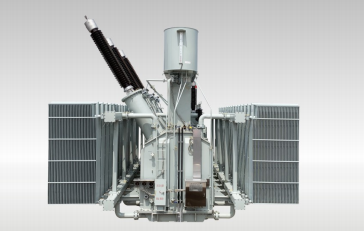
220kV and Below Voltage Level Energy-saving Oil-immersed Power Transformers
FuZhou TianYu Electric Co., Ltd.
TAI Slew-drive Single-axis Independent 1P Tracking Bracket System
ANTAI TECHNOLOGY CO., LTD.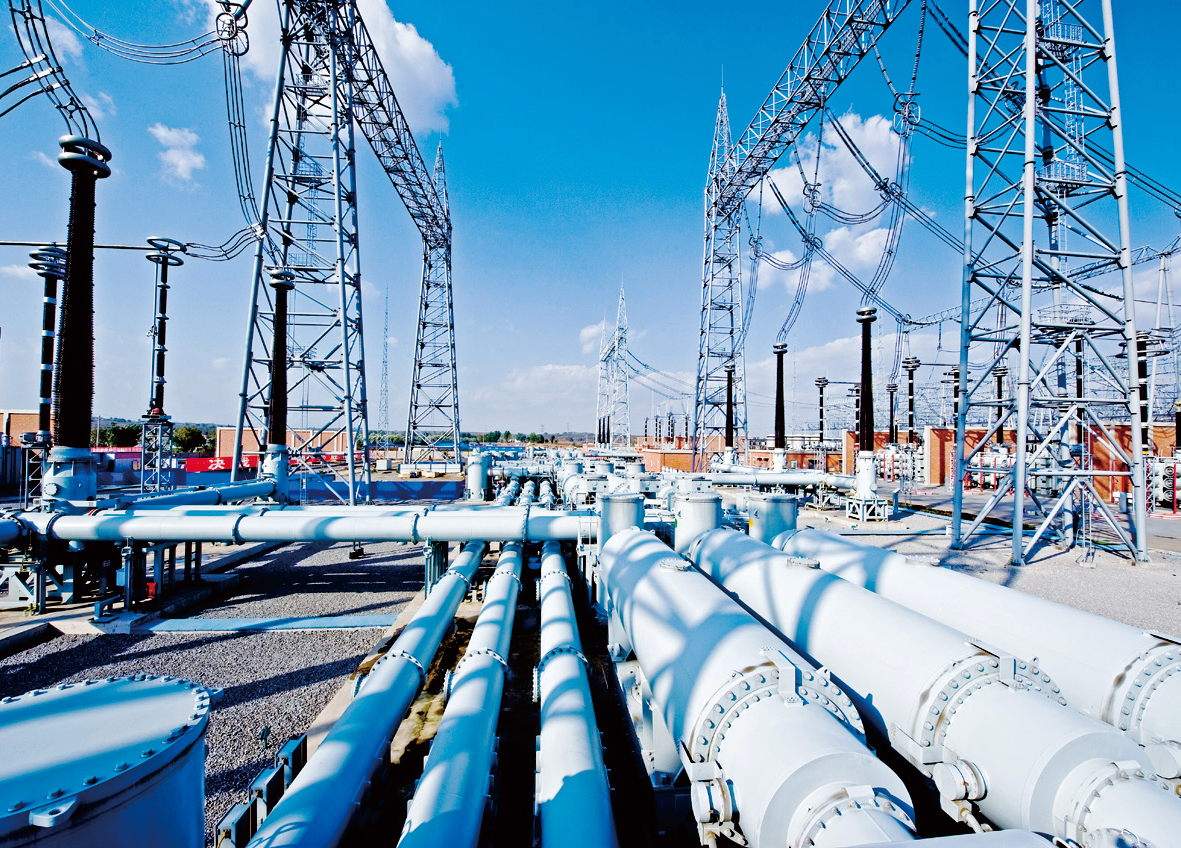
40.5kV-1100kV Gas Insulated Metal-Enclosed Switchgear (GIS)
Henan Pinggao Electric Co., Ltd.
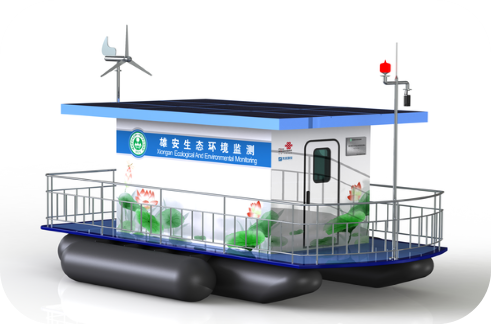
Floating Boat Water Quality Automatic Monitoring System
Hebei Sailhero Environmental Protection High-tech Co., Ltd.
G.652.D Wavelength-extended Non-dispersion Shifted Single-mode Optical Fiber
HONGAN GROUP CO., LTD.