Wedoany.com Report-Nov. 2, Armenia has surpassed 1 GW of installed solar capacity, achieving its national solar target four years ahead of schedule, Infrastructure Minister David Khudadtyan announced. The milestone, reported by ARKA news agency, marks a significant step in the country’s clean energy transition.
Khudadtyan said the government plans to revise renewable energy incentives, scaling back subsidies for standalone solar systems from 2026 while focusing support on hybrid solar and battery storage projects. He stated: “We intend to maintain the subsidy program, but we are solely focusing on supporting the installation of solar panels in conjunction with battery storage systems. This proposal is currently under review. It is also possible to provide separate subsidies for the installation of batteries at existing solar power plants. The rationale is straightforward: the existence of 1,000 MW solar power plants presents certain challenges for Armenia's energy system.”
The 1 GW milestone reflects strong solar deployment in 2025. International Renewable Energy Agency data show Armenia’s cumulative capacity was 485 MW at the end of 2024. The country operates a net-metering system, allowing households and businesses to install systems up to 150 kW for self-consumption and export surplus power to the Electric Networks of Armenia.
As of April 2025, the Armenian Energy Agency reported 37,465 distributed solar producers connected to the grid, providing a combined 486 MW, with an additional 31 MW awaiting connection. In June, Spain-based FRV commissioned a 62 MW solar plant in eastern Armenia under a long-term power purchase agreement with Electric Networks of Armenia, the country’s largest solar project to date.
Solar energy now accounts for 17.2% of Armenia’s total electricity generation. Thermal generation remains the largest source at 30.4%, followed by nuclear at 26.3% and hydropower at 26.1%, according to the Statistical Committee of Armenia.
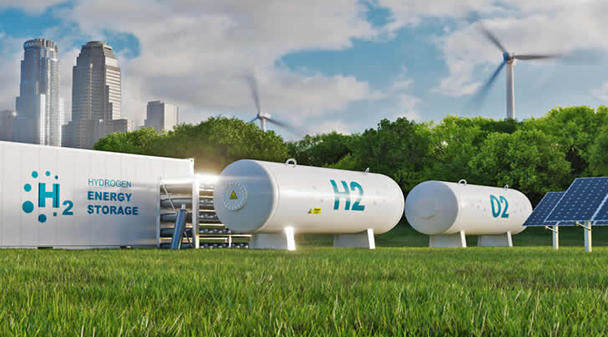
The rapid growth of solar capacity highlights Armenia’s commitment to diversifying its energy mix and supporting renewable energy development. The government’s planned shift toward hybrid systems and battery storage aims to enhance grid stability and integrate higher shares of solar power efficiently.
The milestone positions Armenia as a regional leader in solar deployment, with ongoing investments in distributed solar and large-scale projects supporting both residential and industrial energy needs. Khudadtyan emphasized that future incentives will prioritize combining solar generation with storage, ensuring the system can manage peak production periods while maximizing renewable energy utilization.
Overall, Armenia’s solar expansion demonstrates strong policy support, growing private sector participation, and successful project execution, signaling a robust trajectory for the country’s renewable energy transition.