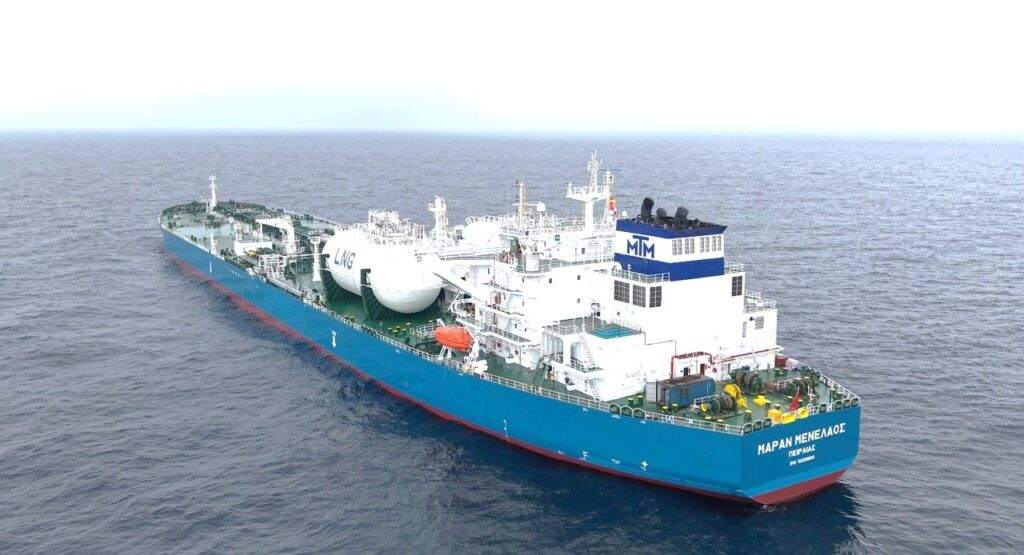
Wedoany.com Report-Nov. 16, Climate-tech start-up Calcarea and Dutch naval architect Aurelia Design have partnered to develop a commercial ship design integrating ocean-based carbon capture technology, the companies announced. The collaboration will combine Calcarea’s limestone weathering system—which removes CO₂ by accelerating its natural reaction with seawater and limestone—with Aurelia’s expertise in vessel design and systems integration.
The joint effort aims to create a new generation of bulk carriers capable of capturing and permanently storing carbon dioxide as stable oceanic bicarbonates. Aurelia will lead naval architecture, class compliance, and engineering work to ensure the onboard system operates safely and efficiently without compromising cargo capacity or hydrodynamic performance.
The first phase focuses on feasibility and concept studies, analysing seawater flow dynamics, hull configuration, and system integration. The companies said this stage will lay the foundation for a scalable newbuild platform and pave the way for future approval in principle.
“We see shipping as one of the most natural environments for large-scale carbon removal,” said Calcarea co-founder Pierre Forin. “Partnering with Aurelia allows us to bridge science and engineering, and turn our technology into a deployable maritime system.”
Aurelia CEO Raffaele Frontera described the project as “a new generation of clean ship design built around a truly regenerative technology.” He emphasized that the initiative seeks to integrate sustainability at the core of vessel performance without reducing operational efficiency.
Based in Los Angeles and Amsterdam, Calcarea and Aurelia plan to advance engineering and validation phases toward a full-scale vessel demonstration. The companies aim to demonstrate that carbon capture technology can be incorporated into commercial shipping at scale, providing a practical pathway for emissions reduction in one of the world’s largest transport sectors.
The project responds to growing industry and regulatory focus on decarbonising maritime transport. By embedding carbon removal directly into the ship design, the initiative could allow operators to reduce the environmental footprint of bulk carriers while maintaining cargo efficiency.
Experts noted that integrating advanced carbon capture systems in commercial vessels presents both engineering and operational challenges, including energy management, weight distribution, and seawater handling. The partnership between a climate-tech innovator and an experienced naval architect is intended to address these challenges through rigorous design and testing.
If successful, the collaboration could set a precedent for clean ship design, showing that carbon capture and storage can be compatible with commercial shipping operations. The effort also highlights a growing trend in the maritime sector toward combining environmental technology with vessel engineering to meet sustainability goals.
Calcarea and Aurelia said the collaboration will continue through concept validation, prototype development, and eventually a full-scale demonstration, positioning the project as a potential model for future low-emission and carbon-negative vessels.