Wedoany.com Report-Nov. 11, Musel Energy Hub, the LNG facility in Gijón, Spain, operated by Enagás and Reganosa, has introduced a bio-LNG supply service for vessels and tankers.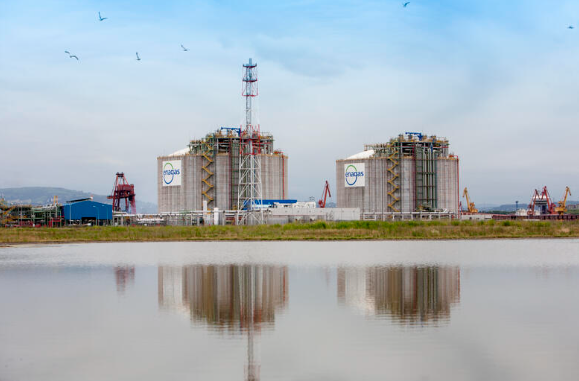
Enagás announced the service began on November 5. It utilizes linked infrastructure, allowing biomethane entered into the gas network to be certified as bio-LNG for terminal delivery.
The offering complies with environmental, social, and traceability standards set by the International Sustainability and Carbon Certification of the European Union (ISCC EU) and the European Commission.
Antonio Manzano, Managing Director of Musel Energy Hub, described the launch as “a new milestone in the development of the Gijón terminal as a multi-molecule plant” and “a clear step forward” in supporting decarbonization objectives “while enhancing the competitiveness of this key infrastructure for the security of the energy supply in Spain and Europe”.
Nieves Roqueñí, President of the Port Authority of Gijón, stated that “preparing the regasification plant to supply ships with bio-LNG will allow shipping companies operating with dual and adapted engines to refuel in Gijón, thus contributing to the strategic goal of reducing our carbon footprint. Having a multi-energy platform to supply European ports and maritime routes and an excellent location in the centre of northern Spain with direct access to the Atlantic provides us with an excellent opportunity to move towards climate neutrality”.
The initiative aligns with rapid expansion in bunkering activities across Spain, where volumes have increased over ten times from 2022 to now.
From January to September 2025, Enagás and Reganosa terminals in Spain delivered 4.6 TWh total, including 4.1 TWh via ship-to-ship transfers and 0.5 TWh through truck-to-ship methods.
Earlier in 2025, Enagás rolled out bio-LNG services at its regasification plants in Barcelona and Huelva.
This Gijón development strengthens the terminal's role in sustainable marine fuels, enabling operators to meet emission targets using certified renewable sources. The interconnected system ensures accurate tracking from biomethane production to final loading, maintaining integrity throughout the chain.
Musel Energy Hub's central Atlantic position facilitates efficient routing for vessels transiting European waters, reducing voyage deviations for refueling. Dual-fuel engines, increasingly common in newbuilds, benefit directly from on-site availability.
Bunkering growth reflects broader adoption of LNG as a transition fuel, with bio-LNG adding a low-carbon option. Ship-to-ship operations dominate due to flexibility and scale, while truck loading serves smaller or specialized needs.
Enagás continues to adapt infrastructure for diverse energy carriers, supporting industrial and transport sectors in emission reductions. The multi-molecule approach allows seamless handling of natural gas, LNG, and renewables at single locations.
Port authorities view the service as enhancing regional competitiveness, attracting traffic seeking compliant fuels ahead of regulatory deadlines. Ongoing investments in storage and loading arms ensure capacity matches demand projections.
Overall, Musel Energy Hub advances practical decarbonization in maritime logistics, combining established assets with innovative supply models to deliver measurable environmental gains.