Nvidia Unveils Nemotron 3 Open Models for Agentic AI
Wedoany.com Report-Dec.17, Nvidia has launched the Nemotron 3 series of open models, accompanied by datasets and libraries, aimed at facilitating the development of transparent, efficient, and specialized agentic AI systems applicable across various industries.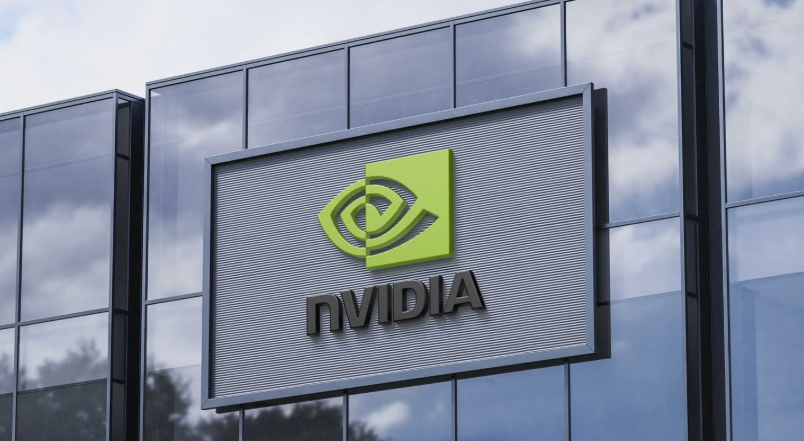
Nvidia positions Nemotron 3 for organisations transitioning from single-model chatbots to multi-agent systems.
The Nemotron 3 lineup includes three variants: Nano, Super, and Ultra. These models employ a hybrid latent mixture-of-experts architecture, enabling developers to construct and operate large-scale multi-agent AI frameworks effectively.
Nvidia presents Nemotron 3 as a solution for entities transitioning from basic single-model conversational tools to sophisticated multi-agent setups. Such systems often encounter challenges related to inter-agent communication, maintaining context consistency, elevated processing expenses, and ensuring visibility in managing intricate automated processes.
The release connects to Nvidia's broader initiatives in sovereign AI, noting that institutions in areas ranging from Europe to South Korea are embracing open models that permit customization based on local data, compliance standards, and organizational principles.
Nvidia founder and CEO Jensen Huang commented: “Open innovation is the foundation of AI progress. With Nemotron, we’re transforming advanced AI into an open platform that gives developers the transparency and efficiency they need to build agentic systems at scale.”
These open models provide emerging companies with accelerated pathways to refine AI agents, progressing swiftly from initial concepts to full-scale implementations.
Nemotron 3 Nano features 30 billion parameters, activating up to three billion for specific operations. The Super version offers 100 billion parameters, with up to 10 billion active per token, suited for reasoning-intensive multi-agent scenarios. The Ultra model encompasses 500 billion parameters, engaging up to 50 billion per token, serving as a powerful engine for demanding tasks like code analysis, document condensation, assistant coordination, and data extraction with reduced computational demands.
The hybrid mixture-of-experts design enhances performance, achieving up to four times greater token processing speed compared to prior versions and reducing reasoning computations by up to 60 percent.
Nano supports a 1-million-token context length, allowing extensive information retention for prolonged, sequential operations. Super excels in collaborative agent environments requiring minimal delay, while Ultra handles in-depth analytical and planning workflows.
Super and Ultra leverage a 4-bit training format on the Blackwell platform, minimizing memory usage and accelerating preparation without affecting precision.
Developers can choose models tailored to particular needs, scaling operations across numerous agents for improved extended reasoning capabilities.
Complementing the models, Nvidia has made available extensive datasets totaling three trillion tokens, covering pretraining, refinement, and reinforcement stages with examples in logic, programming, and multi-phase tasks. A dedicated safety dataset offers practical insights for enhancing agent system reliability.
Supporting tools include open-source NeMo Gym and NeMo RL libraries for training setups, plus NeMo Evaluator for assessing safety and effectiveness. Resources are accessible via GitHub and Hugging Face.
Nemotron 3 integrates with various frameworks and is hosted on multiple inference services and enterprise platforms. Nano is immediately obtainable, with Super and Ultra anticipated in early 2026.
Separately, Nvidia has acquired SchedMD, creators of the Slurm open-source scheduler for high-performance computing and AI workloads. The company intends to maintain Slurm as freely available, neutral software compatible with diverse systems, furthering open ecosystems for research and development.
Related Products

Flat Portable Satellite Terminal 0.35m Aperture Manual Portable Terminal
China Starwin Science & Technology Co., Ltd.
MUX Series Communication Interface Device for Security and Stability Control System
Nanjing NR Electric Co., Ltd.
Conveyor Belt Intelligent Monitoring System
LUO YANG WIRE ROPE INSPECTION TECHNOLOGY CO., LTD.

GYTA Type Non-Self-Supporting Aerial/Duct Optical Cable
TONGDING INTERCONNECTION INFORMATION CO., LTD.