SpaceX Unveils Stargaze Space Situational Awareness System to Enhance Satellite Orbital Safety
Wedoany.com Report on Feb 2nd, SpaceX recently announced the development of a new space situational awareness system named Stargaze, designed to enhance the safety and sustainability of satellite operations in low Earth orbit. The company stated it will provide satellite operators with Stargaze's conjunction screening data for free in the coming weeks.
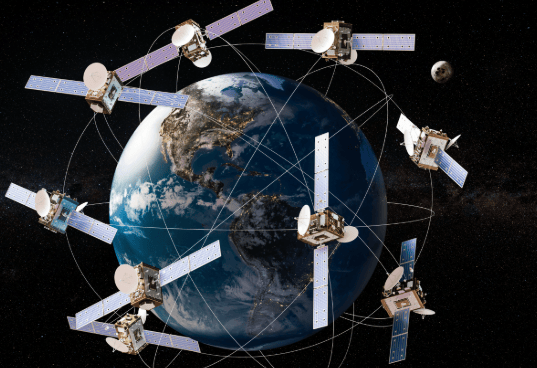
The current low Earth orbit environment is becoming increasingly congested, primarily due to orbital debris and a lack of transparency in satellite maneuver information, leading to a heightened risk of collisions. Traditional monitoring methods have limited observation frequency, significant uncertainties in orbit prediction, and are susceptible to interference from space weather.
The Stargaze system achieves a significant improvement in monitoring capabilities. It integrates data from nearly 30,000 star trackers on SpaceX's satellites. These devices continuously monitor surrounding objects, recording approximately 30 million object transits daily, creating a more detailed map of orbital activity.
The system can automatically identify orbital objects and integrate observation data to generate accurate real-time position and velocity estimates. This information is fed into a space traffic management platform, which can flag potential close approaches and generate conjunction data reports. SpaceX stated that Stargaze can complete conjunction screening in minutes, whereas existing processes often take hours.
To promote space safety, SpaceX will make Stargaze data freely available through its management platform. The platform has completed closed testing with over a dozen operators, achieving ephemeris sharing and low-latency screening. Starting this spring, operators who submit their own trajectory predictions will receive conjunction data reports based on Stargaze, along with information from other participating parties.
SpaceX cited an event from late 2025 to illustrate the system's effectiveness: a Starlink satellite was initially predicted to maintain a safe distance of 9,000 meters from a third-party satellite. However, five hours before the encounter, the other satellite performed an unannounced maneuver, reducing the separation to approximately 60 meters. Stargaze quickly detected the change, updated the trajectory, and after issuing a new conjunction data report, the Starlink satellite performed an avoidance maneuver within an hour, successfully eliminating the collision risk.
The company noted that traditional radar systems or slower screening processes would struggle to achieve such rapid responses. Long observation intervals, processing delays, or reliance on manual operations can all impact the timeliness of risk mitigation.
SpaceX emphasized that while the Stargaze system can detect maneuvers faster than existing solutions, active sharing of ephemeris data by operators remains crucial. The company stated: "Starlink publicly updates and shares its ephemeris data hourly and recommends other operators adopt similar practices." Drawing an analogy to the aviation industry, SpaceX believes spacecraft operators should share predicted trajectories, similar to how aircraft broadcast flight plans, to assist in conflict resolution and reduce unnecessary avoidance maneuvers.
Related Products




G.652.D Wavelength-extended Non-dispersion Shifted Single-mode Optical Fiber
HONGAN GROUP CO., LTD.
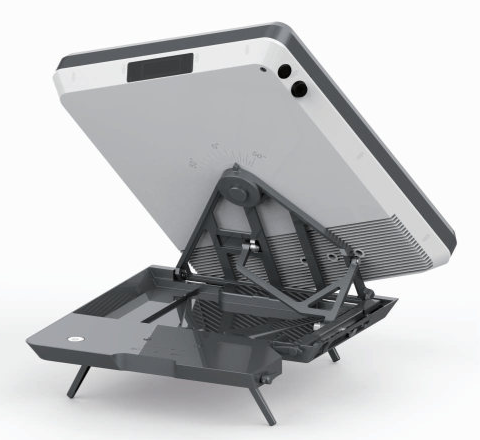
Flat Portable Satellite Terminal 0.35m Aperture Manual Portable Terminal
China Starwin Science & Technology Co., Ltd.

Industrial and Commercial Point-Type Gas Detector
Jinan Benan Technology Development Co., Ltd.
Mine Explosion-proof and Intrinsically Safe Industrial Ethernet Ring Network (10 Gigabit/Gigabit)
Chongqing Mas Sci&Tech Co., Ltd.