BHP Focuses on Organic Growth in Copper, Not Seeking Major M&A for Now
Mike Henry, CEO of BHP (NYSE, LSE, ASX: BHP), stated that the company is focusing on organic growth in copper rather than relying on major acquisitions. Following the release of its half-year results on Tuesday, Henry noted that BHP already possesses a relatively prominent development pipeline within the industry, so he is not surprised by competitors turning to mergers and acquisitions to increase copper exposure. 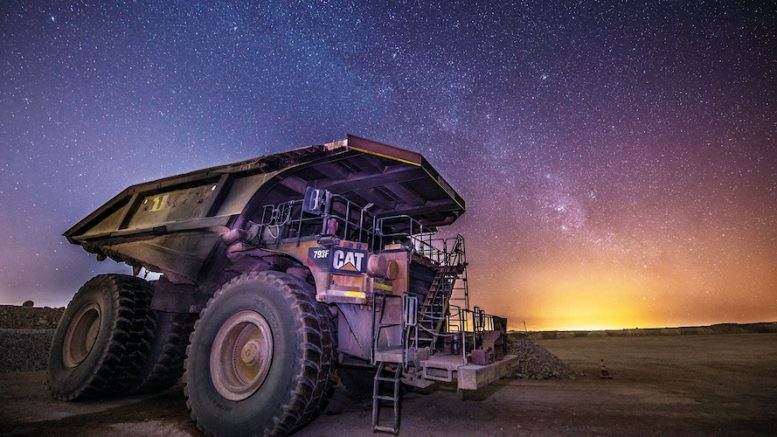
"In our case, we are fortunate to be starting from a very strong base," Henry said. "We are now the largest copper producer, with 30% growth, and we already have several large growth options in our portfolio, so we don't feel the need to do that." BHP abandoned its proposed acquisition of Anglo American (LSE: AAL) in May 2024, and Anglo American later agreed to a $53 billion deal to merge with Teck Resources (TSX: TECK.B; NYSE: TECK). Rio Tinto (NYSE, LSE, ASX: RIO) and Glencore (LSE: GLEN) also terminated merger talks on February 5th.
For the first time, copper has replaced iron ore as BHP's primary profit driver, with underlying EBITDA reaching $8 billion, a 59% year-on-year increase. The company aims to increase copper equivalent production to 2.5 million tonnes per annum by the 2035 financial year, compared to an expected 1.9 to 2.0 million tonnes this financial year. BHP expects the Escondida and Pampa Norte operations in Chile to contribute approximately 1.4 million tonnes per annum, while the South Australia portfolio is initially expected to contribute around 500,000 tonnes per annum, with the potential to increase to 1 million tonnes.
At the Vicuña project on the Argentina-Chile border, the joint venture between BHP and Lundin Mining (TSX: LUN) submitted an updated technical report this week. The estimated Josemaría and Filo deposits contain approximately 47 million tonnes of copper, 97 million ounces of gold, and 1.8 billion ounces of silver, enabling Vicuña to produce around 800,000 tonnes of copper equivalent per annum at a low cash cost. The partners plan to invest about $800 million this year, targeting a final investment decision on the first phase by year-end, and have applied for Argentina's RIGI incentive regime to accelerate project progress.
As of December 31st, BHP's net debt stood at $14.7 billion, with a gearing ratio of 20.9%. The company stated that its portfolio has the potential to unlock up to $10 billion in value, including cash from the sale of its stake in Pilbara power infrastructure and the Antamina silver streaming agreement signed with Wheaton Precious Metals (TSX: WPM; NYSE: WPM). Henry emphasized that, despite having ample financial capacity, BHP's strategy does not rely on buying growth.
"This is a situation where a company is in a precarious position and can only unlock growth through M&A," he said. Conversely, he stated that improving productivity and advancing existing projects over the next decade should deliver strong returns to shareholders. While BHP has the balance sheet to execute deals, Henry noted that large, long-life, low-cost assets meeting its criteria are rare. "The real focus is on operating our existing businesses better and unlocking the organic growth within our portfolio," he said. "For the few opportunities that might emerge that meet our strict criteria, we are positioned to pursue them, but we don't feel any sense of urgency."
Related Products

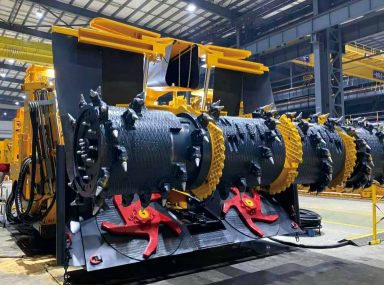
Integrated Excavation and Anchoring Machine (EJM Series)
China Railway Construction Heavy Industry Corporation Limited
High-temperature Equal Wall Thickness High-power Screw Drilling Tool
Orient Energy & Technologies Co., Ltd.
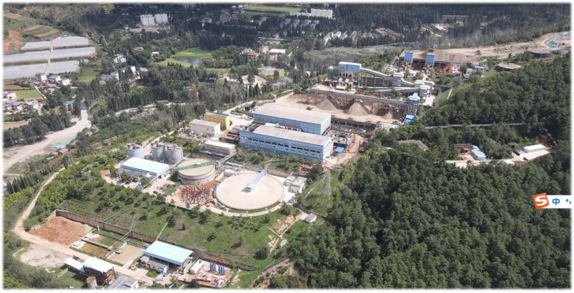
Yunnan Phosphorus Chemical Group Co., Ltd. 2 Million t/a Phosphorus Ore Mining and Beneficiation Project
China Bluestar Lehigh Engineering Corporation

Industrial and Commercial Point-Type Gas Detector
Jinan Benan Technology Development Co., Ltd.