On February 22, during the Spring Festival period, on the 3,000-meter-high plateau in western Sichuan, the Yalong River Lianghekou Pumped Storage Power Station, the world's largest and highest-altitude hybrid pumped storage power station under construction, achieved two key milestones: the excavation of the underground powerhouse was successfully completed, and the first concrete pour for the dam of the lower reservoir, the Yagen I Hydropower Station, was smoothly carried out. The realization of these two major engineering milestones presses the "accelerator" for the completion of the Lianghekou "Hydro-Wind-Solar-Storage-Hydrogen-Computing" Clean Energy Demonstration Zone by 2028, laying a solid foundation for the full completion and operation of the country's first integrated hydro-wind-solar base before 2035.
Excavation of Lianghekou Pumped Storage Power Station Underground Powerhouse Completed
Intelligent Construction Forges the Plateau's Green Power "Power Heart"
The Lianghekou Pumped Storage Power Station is the world's largest hybrid pumped storage project. The station uses the Lianghekou Reservoir, Sichuan's largest "super reservoir," as its upper reservoir and the Yagen I Hydropower Station reservoir as its lower reservoir. It is equipped with four 300,000-kilowatt reversible units, operating jointly with the 3-million-kilowatt conventional units of the Lianghekou Hydropower Station, resulting in a total installed capacity of 4.2 million kilowatts. Upon completion, it will possess both natural runoff power generation and pumped storage bidirectional regulation functions.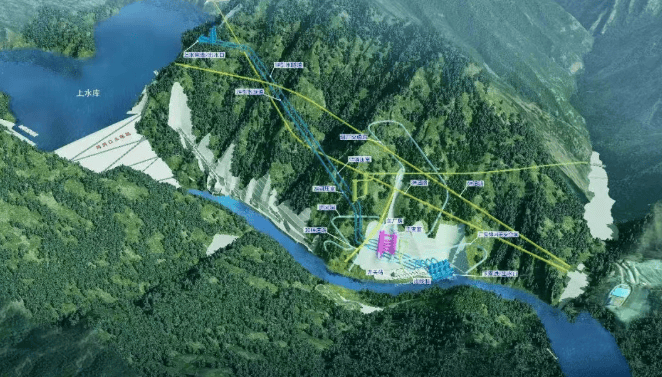
The underground powerhouse, serving as the station's "power heart," is the core hub of the entire project. Buried about 500 meters underground within the mountain, it is nearly 200 meters long, 60 meters high, with a maximum burial depth of 650 meters. Plateau construction faces multiple severe challenges, requiring overcoming constraints like extreme cold and high-altitude hypoxia, as well as tackling engineering difficulties such as high stress and fractured surrounding rock. Confronting these challenges, the builders innovated and persevered. Relying on a self-developed intelligent construction management platform, they integrated multiple intelligent methods including BIM modeling, 3D laser scanning, intelligent rock drilling, intelligent blasting, and intelligent ventilation. The construction adopted a "presplitting blasting + smooth blasting" process, with excavation advancing layer by layer and block by block. Simultaneously, a surrounding rock deformation monitoring system was deployed on-site to track the rock mass status in real-time dynamically, with excavation and support progressing concurrently, ensuring the safety of the underground powerhouse excavation comprehensively.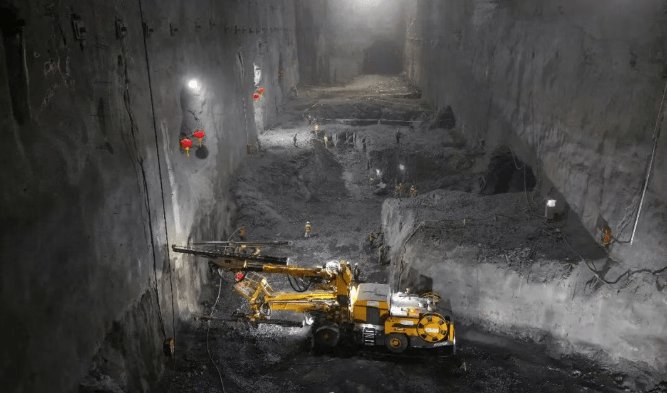
During the Spring Festival, over 500 builders remained on the front line, seizing the "golden window" of the dry season for construction. They implemented 24-hour shift work and deployed the first domestically produced intelligent unmanned rock drilling jumbo, achieving "autonomous walking, precise positioning, automatic drilling, and multi-arm collaborative operation." The drilling accuracy reached the centimeter level, with data transmitted in real-time to the control center. This "unmanned intelligent construction" model not only increased construction efficiency by over 30% but also significantly reduced manual labor intensity and safety risks, helping complete the powerhouse excavation three months ahead of schedule.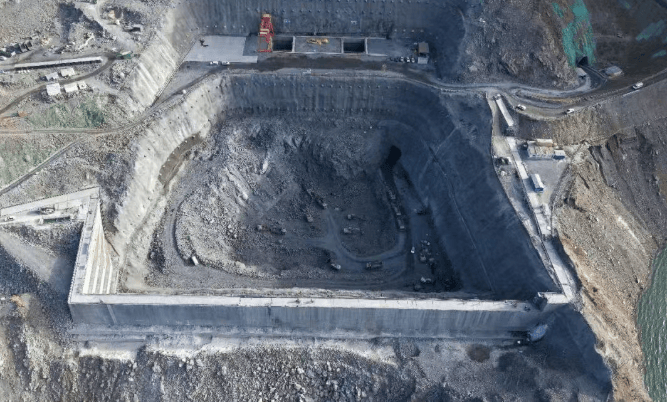
The completion of the excavation for the Lianghekou Pumped Storage Power Station's underground powerhouse marks the conclusion of the civil excavation phase. Construction now transitions to the electromechanical equipment installation stage, providing strong support for the completion of the Lianghekou "Hydro-Wind-Solar-Storage-Hydrogen-Computing" Clean Energy Demonstration Zone by 2028. Upon completion, the station is expected to provide 1.4 billion kilowatt-hours of clean electricity annually, meeting the annual electricity needs of 600,000 households. It will also provide flexible regulation for the approximately 7-million-kilowatt-scale wind and solar new energy sources around Lianghekou, offering solid support for solving the volatility issue of wind and solar new energy on the western Sichuan plateau and achieving stable green power transmission.
First Concrete Pour for Yagen I Hydropower Station Dam Initiated
World-Class Crack Prevention Challenge Overcome by Ultra-Wide Monolithic Sluice Dam
The Yagen I Hydropower Station is the second cascade station in the "one reservoir, seven levels" development of the middle reaches of the Yalong River. With a total installed capacity of 300,000 kilowatts, it features China's widest monolithic sluice dam, with the longest single dam section measuring 47 meters, representing a significant breakthrough in the design and construction of large-scale hydropower projects. Upon completion, it will serve as the counter-regulation station for the Lianghekou Hydropower Station and simultaneously act as the lower reservoir for the Lianghekou Pumped Storage Power Station, making it a key project within the Lianghekou Clean Energy Demonstration Zone.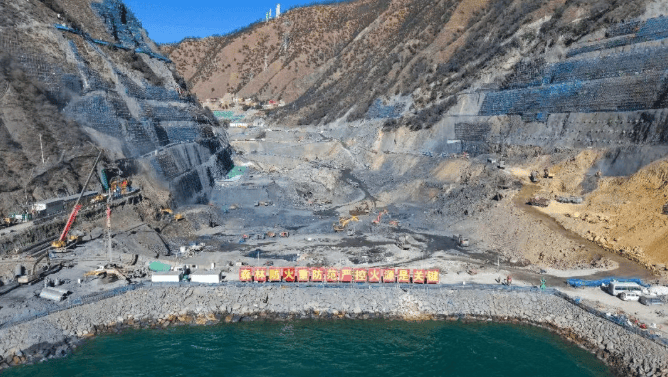
The station's innovatively designed ultra-wide sluice dam breaks away from the traditional pattern where spillway gates in conventional hydropower are mostly independent dam sections. It transforms the spillway gate floor slab into an extremely rigid "giant rock," significantly enhancing the project's earthquake resistance. However, challenges such as low winter temperatures on the plateau, large temperature differentials, and complex aggregate characteristics place the difficulty of crack prevention during concrete pouring for the ultra-wide monolithic dam section among the highest in the world.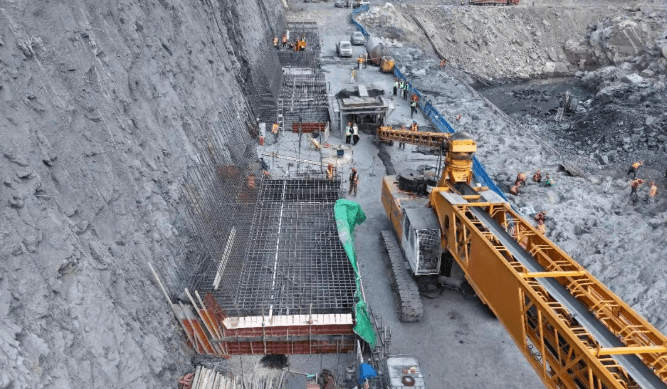
To solve this problem, the construction team created a constant temperature and humidity "growth environment" for the concrete: optimizing the concrete mix ratio to enhance frost resistance and durability from within, akin to putting on "thermal underwear"; establishing a full-process temperature control defense line, strictly controlling each step from aggregate heating, mixing temperature control, transportation insulation, to covering and curing after placement and vibration; innovatively adopting a steam curing method, setting up an outdoor "constant temperature and humidity curing chamber" to ensure the newly poured concrete smoothly passes its "growth period" in a warm and moist environment, effectively avoiding the risk of thermal cracking. During the Spring Festival, over 600 builders remained on-site, initiating the first concrete pour for the dam as scheduled, marking the station's official entry into a new phase of main structure construction.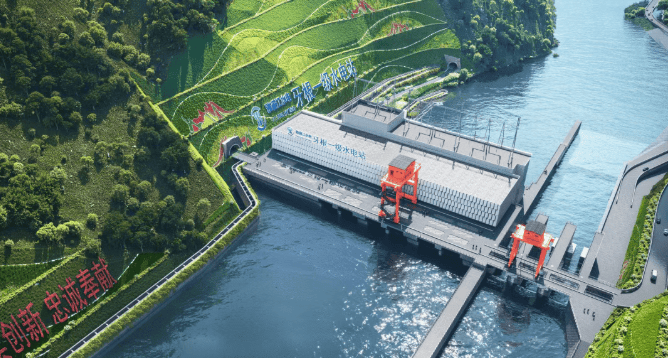
Upon completion, the Yagen I Hydropower Station is expected to provide approximately 1.15 billion kilowatt-hours of clean electricity annually, saving 350,000 tons of standard coal and reducing carbon dioxide emissions by 940,000 tons. As the lower reservoir for the Lianghekou Pumped Storage Power Station, it will operate in coordination with the upper reservoir (Lianghekou Reservoir), pumping water for energy storage when the grid has surplus electricity and releasing water for power generation during peak demand periods. This establishes a complete and efficient energy conversion closed loop for the Lianghekou Clean Energy Demonstration Zone, maximizing the enhancement of watershed regulation capacity and energy utilization efficiency.
Construction of Lianghekou Clean Energy Demonstration Zone Accelerates
Laying a Solid Foundation for the Country's First Integrated Hydro-Wind-Solar Base
The Lianghekou "Hydro-Wind-Solar-Storage-Hydrogen-Computing" Clean Energy Demonstration Zone is an important component of the Yalong River Basin Integrated Hydro-Wind-Solar Base. It has a planned installed capacity exceeding 50 million kilowatts, accounting for about 60% of the base's total scale.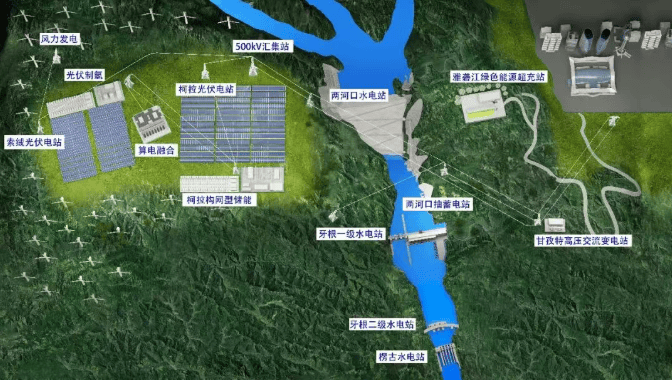
Currently, the Lianghekou Demonstration Zone has already completed projects including the world's largest hydro-solar complementary project, the world's highest earth-rock dam power station, and the country's first high-altitude rock cavern-style computing power cabin intelligent computing center. Projects such as the Lianghekou Pumped Storage Power Station, Daofu Pumped Storage Power Station, and Yagen I Hydropower Station are accelerating construction. The Yagen II Hydropower Station is about to be approved for commencement, while projects like green power grid-connected hydrogen production and supporting new energy projects are advancing simultaneously.
As the country's first integrated hydro-wind-solar base, the Yalong River Basin Integrated Hydro-Wind-Solar Base has a total planned installed capacity of 78 million kilowatts. Currently, nearly 23 million kilowatts are operational, with about 12 million kilowatts under construction. It has established three "super reservoirs" – Lianghekou, Jinping, and Ertan – with a total regulating storage capacity of 14.8 billion cubic meters, forming a clean energy system with coordinated development of "hydro-solar-storage-computing," providing a pioneering demonstration for integrated hydro-wind-solar development in river basins nationwide.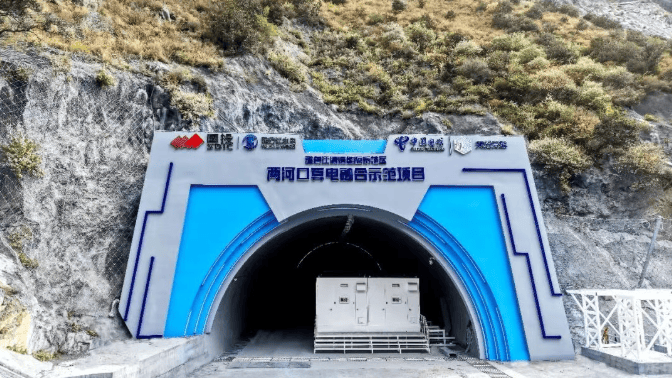
The "15th Five-Year Plan" period is the decisive phase for China to achieve its carbon peak target as scheduled. A relevant official from the State Development & Investment Corp. (SDIC) Yalong River Hydropower Development Company stated that the company will actively respond to national deployments for building a new energy system and optimizing Sichuan's energy structure. It will go all out to accelerate the construction and operation of the Yalong River Basin Integrated Hydro-Wind-Solar Base, striving to achieve an operational scale exceeding 40 million kilowatts by 2030 and the full completion of the 78-million-kilowatt planned installed capacity by 2035. By then, the base is expected to contribute approximately 200 billion kilowatt-hours of clean electricity annually, meeting the annual electricity needs of 100 million households, and continuously injecting strong green momentum into the realization of the national "dual carbon" goals, the construction of a new energy system, and the high-quality development of ethnic regions.