
Research from the Delta Research and Extension Center at Mississippi State University indicates that fall applications of residual herbicides are an effective strategy for controlling glyphosate-resistant Italian ryegrass. The findings, published in Weed Technology, provide new evidence for weed management in rice-growing regions.
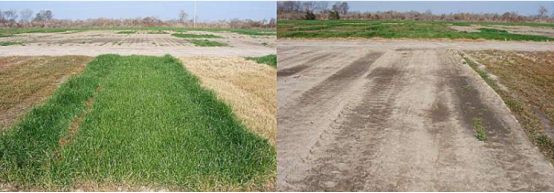
Glyphosate-resistant Italian ryegrass is a major weed issue in Mississippi rice production. The research team conducted two field trials in Stoneville from 2021 to 2023, evaluating herbicide mixture programs and sequential application programs for control efficacy. Jason A. Bond, Extension/Research Professor at Mississippi State University, stated: "The most effective management strategy for controlling glyphosate-resistant Italian ryegrass is to integrate preemergence and postemergence herbicide programs. Residual herbicides applied in the fall should be used to control glyphosate-resistant Italian ryegrass in Mississippi."
In the herbicide mixture study, the researchers found that standalone applications of S-metolachlor, imazosulfuron, and clomazone provided over 94% control of the weed within 21 days after treatment. Adding flumioxazin did not significantly improve field control at 130 days. In the sequential application study, fall-applied S-metolachlor outperformed acetochlor unless the latter was used sequentially with clethodim and clomazone.
Bond emphasized: "The research confirms that residual herbicides applied in the fall are an essential component of glyphosate-resistant Italian ryegrass control programs in Mississippi. In the absence of a fall residual herbicide application, clomazone reduces the efficacy of clethodim on glyphosate-resistant Italian ryegrass."
The study also found that adding residual herbicides during clethodim applications targeting glyphosate-resistant Italian ryegrass provided limited improvement. These results on fall residual herbicide applications offer specific guidance to rice growers, aiding in the development of more effective weed management programs.
In Mississippi rice production, herbicide applications in the fall or early spring are critical for establishing healthy rice fields. The researchers recommend that growers select appropriate fall residual herbicides based on field-specific conditions and integrate them with subsequent postemergence treatments to establish a comprehensive glyphosate-resistant Italian ryegrass control system.