
In disaster scenarios, the urgent need to quickly erect shelters, reinforce infrastructure, and build bridges often demands immediate action. A new study from Carnegie Mellon University's College of Engineering offers an innovative solution to this challenge—combining drones, additive manufacturing, and large language models to explore the future of aerial construction.
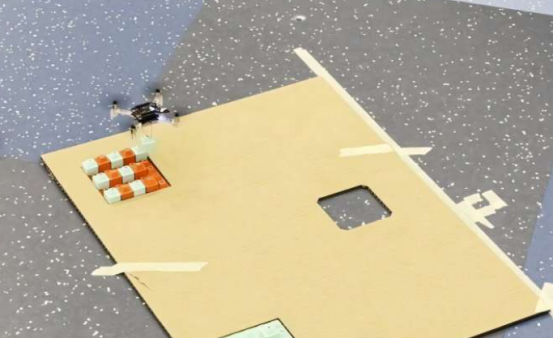
Aerial additive manufacturing, a technology akin to flying 3D printers, has long been hindered by the instability of drone flight, making traditional layer-by-layer fabrication difficult. Amir Barati Farimani, Associate Professor of Mechanical Engineering at Carnegie Mellon University, equipped drones with magnetic blocks to enable precise pick-and-place assembly. At the same time, integrating large language models transforms high-level design goals like "build a bridge" into executable plans, imparting unprecedented flexibility to the construction process.
"The flexibility of LLMs allows us to develop and adjust construction plans on-site," Barati Farimani said. "If issues arise during construction, we can adjust in real time to ensure efficient and precise building." In testing, researchers set up a 5x5 grid, requiring the drone to use magnetic blocks to design specific shapes. Under camera monitoring, if blocks were misaligned, gaps appeared, or construction efficiency was low, the LLM would automatically prompt the drone to redesign the build plan rather than starting over. This closed-loop feedback mechanism achieved a construction success rate of up to 90%.
The combination of drones equipped with magnetic blocks and large language models demonstrates powerful capabilities in precise assembly and the translation of high-level design goals. Barati Farimani envisions: "This tool can fill potholes, repair spaceships on tracks, and construct infrastructure in mountainous areas inaccessible to heavy machinery."
Looking ahead, the Carnegie Mellon University team plans to test drones outside the laboratory to address real-world challenges. They aim to explore using LLMs to construct 3D structures and adopt more dynamic building materials to further optimize the performance and flexibility of construction designs.