
A research team from Vienna University of Technology has published the latest findings in Nature Communications, utilizing thorium nuclear properties for precise measurement of the fine-structure constant. This breakthrough study based on nuclear clock technology provides a new method for exploring the stability of fundamental physical constants in nature.
In 2024, the team successfully discovered the thorium nuclear transition phenomenon and confirmed its potential for constructing high-precision nuclear clocks. The latest research shows that during transitions between different states of the thorium nucleus, its elliptical shape undergoes subtle changes. This morphological alteration affects the proton distribution pattern, thereby adjusting the nuclear electric field characteristics. By precisely measuring electric field variations, the research team achieved high-precision studies of the fine-structure constant.
Professor Thorsten Schumm from the Institute of Atomic and Subatomic Physics explained: "As far as we know, there are only four fundamental forces in nature: gravity, electromagnetism, the strong nuclear force, and the weak nuclear force. Each fundamental force is assigned a fundamental constant that describes its strength relative to the others." The fine-structure constant is approximately 1/137 and determines the strength of electromagnetic interactions. Schumm noted: "Usually, we assume these constants are universal—they have the same value at any time and place in the universe."
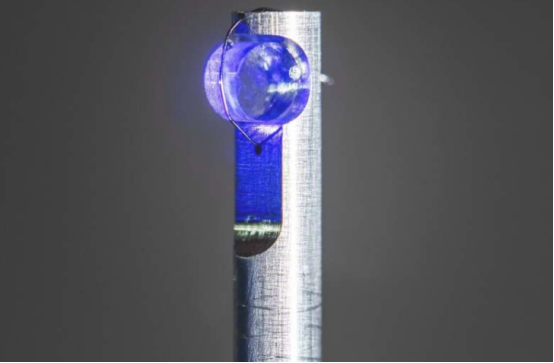
The experiment used thorium-containing crystals prepared at Vienna University of Technology and conducted laser spectroscopy measurements in Boulder, Colorado. Researchers observed that changes in the nuclear state lead to variations in its electric quadrupole moment component. Schumm stated: "We have demonstrated that our method can detect changes in the fine-structure constant more precisely than previous methods, with an improvement of three orders of magnitude, or 1,000 times greater accuracy."
This breakthrough in nuclear clock technology not only lays the foundation for building next-generation high-precision timekeeping devices but also opens new pathways for exploring fundamental physical theories. Schumm emphasized: "This shows that the thorium transition we discovered can not only be used to build next-generation high-precision clocks but also to investigate new physics that previous experiments could not achieve."