
A research team from Princeton's School of Engineering has published the latest findings in Water Research, confirming the feasibility of using reclaimed wastewater instead of pure water for electrolytic hydrogen production. This technological breakthrough is expected to reduce water treatment costs by 47%, providing a new pathway for decarbonizing hard-to-electrify industries such as steel and fertilizers.
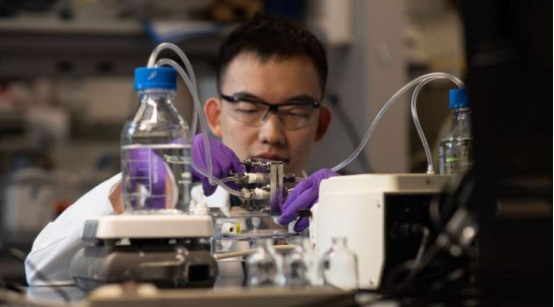
The research team found that current electrolytic hydrogen production processes consume large amounts of pure water, increasing costs and putting pressure on local water supply systems. Senior author Professor Z. Jason Ren stated: "Hydrogen infrastructure often competes with local freshwater resources. But every town has a wastewater treatment plant, which represents a highly distributed water source for the hydrogen economy." The team systematically compared hydrogen production efficiency between pure water and reclaimed wastewater using proton exchange membrane electrolyzers.
PhD student Lindu led experiments that showed a decline in system performance when using reclaimed wastewater. Through electrochemical testing and microscopic imaging analysis, the researchers identified calcium and magnesium ions as the primary cause of membrane clogging. The team proposed adding sulfuric acid to the water as a solution, with experiments confirming that acidification enables stable system operation for over 300 hours. Professor Ren explained: "Removing all ions to use ultrapure water in electrolyzers is very costly. Now, with just slight acidification, ion-containing water can operate continuously."
This hydrogen production technology improvement is projected to reduce water treatment energy costs by about 62%. Professor Ren emphasized: "The acid circulates within the system and never leaves." The team is collaborating with industry partners to advance scaled-up testing and exploring the feasibility of using pretreated seawater as a feedstock. Last year, they published research on water-saving optimizations for hydrogen production, identifying U.S. regions suitable for co-locating hydrogen facilities with wastewater treatment plants.